


Antique Terrestrial Globe
An antique terrestrial globe maps the shifting borders of empires and nations across centuries of cartographic history.
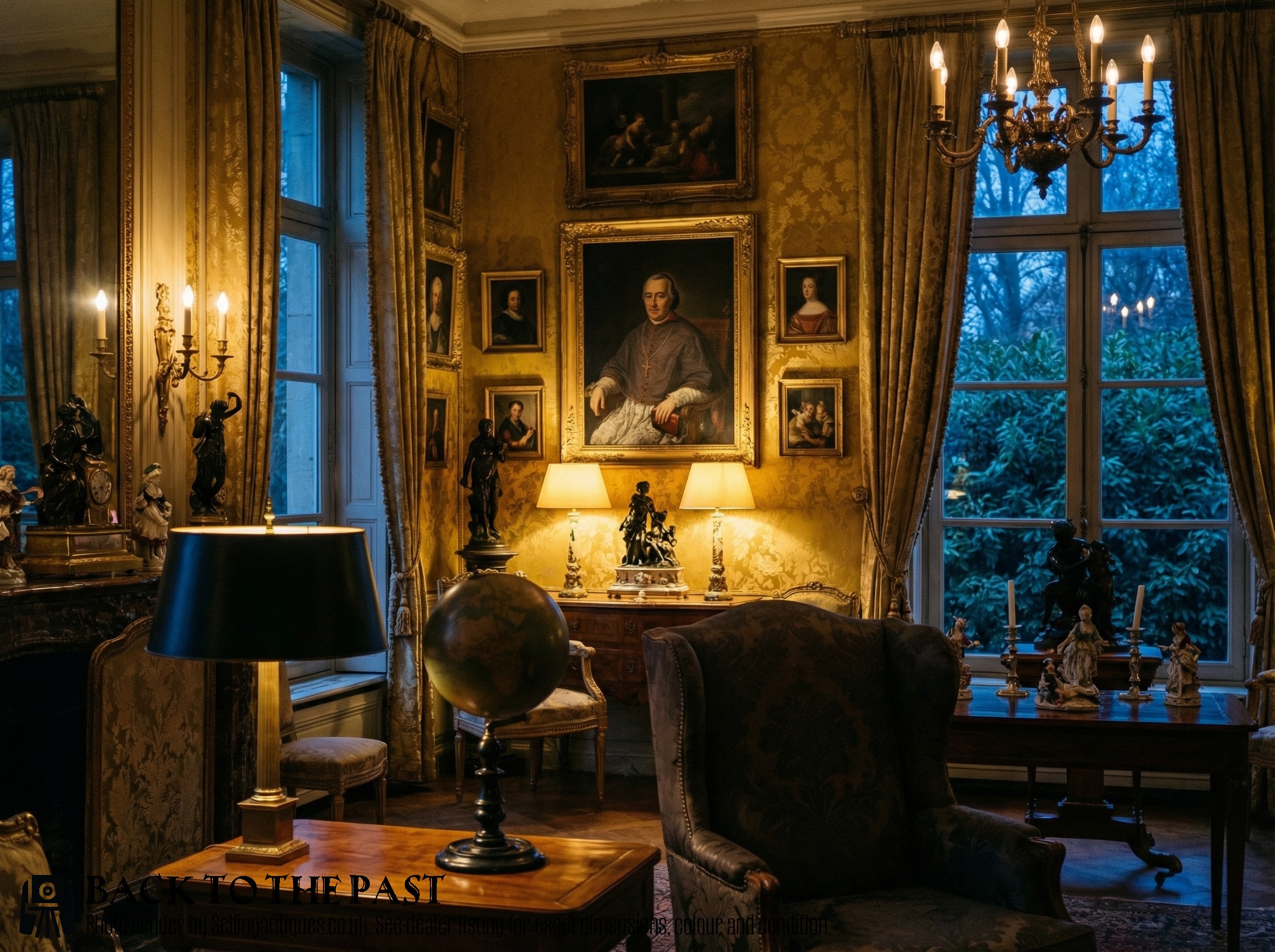
Antique Terrestrial Globe
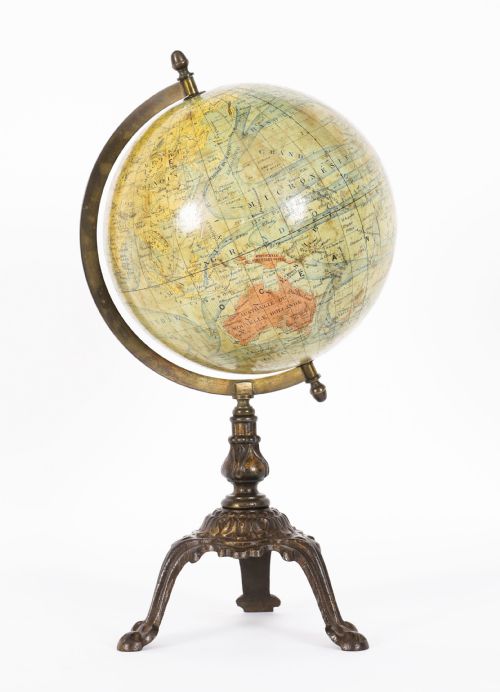
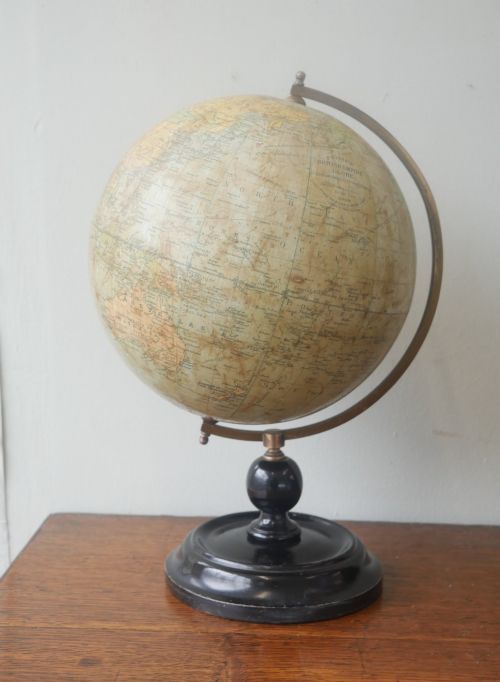
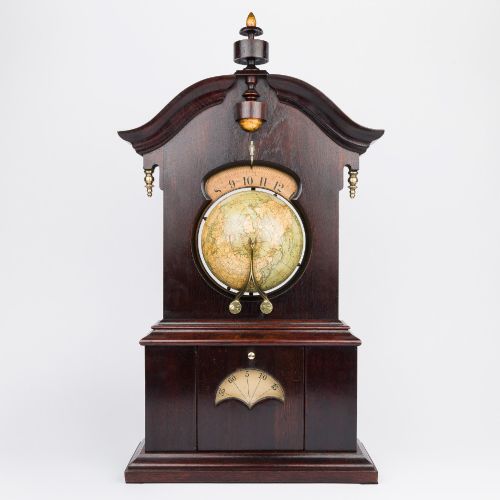
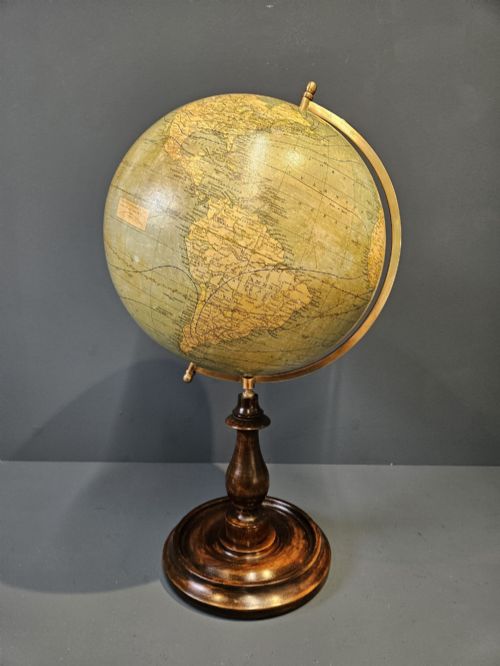
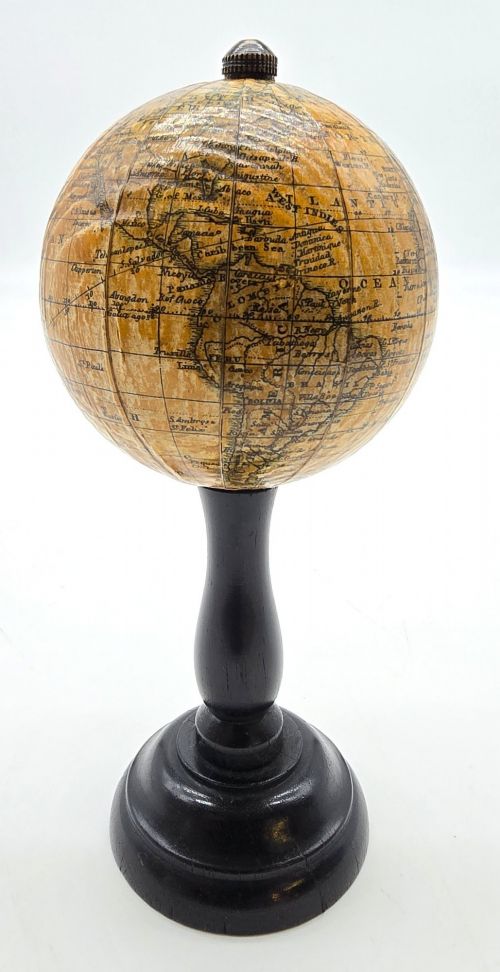
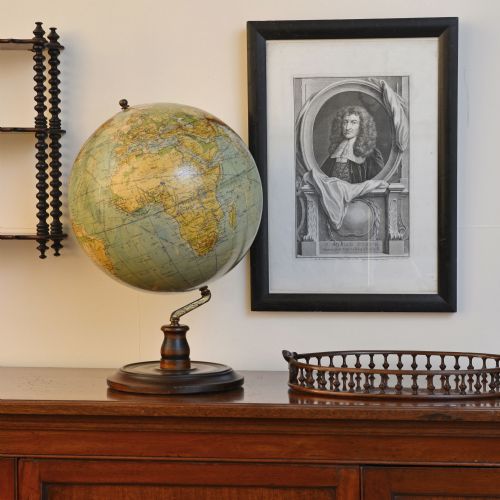
When searching for an antique terrestrial globe, you encounter pieces spanning the Victorian, Edwardian, and interwar periods, rendered in formats from small desk models to large floor-standing library examples. The selections range from miniature four-inch classroom items to grand eighteen-inch library spheres resting on mahogany or ebonised wood stands.
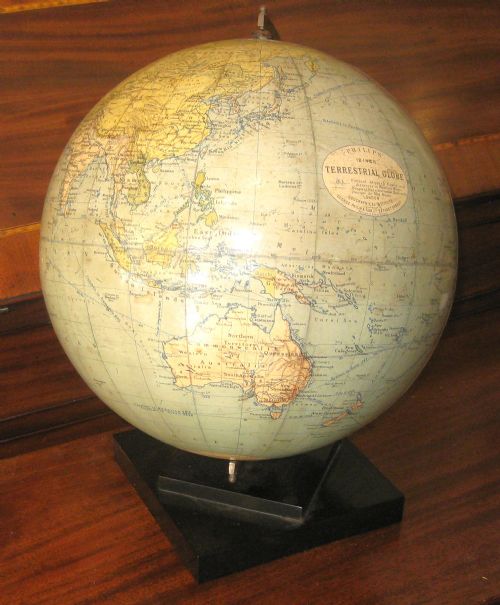
Table globes and desktop globes dominate the current offerings, often supported by cast iron, brass, or wooden feet. Makers such as Phillips, Geographia, and Malby produced these pieces in sizes scaling from compact six-inch globes to substantial twelve-inch library editions.
Materials and construction
The construction of these spheres relies upon plaster shells covered with printed paper gores, which are hand-applied in segments to map the surface of the earth accurately. Beneath these delicate layers, manufacturers often utilised papier-mâché or solid plaster cores to give the globe its weight and structural form.
The stands and mountings incorporate turned wood such as mahogany and walnut, alongside brass meridian rings, cast iron bases, and ebonised wood feet. These varied materials provide the structural pivot that allows the sphere to rotate at the correct axial tilt.
Antique Terrestrial Globe Retail Price Guide 2026
Typical asking prices for terrestrial globe among the pieces listed under this phrase on Sellingantiques today, from the lower quarter to the upper quarter. They describe what is for sale here now, not the wider market.
Listings feature pocket-sized four-inch German models alongside eighteen-inch Victorian library globes resting on mahogany stands.
What separates the grades
The standard of an antique terrestrial globe rests upon the crispness of the cartographic engraving and the accuracy of the historical boundaries printed on the paper gores. Clear typography and detailed geopolitical labelling distinguish a workshop production intended for educational study from a simple decorative item.
The structural integrity of the plaster sphere and the original finish of the wooden or brass stand dictate the overall retention of the piece. Intact paper gores free from heavy discoloration or significant surface loss command greater interest among collectors.
G and J Cary·George Philips and Son·Malby·Geographia·J Forest
The Antique Terrestrial Globe Glossary
- Gores
- Printed paper segments shaped like tapering lutes that are pasted onto the plaster sphere to form the map of the world. Each gore is meticulously aligned by hand during manufacture to ensure the geographic lines meet at the poles.
- Meridian ring
- The graduated brass or metal semi-circle enclosing the globe that holds it at the correct axial tilt. It is typically marked in degrees to measure latitude.
- Horizons
- The wooden ring encircling the globe that displays calendar months, zodiac signs, and compass points. It frames the sphere and relates the position of the earth to seasonal cycles.
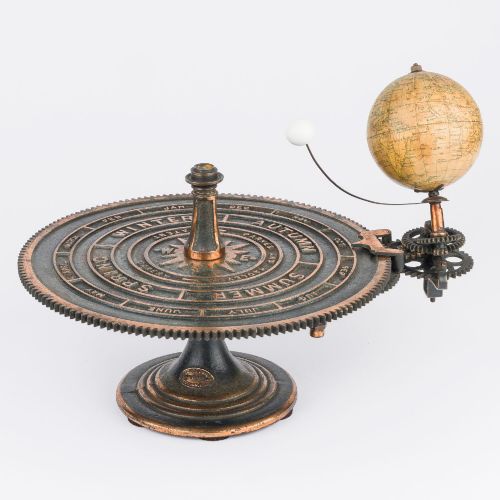
- Orrery
- A mechanical model of the solar system demonstrating the relative positions and motions of the planets. This apparatus often accompanies astrological and geographical instruments of the nineteenth century.
Antique Terrestrial Globe: Frequently Asked Questions
How do I read date clues on a globe?
Cartographers often printed geopolitical changes directly onto the paper gores, marking shifts in colonial territories and newly founded cities. Examining the listed names of capitals and African or European borders provides a reliable decade for the manufacturing period.
Makers frequently updated their copperplates rather than engraving entirely new ones for every production run. Cross-referencing the company name on the cartouche with known operational dates narrows down the year of release.
What is the difference between a desk globe and a library globe?
Desk and table globes typically measure between four and twelve inches in diameter, designed for close study or domestic display. They feature simpler wooden or metal stands suited to furniture surfaces.
Library globes are larger installations, often twelve to eighteen inches across, mounted on heavy floor-standing frames with dedicated horizon rings. These were built for institutional or grand residential libraries to facilitate detailed geographical navigation.
How should I care for a paper globe?
Keep paper globes away from direct sunlight and damp environments to prevent the printed gores from fading, yellowing, or lifting off the plaster core. Stable indoor humidity protects the delicate paper and prevents the plaster beneath from cracking.
Dust the surface very gently with a dry, soft cloth, avoiding any liquid cleaners or polishes. The varnish applied to historic globes reacts poorly to moisture and chemical agents.
Are celestial globes different from terrestrial ones?
Terrestrial globes map the surface of the earth, including oceans, countries, trade routes, and exploratory paths. They reflect the geographical knowledge of the specific decade in which they were printed.
Celestial globes map the night sky, illustrating constellations, stars, and astronomical coordinates from a geocentric perspective. They were frequently issued as companion pieces to terrestrial globes by makers like Malby and Cary.