







Antique Taxidermy Bird
An antique taxidermy bird brings the natural history of the Victorian and Edwardian eras directly into a room.
Antique Taxidermy Bird
When you search for an antique taxidermy bird, you encounter preserved specimens mounted singly or arranged in complex natural history compositions. The examples on this page span the Victorian and Edwardian periods, stretching from the mid-nineteenth century into the early twentieth century.
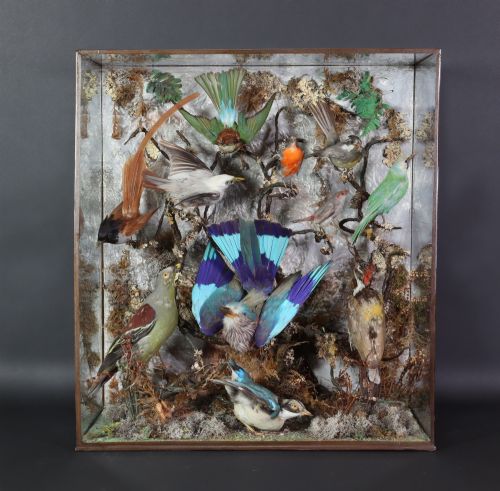
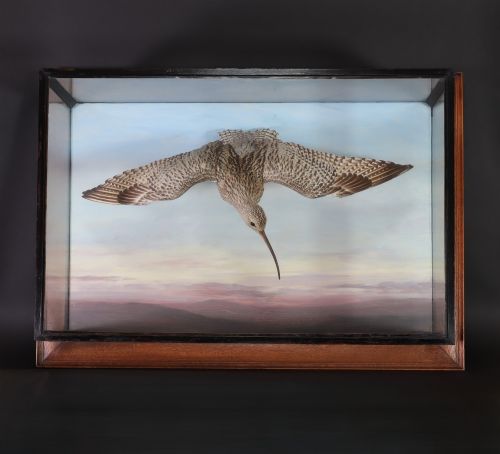
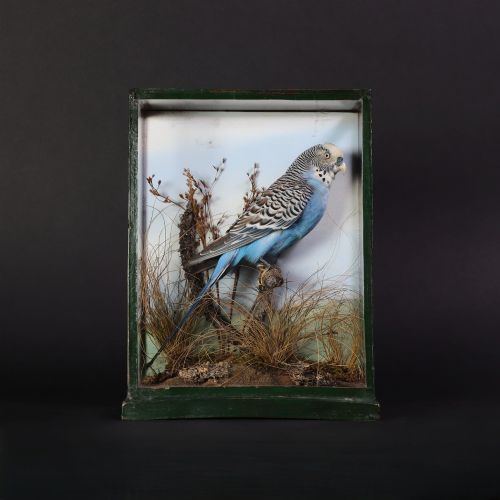
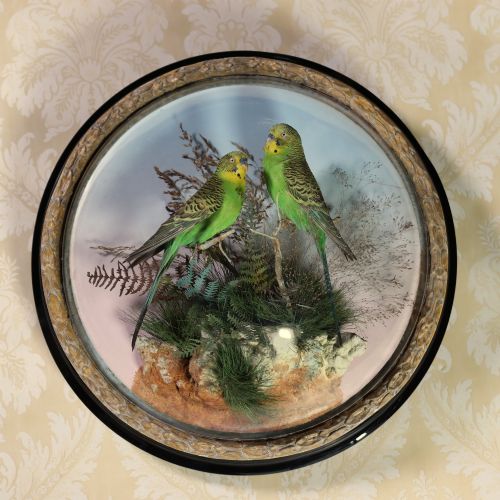
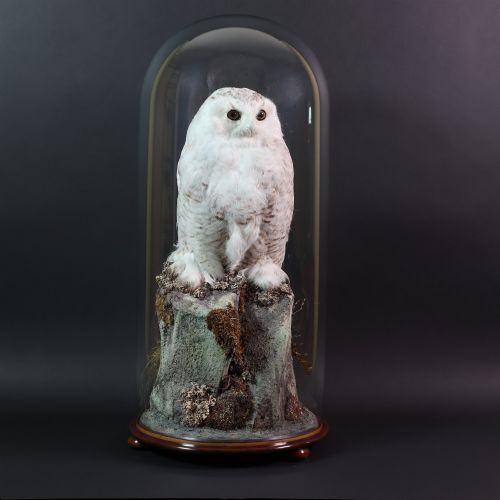
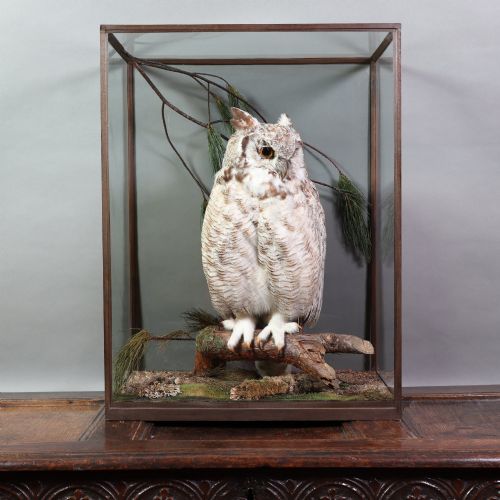
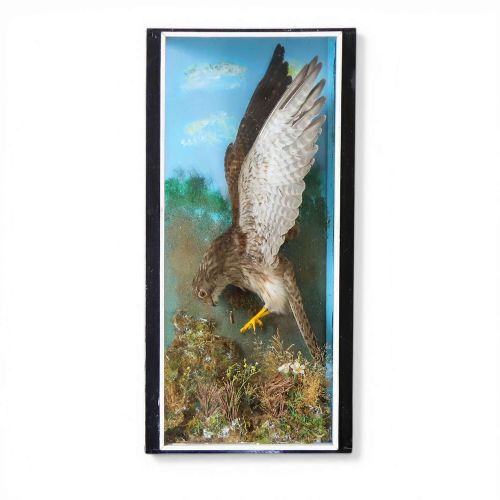
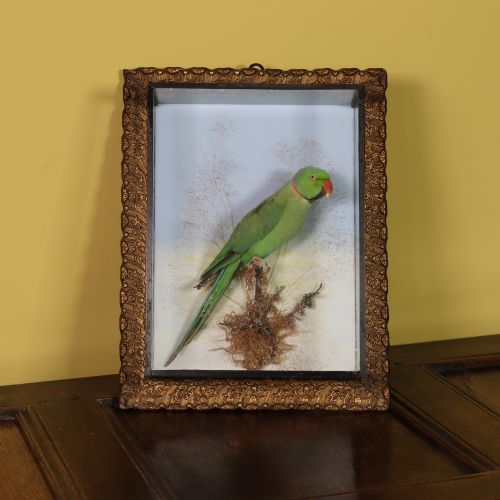
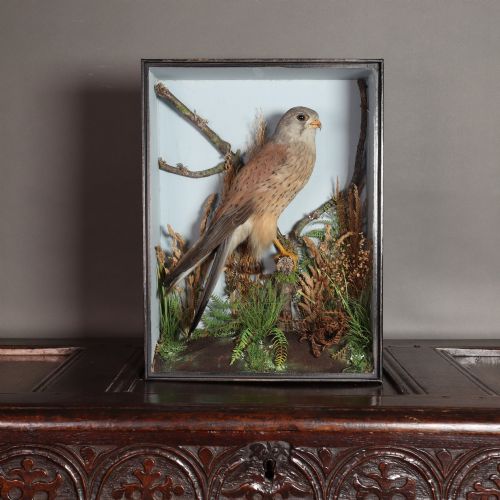
Most pieces take the form of glazed display cases, flat-sided glass domes, or painted wooden dioramas. Single specimens like owls, kestrels, and kingfishers appear frequently, alongside multi-bird groupings of exotic species from South America, Australia, and New Guinea.
Makers and taxidermists mounted these specimens using dried moss, paper, and painted backdrops to simulate natural habitats. The resulting pieces reflect nineteenth-century ornithological study and domestic interior decoration.
Materials and Technique
Taxidermists constructed these displays using preserved bird specimens mounted inside timber or ebonised wood frames with glass panels. Cases frequently incorporate painted backgrounds, paper foliage, and real moss to recreate woodland or winter snow scenes.
Domed specimens utilise blown glass covers sitting upon wooden bases, protecting delicate feathers from dust and handling. Internal wire armatures support the posture of the birds, while paper linings seal the back of wooden display boxes.
Antique Taxidermy Bird Retail Price Guide 2026
Typical asking prices for taxidermy bird among the pieces listed under this phrase on Sellingantiques today, from the lower quarter to the upper quarter. They describe what is for sale here now, not the wider market.
Materials recorded in current items include feathers, ebonised wood, glass, paper, moss, and preserved specimens.
Assessing the Workmanship
Quality rests upon the naturalism of the taxidermist's posture and the preservation of the plumage. Skilled practitioners maintained the lifelike anatomy and vivid colours of the bird without distortion.
The sophistication of the internal setting separates standard specimens from notable works. Elaborate dioramas with hand-painted backdrops and balanced multi-bird compositions demonstrate superior workshop execution.
J Griffiths of Burford·Rowland Ward Ltd·T E Gunn·William Bazeley and Sons·John Hancock·Henry Ward London·A Pollard·James Gardner·W F Homer London
The Antique Taxidermy Bird Glossary
- Taxidermy specimen
- A preserved animal skin mounted over a supportive form to recreate its living appearance. These specimens form the central focus of natural history displays.
- Taxidermy case
- A wooden box enclosed with glass on one or more sides to protect mounted birds. These enclosures often feature painted internal backdrops.
- Taxidermy dome
- A blown glass cover mounted on a wooden base to display preserved birds under glass. They provide a clear view from all horizontal angles.
- Ebonised wood
- Timber stained or treated to imitate dense, black ebony. This finish appears frequently on nineteenth-century display frames.
- Fasciculus
- A structured grouping or bundle of specimens assembled for study or display. These arrangements highlight multiple avian species within a single presentation.
Antique Taxidermy Bird: Frequently Asked Questions
Where were these bird cases displayed?
Victorian and Edwardian households placed taxidermy displays in studies, libraries, and drawing rooms as conversation pieces. They reflected the period's fascination with natural history, exploration, and the collection of exotic species.
Many pieces were also produced for local museums, schools, and private naturalists before entering the antique market as decorative objects.
How do I date a taxidermy display?
Examine the construction of the wooden case, the style of the hinges, and the type of paper used to seal the back joints. Labels pasted inside the case by known nineteenth-century taxidermists provide precise chronological markers.
The species depicted and the aesthetic of the painted background also offer clues regarding whether a piece originates from the Victorian period or the early twentieth century.
What is the difference between a case and a dome?
A taxidermy case is typically a square or rectangular wooden box with a glazed front or top panel. Cases often include painted landscapes and botanical elements fixed to the interior.
A dome consists of a removable curved glass cover placed over a flat wooden base. Domes allow unobstructed all-round viewing of specimens mounted on central branches or rockwork.