



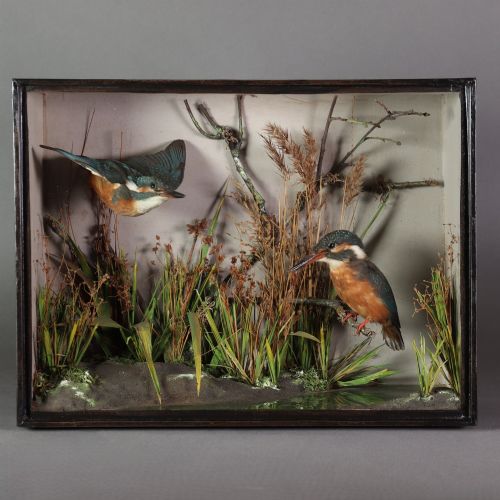


Brown Taxidermy Bird Mount
These brown taxidermy bird mount pieces capture nineteenth-century natural history through preserved specimens set in glass cases with wood and moss.
Brown Taxidermy Bird Mount
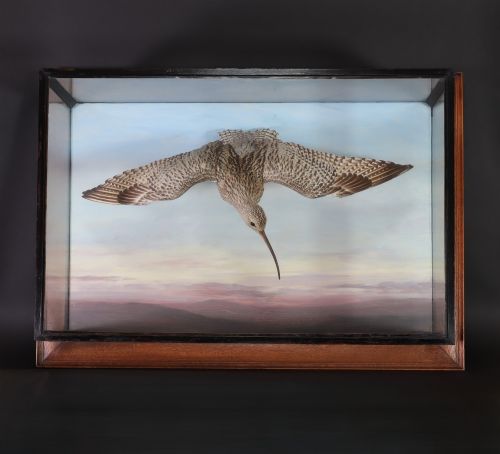
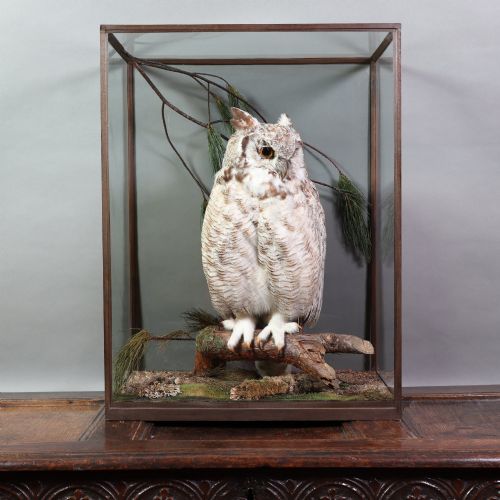
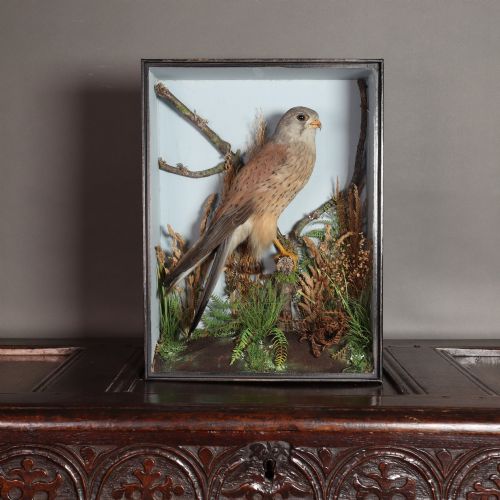
A brown taxidermy bird mount represents Victorian and early twentieth-century natural history interest, capturing native birds in preserved displays. These specimens range from single birds like a kestrel or owl to pairs and trios arranged within glazed wooden cabinets.
Most examples found here hail from the Victorian era and the early twentieth century, spanning dates from eighteen seventy to nineteen thirty. The selection favours British specimens including curlews, peregrine falcons, bantams, kingfishers, jays, little owls, herons, and pheasants.
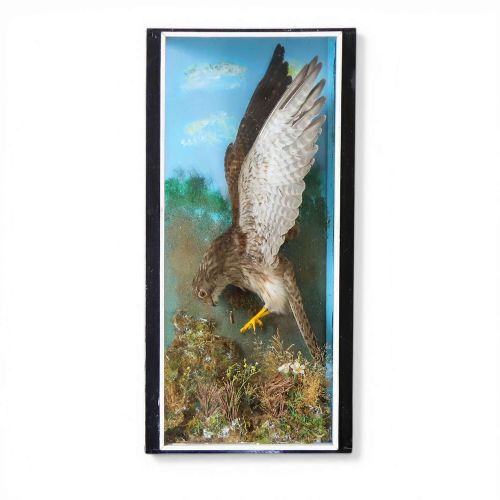
The objects serve as curiosity cabinet decor and interior focal points, combining ornithological study with Victorian aesthetic display. Buyers encounter everything from wall-mounted flying birds to intricate dioramas complete with dried vegetation and painted paper backgrounds.
Materials and construction methods
Makers constructed these displays using wood for the outer cabinets and glass to protect the fragile contents from dust and damage. Preserved bird specimens form the central focus, often supported by internal wiring and positioning frames.
Makers added realistic habitat details inside the enclosures using dried vegetation, moss, and painted paper to mimic natural environments. Workshops sealed the glazed front cases to preserve the feathers and organic materials over generations.
Brown Taxidermy Bird Mount Retail Price Guide 2026
Typical asking prices for brown taxidermy bird mount among the pieces listed under this phrase on Sellingantiques today, from the lower quarter to the upper quarter. They describe what is for sale here now, not the wider market.
Listings feature periods spanning from eighteen seventy through the Victorian era up to nineteen thirty.
Distinguishing quality in bird mounts
The skill of the taxidermist dictates the lifelike posture and anatomical accuracy of the preserved bird specimen. Master practitioners captured natural feather patterns and energetic poses, whereas lesser work appears stiff or disproportionate.
The complexity and condition of the internal diorama environment influence the overall desirability of the piece. Intricate arrangements featuring painted paper backgrounds and well-preserved dried vegetation elevate the craftsmanship beyond simple single-bird mounts.
Kirk of Glasgow·Cullingford of Durham·J Griffiths of Burford·Rowland Ward Ltd·T. E. Gunn
The Brown Taxidermy Bird Mount Glossary
- Diorama
- A three-dimensional scene featuring preserved specimens set against a painted background with natural flora. These displays recreate outdoor habitats inside a protective glass case.
- Curiosity cabinet
- A specialised piece of furniture or collection space used to display natural history specimens and oddities. Victorian collectors used these cabinets to showcase their botanical and zoological finds.
- Specimen
- An individual animal or plant collected for scientific study or display. These preserved birds serve as historical records of British ornithology.
Brown Taxidermy Bird Mount: Frequently Asked Questions
How do I care for a bird mount?
Keep glass-fronted taxidermy cases away from direct sunlight and damp environments to protect the feathers and internal wooden structures. Gentle dusting of the exterior glass maintains clarity.
Avoid opening sealed display cases, as internal humidity changes can harm the preserved specimens and dried vegetation inside.
Where were these bird mounts made?
Most pieces originate from British workshops and taxidermists operating during the nineteenth and early twentieth centuries. Regional makers worked across locations from Scotland down to the Cotswolds and Norwich.
Town and city taxidermists supplied local collectors, naturalists, and home decorators with native British bird species.
How are birds displayed in these mounts?
Birds appear either as single specimens, in pairs, or grouped as trios within glazed wooden frames and cases. Some mounts capture birds in flight, such as curlews, while others show perched owls or ground-dwelling pheasants.
Internal settings often incorporate moss, twigs, and painted paper backgrounds to simulate natural woodland or riverbank habitats.