


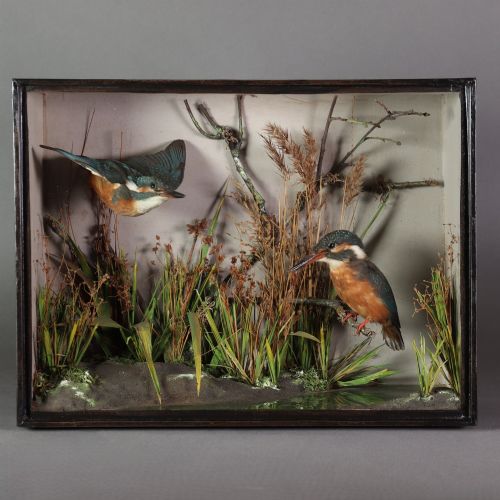


Wooden Cased Taxidermy Bird
These wooden cased taxidermy bird specimens bring the natural world indoors, offering a preserved glimpse of avian life housed in timber and glass.
Wooden Cased Taxidermy Bird
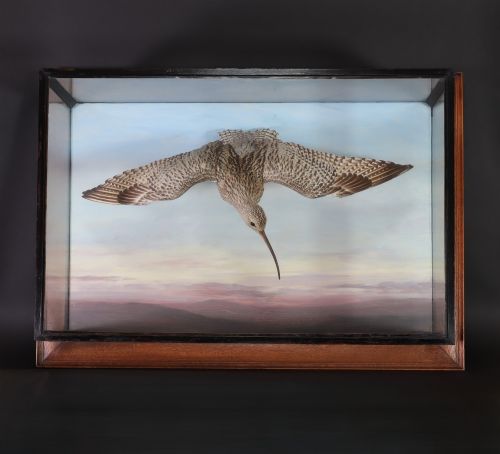
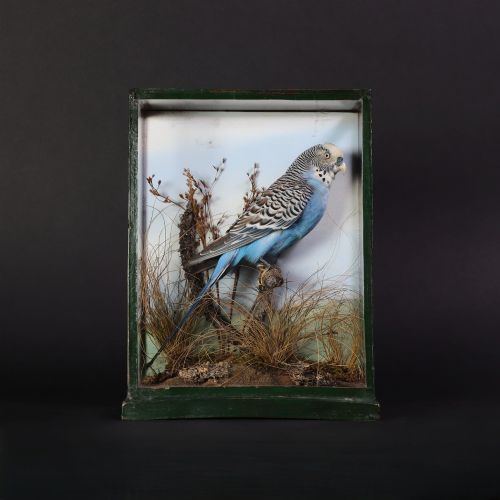
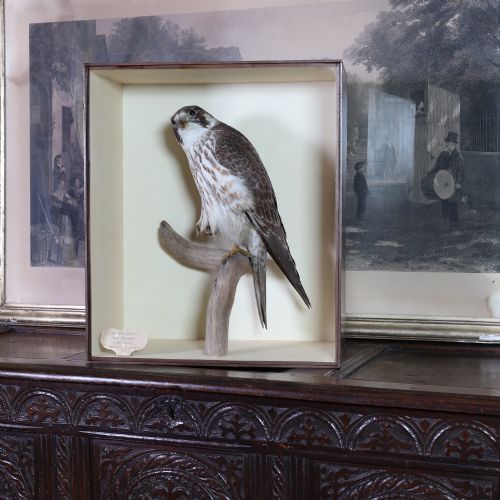
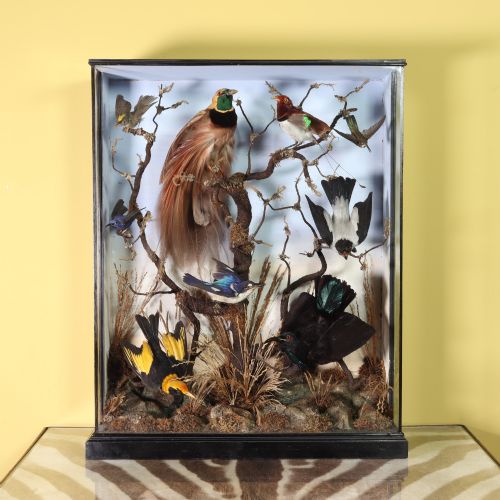
When you search for wooden cased taxidermy bird, you are looking at preserved specimens mounted within timber display enclosures, frequently encountered from the Victorian and Edwardian periods. These pieces range from solitary subjects like a curlew in flight or a jackdaw to elaborate groups including a trio of bantams or mixed exotic birds from New Guinea, South America and Australia.
The objects combine taxidermy with custom cabinetry, creating self-contained habitats designed for domestic display. You will frequently encounter specimens such as kingfishers, peregrine falcons, budgerigars, shoveler ducks and pheasants preserved behind glass panels.
Materials and construction
The construction relies on timber enclosures fitted with glass viewing panes to protect the delicate preserved specimen and feathers within. Makers constructed these wooden cases to house internal habitats incorporating painted paper backgrounds and natural elements such as moss.
Taxidermists mounted the preserved specimens over these prepared backdrops to simulate natural behaviour and posture, such as a bird in flight or perched on simulated ground.
Wooden Cased Taxidermy Bird Retail Price Guide 2026
Typical asking prices for wooden cased taxidermy bird among the pieces listed under this phrase on Sellingantiques today, from the lower quarter to the upper quarter. They describe what is for sale here now, not the wider market.
Some nineteenth-century makers populated their wooden boxes with exotic birds hailing from as far away as South America and Australia.
Judging quality and provenance
Quality in these displays rests upon the taxidermist's skill in mounting the bird to appear lifelike and the condition of the plumage. Pieces bearing the attribution of established practitioners show superior anatomical accuracy and more intricate environmental staging.
The cabinetwork itself separates standard examples from finer works, with well-constructed timber frames and clean glass offering better visibility and preservation of the interior scene.
Kirk of Glasgow·Raine of Carlisle·Cullingford of Durham·J Griffiths of Burford·T. E. Gunn·W.F. Homer London
The Wooden Cased Taxidermy Bird Glossary
- Taxidermy case
- An enclosed wooden box with glass panels designed to display and protect a preserved animal specimen. These enclosures kept dust and moisture away from delicate feathers.
- Preserved specimen
- The prepared remains of an animal mounted over an artificial armature. In these pieces, the skin and feathers are preserved rather than the skeletal structure.
- Painted paper
- A decorative backdrop placed inside the wooden case behind the mounted bird. This technique added depth and simulated the natural habitat of the species.
- Timber
- The wood used to construct the exterior display housing. Different woods provided varying structural support and finish quality for the cabinet.
Wooden Cased Taxidermy Bird: Frequently Asked Questions
How should I clean the glass?
Use a soft cloth and a gentle glass cleaner applied to the cloth rather than sprayed directly onto the wood or frame. This prevents moisture from seeping into the timber joints or reaching the interior.
Keep the cleaning solution away from the internal paper backgrounds and preserved feathers to avoid accidental water damage.
Where should I place the case?
Position the enclosure away from direct sunlight and strong heat sources to protect the feathers and painted paper from fading. Stable indoor temperatures prevent the timber from warping over time.
Choose a wall or surface free from excessive humidity, which can degrade the natural materials inside the display.
Can I open the wooden case?
Most historical display enclosures are sealed to protect the delicate contents from dust and insect damage. Opening the case can disturb the internal arrangement and expose the fragile specimen.
Leave the original seals intact to maintain the integrity of the historical mounting and its habitat elements.
How do I identify the period?
Examine the style of the timber framing and the materials used for the interior painted paper and backing. Victorian and Edwardian examples often feature specific cabinet-making techniques and construction methods characteristic of the late nineteenth and early twentieth centuries.
Maker labels pasted inside or on the back of the timber enclosure provide definitive dates and workshop attributions.