




Antique Tapestry Cushion
These antique tapestry cushion pieces bring centuries of woven artistry into modern interiors, offering authentic historical textiles adapted for practical comfort.
Antique Tapestry Cushion
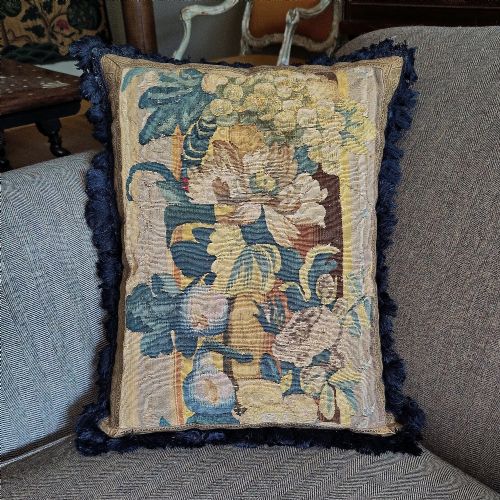
An antique tapestry cushion brings historic woven fragments and panels into functional domestic use, often formed from older textile remnants sewn into supportive covers. When you search for an antique tapestry cushion, you encounter pieces repurposed from larger 17th century Flemish borders, French Aubusson weaves, and later Victorian needlework.
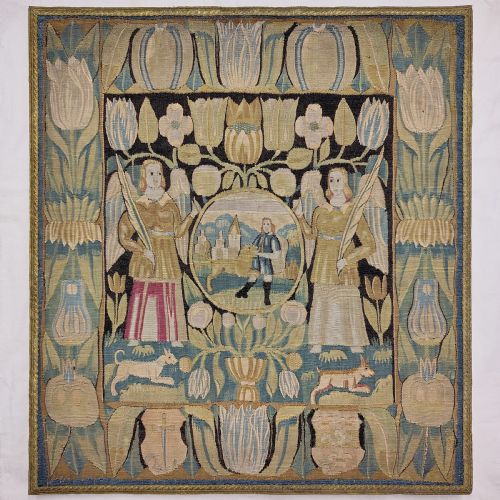
The selection ranges from early seventeenth century North German and Flemish fragments to nineteenth century French Aubusson examples and tribal flatweaves. These textiles transform historical wall hangings and decorative panels into comfortable soft furnishings for everyday seating and display.
Materials and construction methods
The primary textiles rely on natural fibres such as wool, silk, cotton, and linen, spun by hand and dyed using natural colourants to achieve deep, lasting shades. Weavers constructed the foundational imagery using meticulous hand needlework or loom techniques, often combining wool yarns with fine silk highlights to build complex pictorial details.
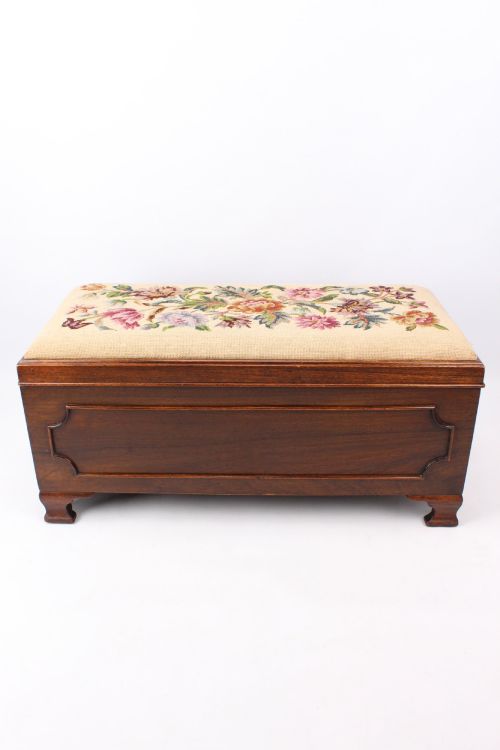
Support structures and frames utilise traditional hardwoods including mahogany and oak, while backing materials often consist of sturdy woven cotton or linen to protect the fragile antique textile face. Master makers integrated these panels into cushions, ottomans, and chairs using robust stitching and period upholstery methods.
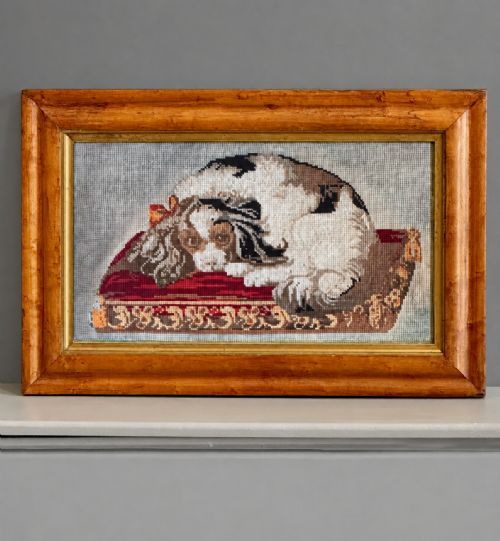
A loyal King Charles spaniel immortalised in 19th century Berlin work gazes out from a burr maple frame.
Evaluating quality and authenticity
Quality rests primarily on the integrity of the textile weave, the density of the yarn, and the stability of the natural dyes used in the original production. Pieces retaining crisp pictorial clarity and secure structural stitching distinguish themselves from examples with extensive modern repairs or faded colouration.
The age and provenance of the woven fragment dictate desirability, with seventeenth century Flemish and North German works representing the upper tier of historic textile artistry. The sophistication of the design, whether a French Chateau Aubusson scene or a detailed needlework portrait, defines the artistic standard.
Liberty & Co
The Antique Tapestry Cushion Glossary
- Aubusson
- A style of tapestry woven in the French town of Aubusson, typically featuring pastoral or floral scenes suited for decorative cushions.
- Flemish tapestry
- Woven textile art produced in Flanders during the seventeenth century or earlier, known for intricate historical and botanical border designs.
- Soumak
- A flatweave textile technique involving coloured yarns wrapped around warp threads, producing a textured surface seen on tribal bag faces.
- Needlework
- Hand-stitched embroidery using yarn on a canvas ground, commonly employed in nineteenth century Berlin work and decorative cushions.
- Flatweave
- A textile produced without knotted piles, resulting in a smooth, durable surface utilised in traditional tribal trappings and cushion covers.
Antique Tapestry Cushion: Frequently Asked Questions
How should I care for an antique tapestry cushion?
Keep these historic textiles away from direct sunlight to prevent natural dyes from fading over time. Handle them gently and avoid heavy moisture or professional chemical cleaning.
Spot clean only with extreme care using dry methods where possible. Professional textile conservators can advise on long-term preservation for particularly fragile seventeenth century pieces.
Are these cushions made from original period fragments?
Many examples utilise genuine historical textile remnants, such as seventeenth century Flemish tapestry borders or nineteenth century Aubusson panels, sewn into modern cushion forms. Makers historically repurposed these precious fragments to preserve woven art.
Examine the weave density and material ageing to understand the timeline of the textile. Expert descriptions clarify whether the entire piece or specific face panels date to the stated century.
What is the difference between Aubusson and Flemish cushions?
Aubusson cushions originate from France and typically feature refined pastoral, floral, or verdure scenes characteristic of the eighteenth and nineteenth centuries. Flemish pieces date earlier, often to the seventeenth century, displaying denser architectural or figural border fragments.
Both styles utilise wool and silk yarns, but the regional aesthetic varies distinctly. Flemish work leans towards sombre, detailed historic narratives, while Aubusson offers lighter decorative charm.
Can I use these cushions on daily seating furniture?
Historic cushions serve well on display armchairs, ottomans, or decorative benches where they experience minimal friction. Ensure the underlying fabric and support stitching remain robust if placed on active seating.
Rotate the cushions periodically to distribute wear evenly across the textile face. Lighter usage preserves the delicate silk and wool yarns for years to come.