
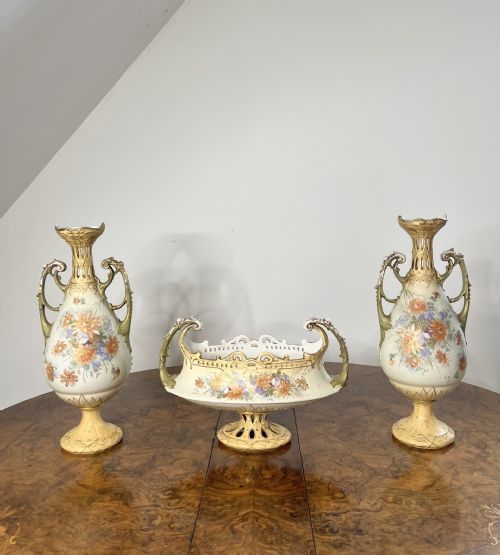
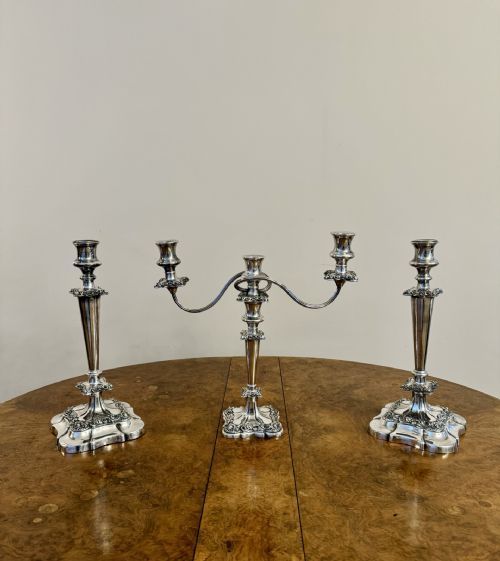


Antique Table Garniture Set
An antique table garniture set brings symmetry and formal presence to a mantelpiece or sideboard through a matched arrangement of clocks, candelabra, or vases.
Antique Table Garniture Set
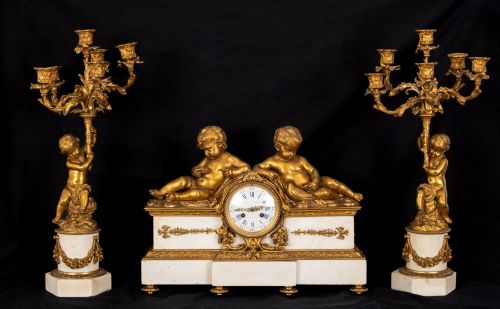
An antique table garniture set comprises a central timepiece accompanied by matching side pieces such as candelabra, urns, or vases designed to be displayed together on a mantelpiece or sideboard. These decorative groups emerge predominantly from the nineteenth and early twentieth centuries, reflecting elaborate interior display fashions across Europe.
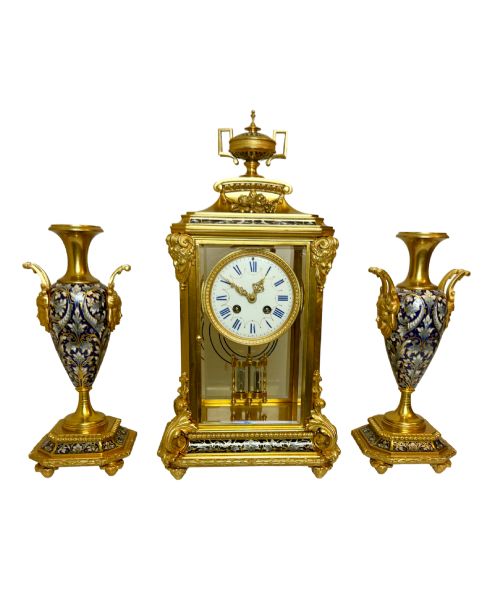
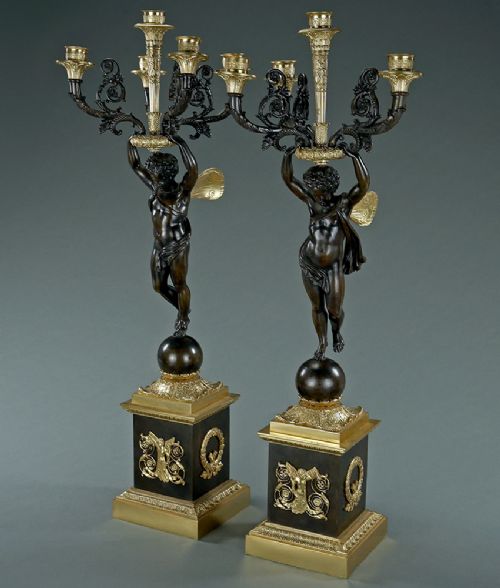
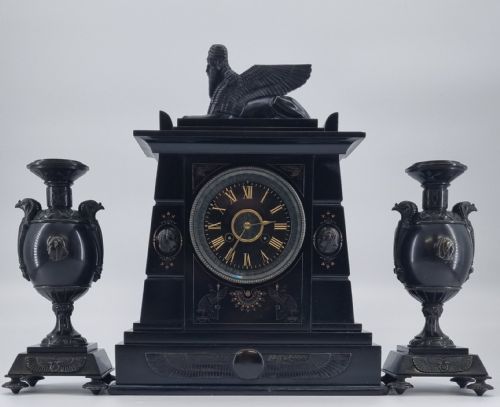
The most common configurations found here are French clock garnitures, pairing a central mantel clock in marble, ormolu, or slate with twin candelabra or side urns. Pieces span Victorian, Louis XVI Revival, Empire, and Art Deco styles, often incorporating ornamental figures, cherubs, or classical motifs.
Materials and construction
Makers combined cast metals like ormolu, gilt bronze, brass, and patinated bronze with heavy mineral bases including white marble, black slate, green onyx, and grey breccia marble. Enamel dials and champlevé enamel detailing frequently provide colour and textural contrast against polished metal surfaces.
Structural elements rely on precision casting, hand chasing, and mechanical movement assembly for the central clocks, alongside skilled stone cutting for the matching plinths and vases.
Object forms span mantel clocks, candelabra, centrepieces, and side vases paired into coordinated garniture suites.
What separates the grades
Quality rests in the crispness of the metal chasing, the weight and uniformity of the marble or slate bases, and the integration of the matching side pieces with the central clock. Superior examples display deeply chiselled ornamentation, signed movement mechanisms, and perfectly matched mineral components across all three or five elements of the group.
Lesser versions utilise simpler stamped brass elements, lighter composite materials, or display inconsistencies in the patination and wear between the central clock and its side garnitures.
A.D Mougin·Deniere Paris·Royal Vienna·Meissen
The Antique Table Garniture Set Glossary
- Garniture set
- A coordinated group of decorative objects, typically a central clock flanked by two candelabra, vases, or urns. These matching suites were created to decorate mantelpieces and large tables in formal nineteenth-century interiors.
- Ormolu
- Finely ground high-carat gold applied to a bronze base using a mercury amalgam technique. This decorative coating gives nineteenth-century French metalwork its characteristic warm, golden lustre.
- Champlevé
- An enamelling technique where troughs are dug into a metal surface and filled with vitreous enamel powder before firing. The resulting coloured patterns sit flush with the surrounding metal borders.
- Breccia marble
- A composite stone made of broken rock fragments embedded in a fine-grained matrix. Its complex, mottled patterns made it a favoured material for high-end nineteenth-century clock bases and garniture side pieces.
Antique Table Garniture Set: Frequently Asked Questions
How do I style a garniture set?
Place the central clock in the exact middle of a mantelpiece, sideboard, or large console table to anchor the display. Flank it symmetrically with the matching candelabra or vases to complete the traditional balanced arrangement.
Ensure the surface can support the combined weight of the stone bases and metal components. Keep direct sunlight away from marble and enamel surfaces to preserve the original finishes.
What periods do these sets cover?
The available sets span the nineteenth and early twentieth centuries, capturing Victorian, Empire, Louis XVI Revival, and Art Deco aesthetics. Most originate from French workshops active between eighteen-fifty and nineteen-twenty.
Earlier nineteenth-century pieces often feature classical bronze and marble, while later examples transition towards slate, onyx, and stylized Art Deco geometries.
How do I care for marble and ormolu?
Dust the metal and stone surfaces regularly with a soft, dry cloth to prevent grime accumulation. Avoid chemical cleaners and polishes, which can strip the original fire-gilt or damage vulnerable enamel dials.
Handle the side garnitures by their solid stone or metal bases rather than protruding decorative elements like handles or arms. Professional clock servicing is recommended for nineteenth-century striking movements.
Are all garniture pieces made of metal?
Most sets combine metal components with heavy mineral bodies, including white marble, black slate, green onyx, and glass. The central timepieces and candelabra frequently unite cast bronze or brass with carved stone plinths.
Specialist variations incorporate carved wood, such as Black Forest animal motifs, alongside traditional ceramic elements from factories like Meissen and Royal Vienna.