


Antique Table Cruet Set
An antique table cruet set organises condiments on the dining table, and you are looking at silver, glass and plated frames designed to hold bottles and pots together.

Antique Table Cruet Set
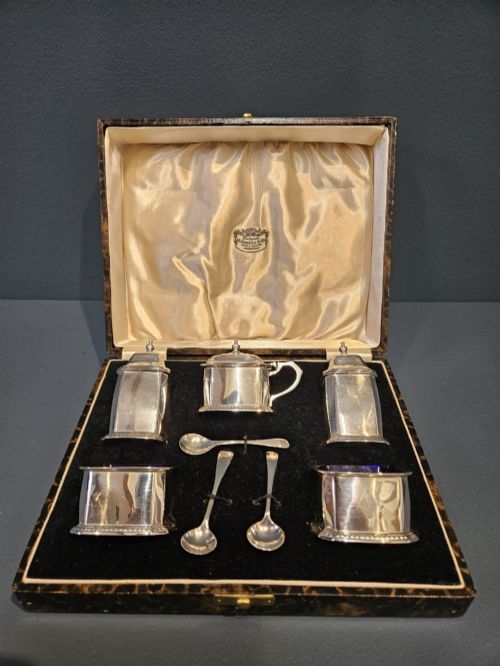
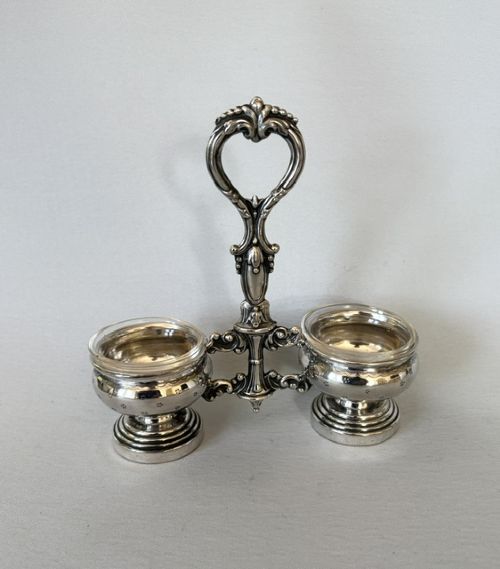
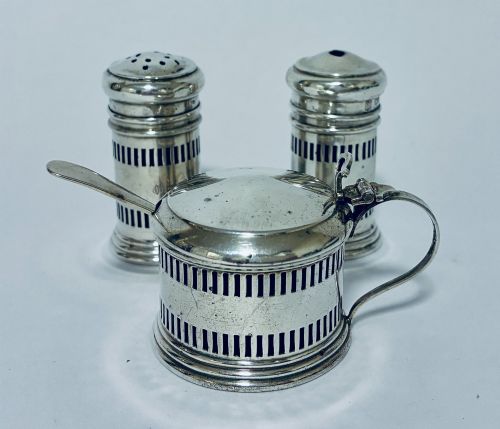
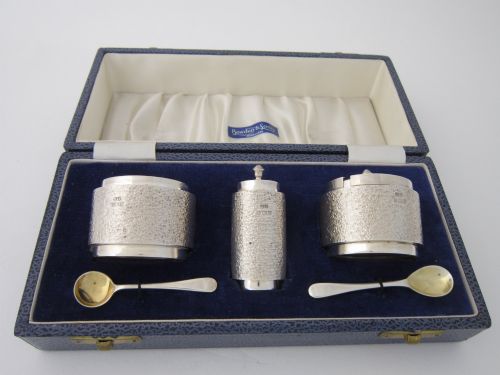
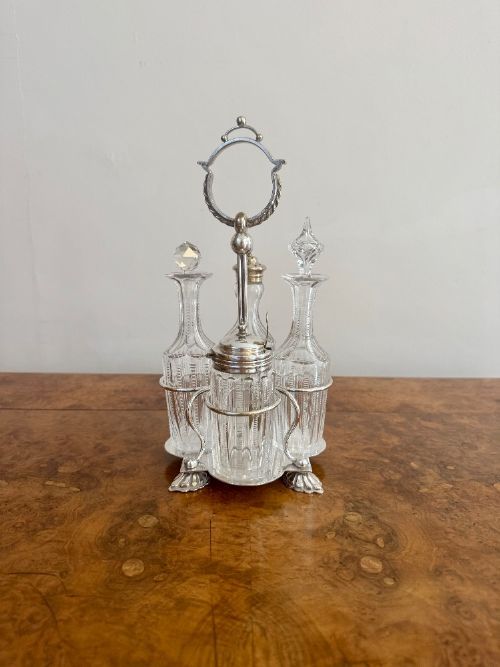
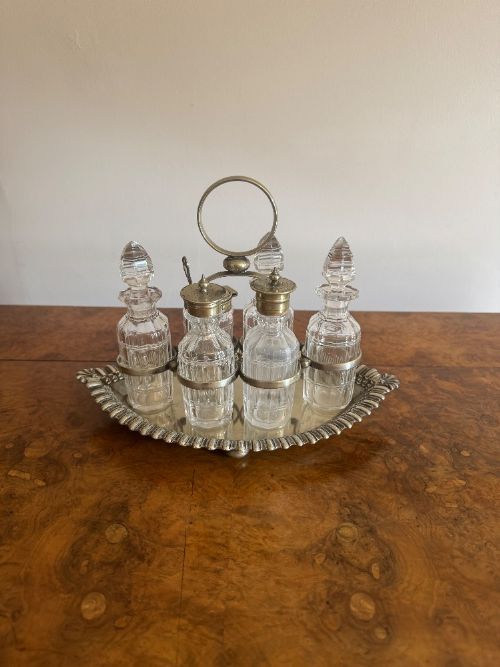
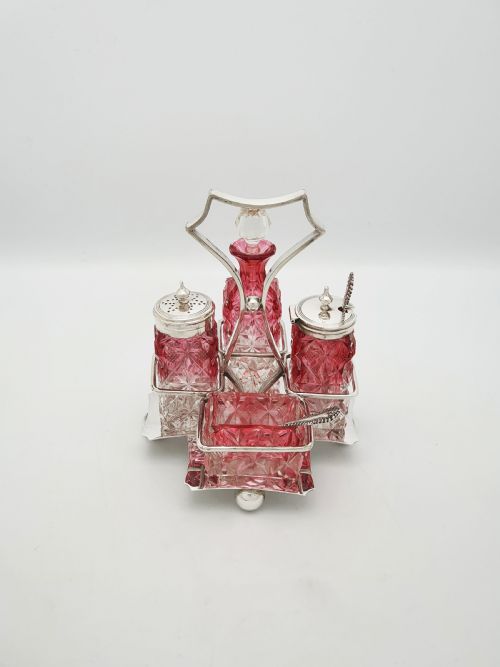
An antique table cruet set brings together bottles, castors and pots for mustard, pepper, vinegar and oil within a single stand, keeping the dining table orderly. The pieces you meet here range from modest three-piece condiment groups to large frames holding six or seven glass bottles.
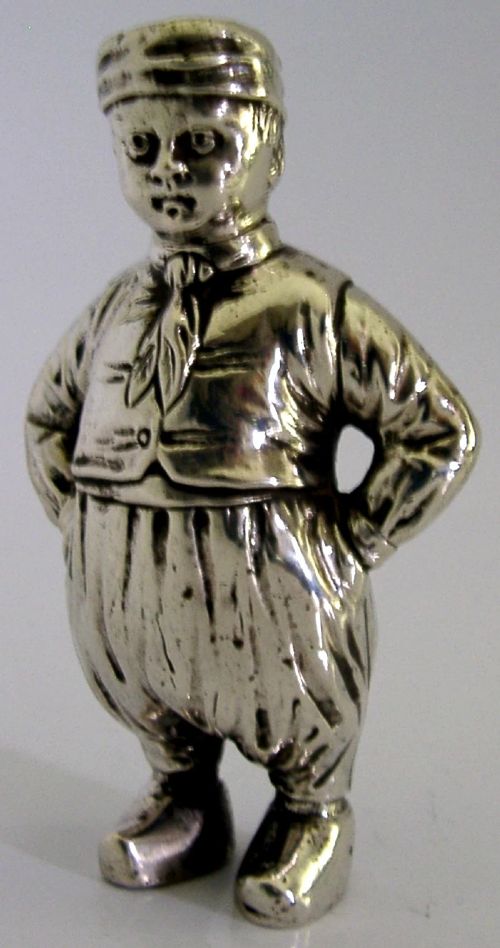
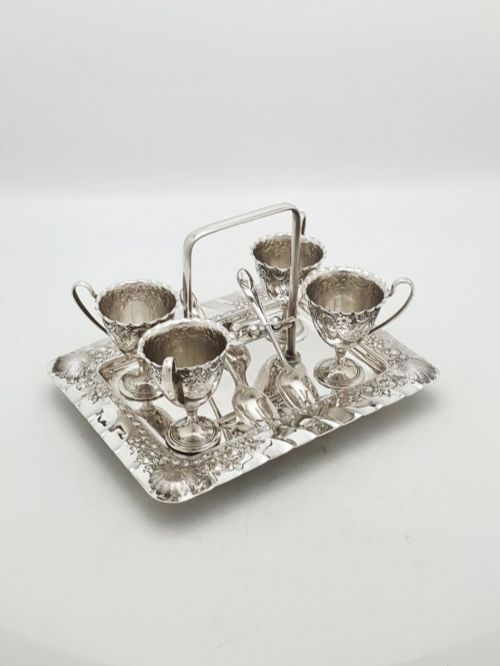
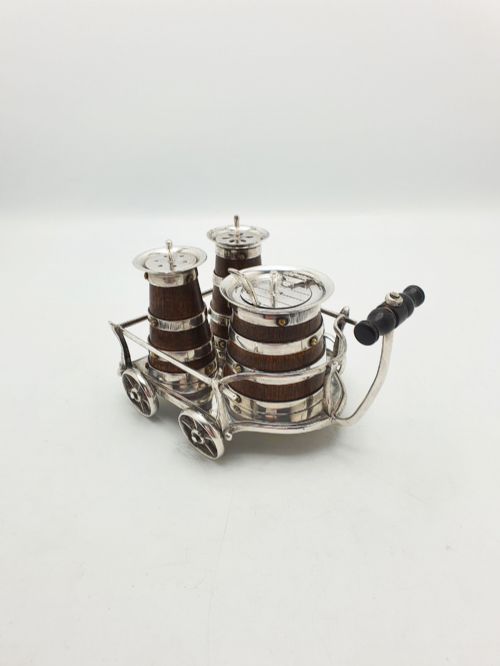
Edwardian silver-plated frames and Victorian multi-bottle stands form the bulk of what you see on this page. Alongside traditional stands, the selection includes novelty shapes such as oak barrels, carriages, farmyard animals and equestrian scenes.
The materials span sterling silver, electroplated nickel silver, cut glass and occasionally fitted boxes lined with velvet or satin. Origins stretch from Georgian workshops through the nineteenth century and into the 1930s Art Deco period.
Materials and construction
Frames are constructed from sterling silver or a base metal coated in silver plate, employing casting, stamping and embossing techniques to achieve ornate borders and handles. Many stands incorporate wooden elements such as oak barrels alongside metal framework.
Bottles and casters feature cut glass, sometimes with cranberry flashed colour, paired with pierced metal tops or hinged silver lids. Interiors often use electroplated nickel silver for durability in everyday dining service.
Materials documented across the page include sterling silver, silver plate, cut glass, satin and velvet.
Distinctions in quality
Quality rests on the heaviness of the silver or plating and the crispness of the chased or embossed decoration on the frame. Heavier metal gauge and intricate detailing distinguish finer examples from standard production pieces.
The completeness and matching status of the glassware dictate overall merit. Original cut glass bottles that match the frame without replacement enhance the integrity of the set.
Goldsmith & Silversmith's·Mappin Brothers·Hester Bateman·Sampson Mordan·Wilmot Manufacturing Co.
The Antique Table Cruet Set Glossary
- Castor
- A tall jar with a pierced top used for shaking sugar or fine spices over food. Georgian sets frequently include matching castors alongside oil bottles.
- Silver plate
- A base metal, often nickel copper, covered with a thin layer of silver through electroplating. This technique became widespread during the Victorian era for affordable tableware.
- Cut glass
- Glass decorated by cutting geometric or floral patterns into the surface using a rotating wheel. It provides weight and sparkle to condiment bottles.
- Novelty cruet
- A condiment set modelled in a playful shape such as an animal, bird, carriage or barrel. These pieces combine humour with practical dining use.
Antique Table Cruet Set: Frequently Asked Questions
How were table cruet sets used?
These sets sat at the centre of the dining table to dispense oil, vinegar, salt, pepper and mustard during meals. Diners seasoned their food using the individual bottles and pots provided in the stand.
Larger frames allowed hosts to offer a full range of condiments simultaneously. Servants could also transport the entire assembly easily by the central handle.
How do I clean silver plate safely?
Use a soft cloth and a gentle silver cream formulated specifically for plated items. Avoid harsh scrubbing that can wear through the silver layer.
Wash glass bottles separately in warm soapy water and dry them completely before returning them to the frame.
Are replacement bottles easy to find?
Finding exact match replacement bottles for antique frames can prove challenging due to variations in neck sizes and cut glass patterns. Many collectors accept assembled sets provided the glass fits securely in the apertures.
Checking dimensions carefully helps when pairing loose bottles with an incomplete stand.
What is a bachelor cruet?
A bachelor cruet is a smaller version of a standard set, typically holding fewer bottles for individual or small household use. These compact pieces were popular in the nineteenth century for smaller dining arrangements.
They offer the same decorative appeal as larger stands while taking up less space on the table.