

Silver and Glass Condiments
Silver and glass condiments bring functional elegance to the table, pairing precious metal frames with cut, coloured, or crystal vessels.
Silver and Glass Condiments
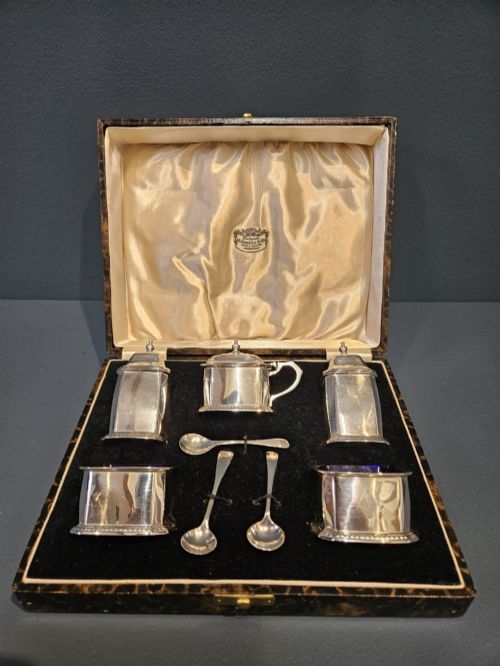
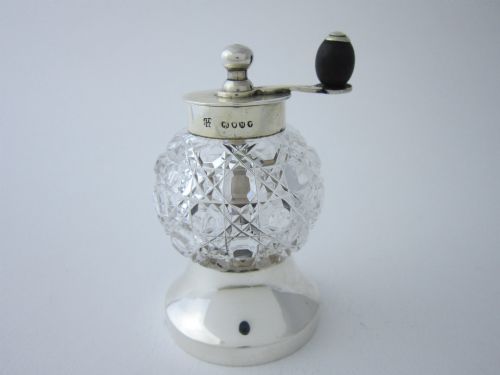
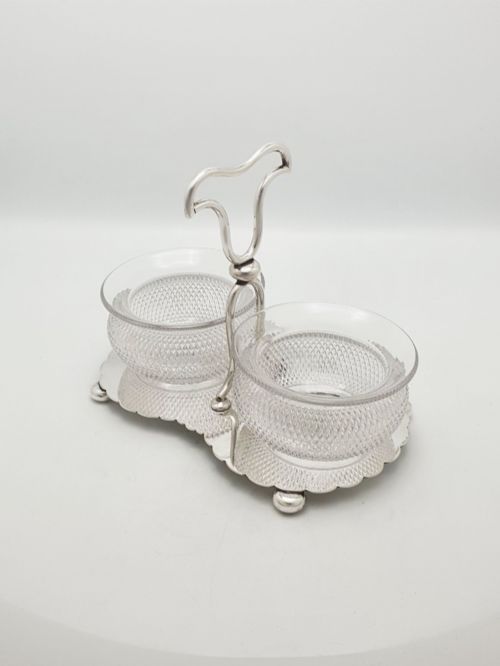
Silver and glass condiments encompass table vessels and stands designed for salt, mustard, pepper, oil, and vinegar. These pieces range from multi-bottle cruet sets and mustard pots to open salt cellars and pepper grinders.
The selections available here span from the Victorian and Edwardian eras into the Art Deco period, alongside mid-twentieth-century examples. Buyers frequently encounter fitted cruet sets on stands, standalone mustard pots with hinged lids, and paired salt cellars.
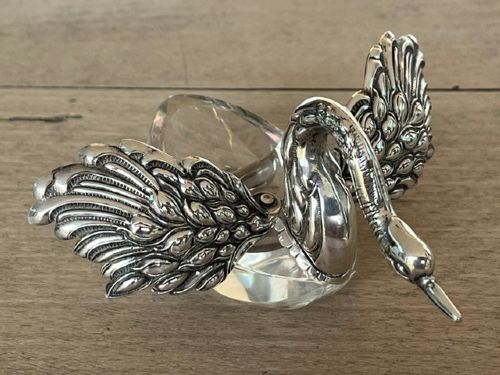
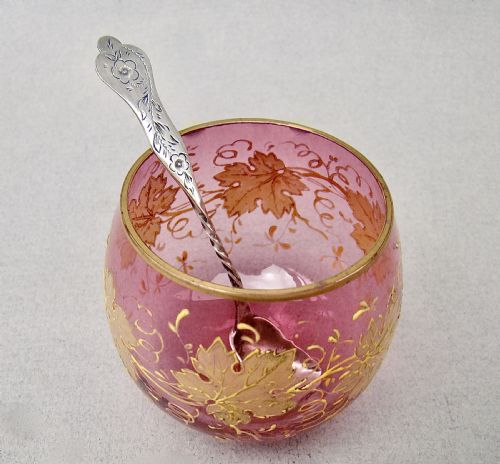
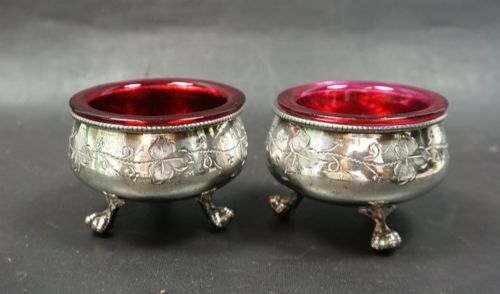
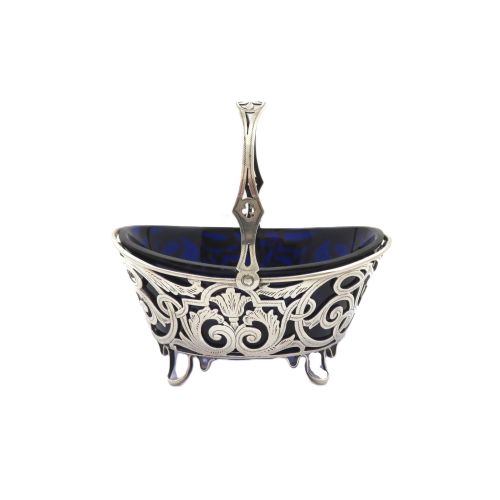
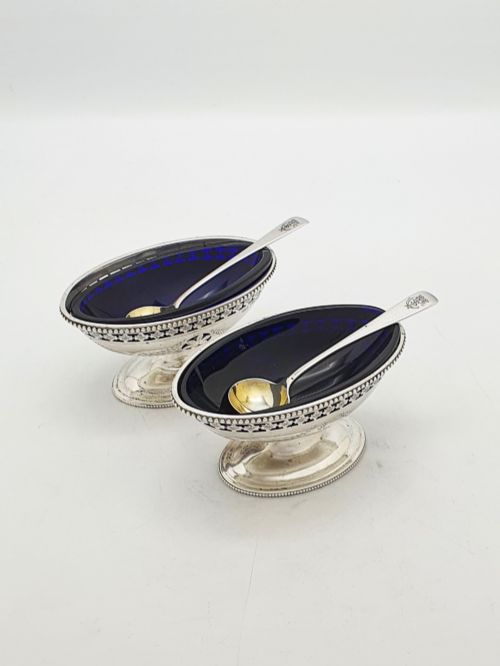
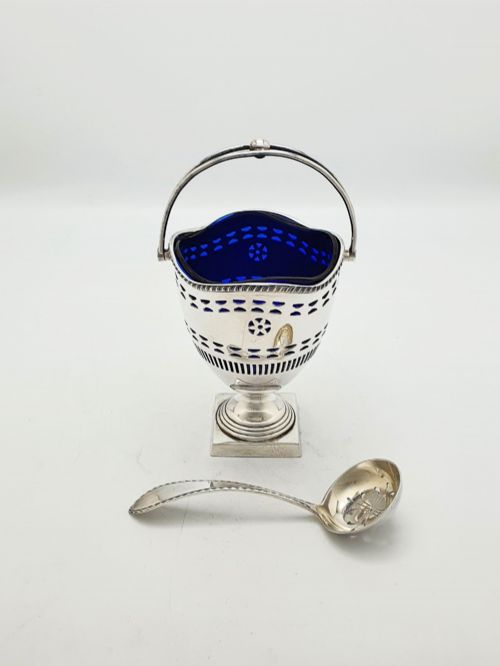
Many designs incorporate coloured glass inserts, such as cobalt blue or cranberry glass, nestled inside pierced or solid silver and silver-plated frames. Others utilise clear cut glass or crystal combined with sterling silver or silver plate.
Materials and Construction Techniques
Makers combined sterling silver or silver plate with blown, moulded, and cut glass to produce these table wares. Pierced silver frames, wirework, and cast components were shaped by hand or machine before receiving glass liners.
Glass elements often feature moulded fluting, hand-cut facets, or flashed colourations like cranberry and cobalt. Frames utilise structural elements such as swing handles, hinged lids, and fitted mounts to secure the glass vessels.
Listings feature sterling silver and silver plate alongside cobalt, cranberry, and cut glass across Victorian, Edwardian, and Art Deco periods.
Distinguishing Quality in Construction
Quality rests in the weight of the silver, the crispness of any pierced or chased ornamentation, and the precision of the fit between metal mounts and glass inserts. Substantial sterling silver frames with clear hallmarks demonstrate superior manufacture compared to lighter silver-plated alternatives.
The integrity and clarity of the glass liner also determine standard, with heavy cut crystal or vibrant coloured glass showing finer craftsmanship. Matched sets complete with original spoons or grinders command greater interest than assembled groupings.
Nathan and Hayes·William Neale·Hukin and Heath·Mappin Brothers·Walker and Hall·Charles Thomas Fox·Josiah Williams and Co
The Silver and Glass Condiments Glossary
- Cruet set
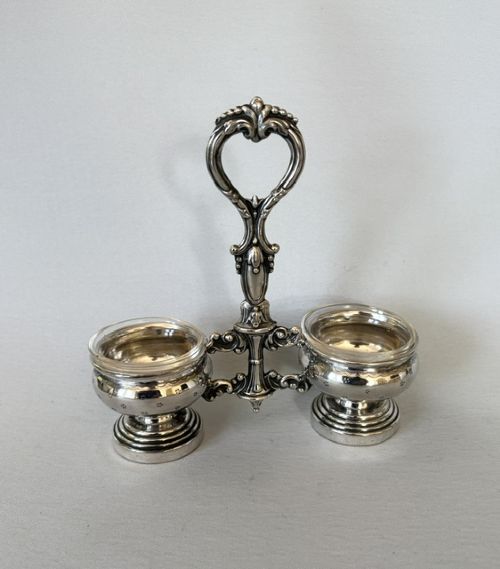
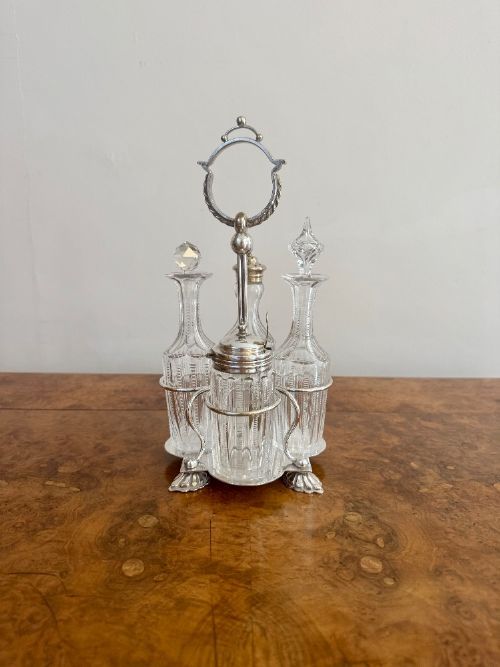
- A fitted stand holding multiple glass bottles or jars for condiments such as oil, vinegar, salt, and pepper. These frames often include a central carrying handle.
- Mustard pot
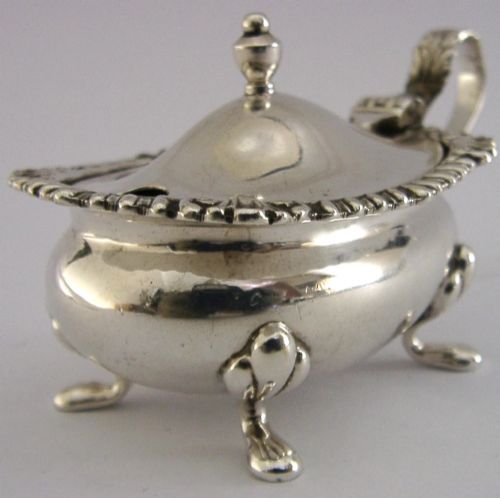
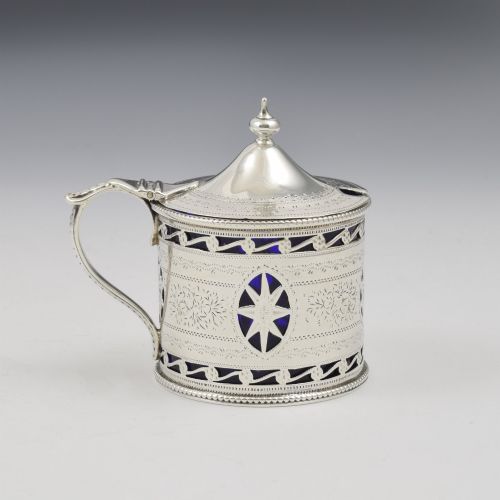
- A small covered jar designed to hold prepared mustard, frequently supplied with a fitted glass liner and a matching tiny spoon. Many examples feature hinged lids and pierced silver bodies.
- Salt cellar
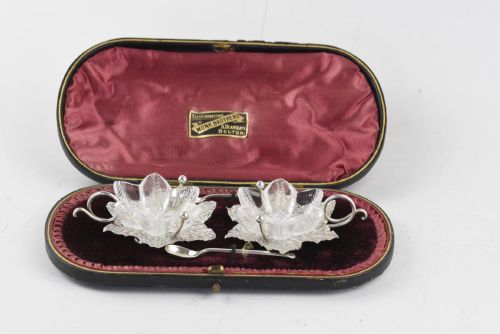
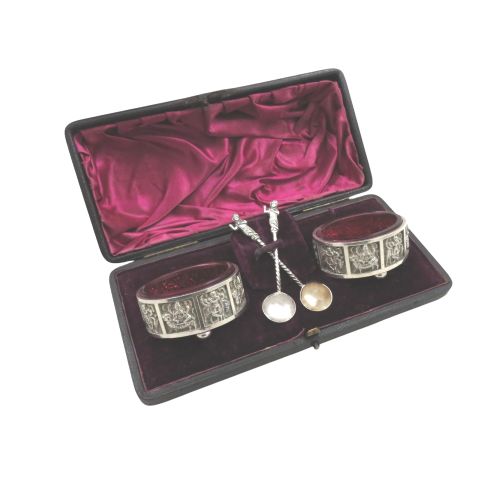
- An open vessel or enclosed container used for holding salt at the dining table, often paired with miniature spoons. They frequently contain cobalt or cranberry glass liners.
- Silver plate
- A base metal, such as copper or Britannia metal, coated with a thin layer of silver through electroplating or older fusion methods. It provided a lower-cost alternative to solid sterling silver.
Silver and Glass Condiments: Frequently Asked Questions
What is included in a standard cruet set?
A traditional cruet set comprises a metal frame or stand holding a combination of glass bottles, jars, or cruets for liquids and dry seasonings. Many configurations include designated spaces for oil, vinegar, mustard, and pepper.
Larger versions accommodate up to seven distinct bottles, while smaller bachelor sets generally feature two or three receptacles. Matching spoons and stoppers frequently accompany these arrangements.
How do I care for silver and glass condiments?
Maintenance involves washing glass inserts in warm soapy water and drying them thoroughly to prevent water spots. Silver components require occasional polishing with a dedicated cloth to remove tarnish.
Harsh chemical dips should be avoided, particularly when glass liners remain fitted inside delicate pierced silver frames. Storing pieces in dry environments helps preserve both the metal finish and the glass.
Are replacement glass liners easy to find?
Finding exact replacement liners for antique frames can prove challenging due to variations in nineteenth and twentieth-century manufacturing dimensions. Hand-blown and hand-cut glass rarely adhered to strict modern standards.
Buyers often measure the internal diameter and depth of the metal mount carefully before seeking a vintage replacement. Clear or coloured glass inserts that approximate the original dimensions are sometimes adapted to fit.
How can I identify the date of a piece?
Dating relies primarily on hallmarks stamped into sterling silver or silver-plated frames, which indicate assay offices, makers, and date letters. Stylistic clues such as Victorian pierced work or Art Deco geometry also offer chronological markers.
Manufacturing techniques, including the evolution from fused plate to electroplate, help narrow the production window. Consulting maker marks against historical records confirms the exact period of origin.