

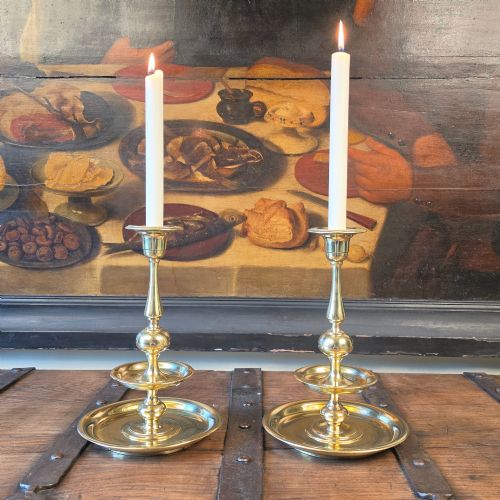
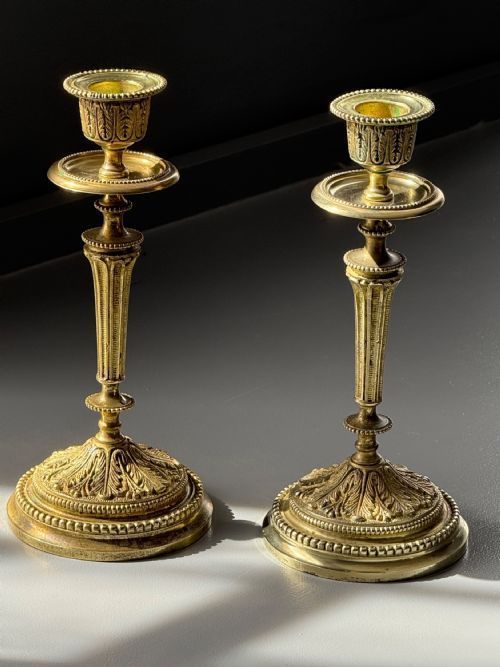
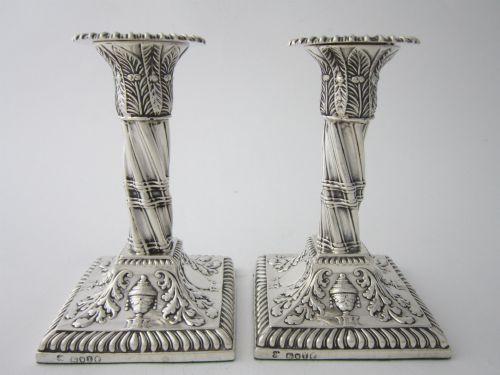
Antique Table Candle Holders
These antique table candle holders bring direct candlelight to a dining table or mantelpiece through centuries of metalwork and glass.
Antique Table Candle Holders
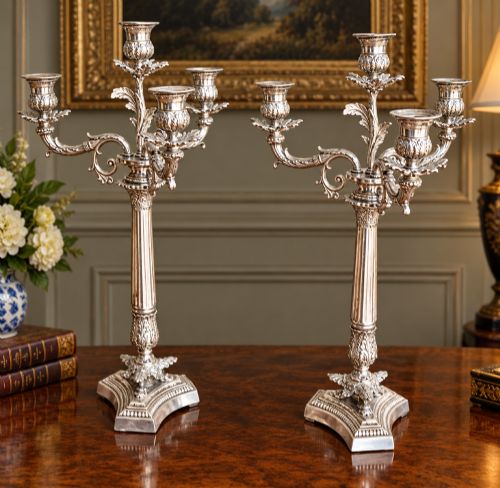
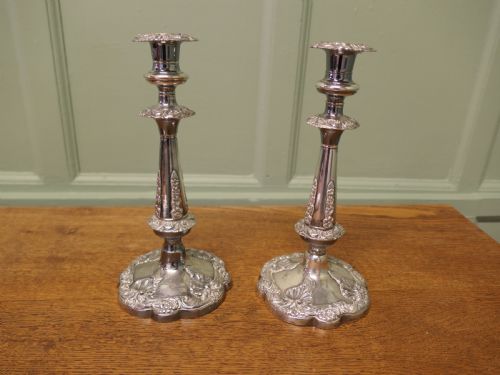
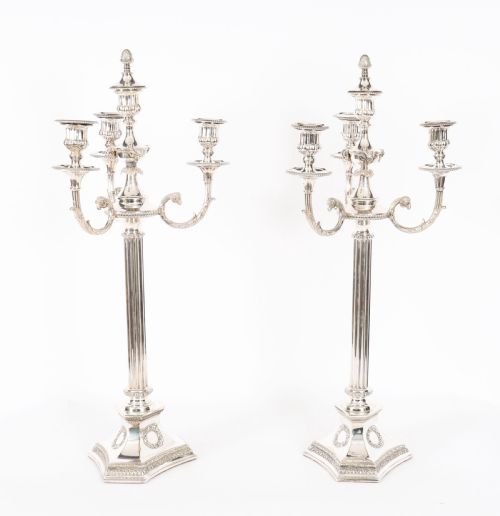
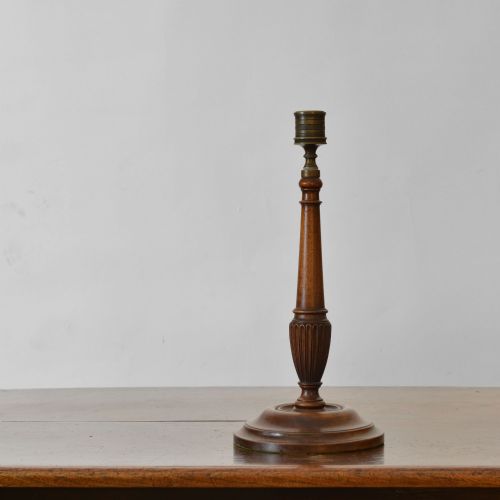
Antique table candle holders span simple single-light candlesticks and multi-armed candelabra alongside specialised forms like hurricane lamps, table lustres, and table mirrors.
Most examples found here date from the eighteenth and nineteenth centuries, running through the Georgian, Victorian, and Edwardian periods into the twentieth century.
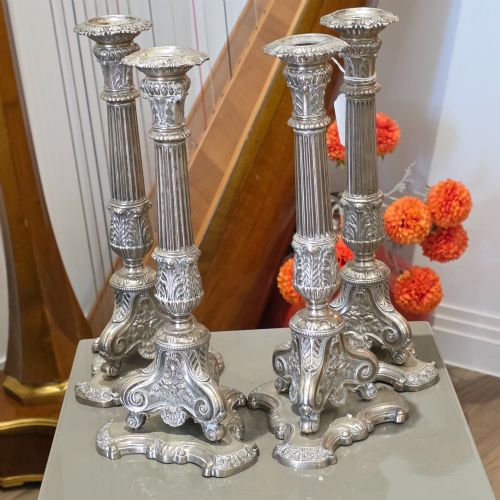
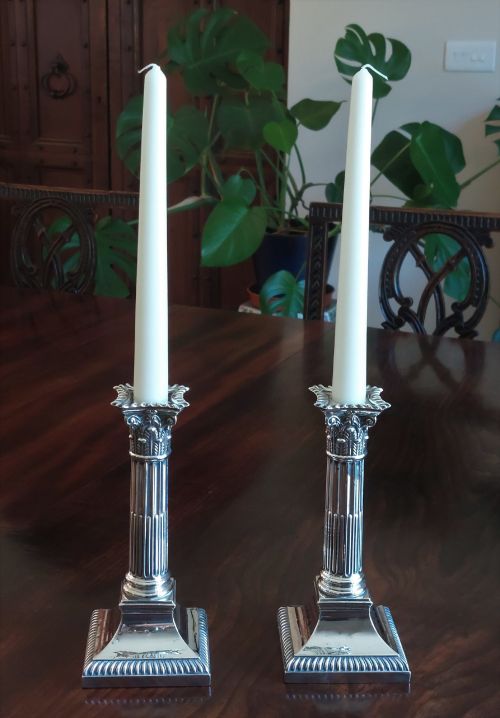
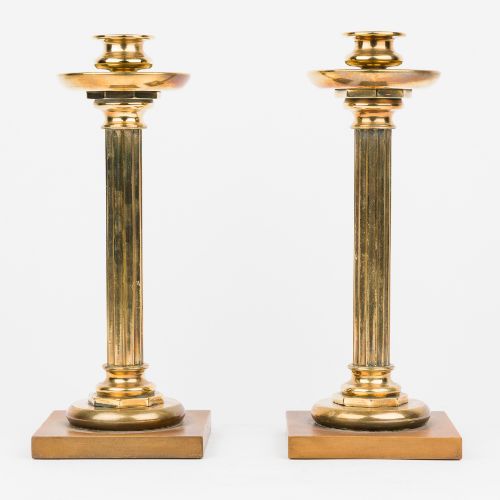
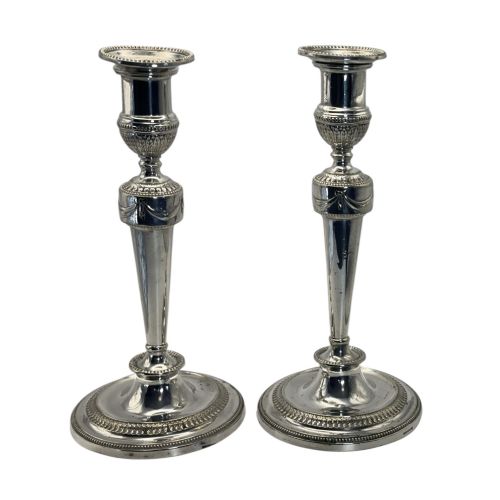
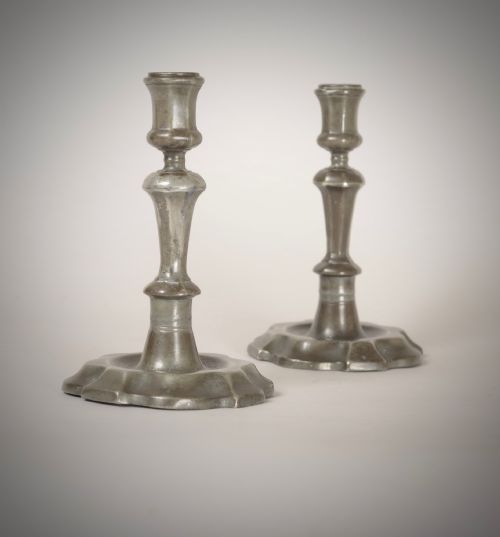
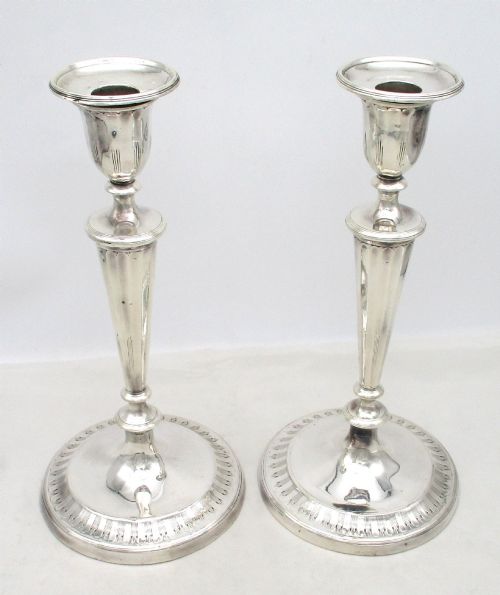
Makers fashioned these pieces in brass, pewter, ironstone, sterling silver, silver plate, and ormolu, often produced in matched pairs for symmetrical placement.
Materials and construction
Brass examples utilise seamed construction or casting methods, developing a patinated surface through age and use.
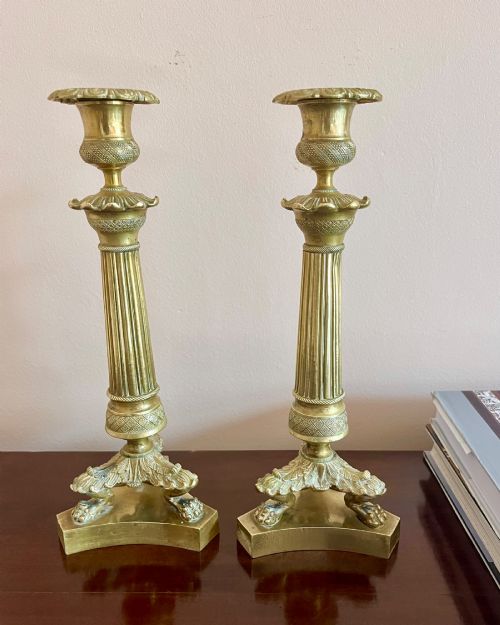
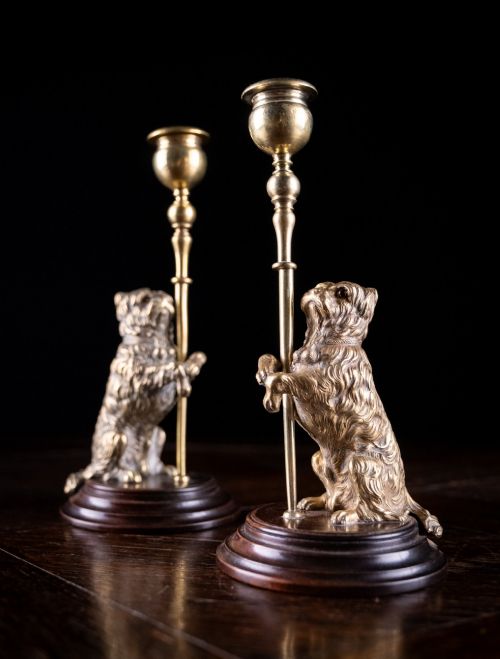
Silver items combine sterling silver and silver plate over supportive bases, while French pieces employ cast gilt bronze and ormolu alongside cut glass.
Listings feature brass, sterling silver, silver plate, gilt bronze, ironstone, and glass across Georgian, Victorian, and Edwardian periods.
Assessing craftsmanship
Quality rests in the crispness of cast ornamentation on ormolu and gilt bronze, and in the structural weight of brass and silver candlesticks.
Candelabra separate themselves by the rigidity of their removable arms and the balance of their multi-branch configurations.
Mappin & Webb·Birks·Pierre Philippe Thomire·Garrard & Co·Matthew Boulton
The Antique Table Candle Holders Glossary
- Candelabra
- A branched lighting fixture designed to hold multiple candles simultaneously on a central stem. These multi-light formats often allow branches to detach for use as single candlesticks.
- Ormolu
- Finely ground high-carat gold applied to a bronze base through a mercury amalgamation process. This technique produces a lasting, warm metallic lustre seen on French decorative pieces.
- Table Lustres
- Decorative glass or crystal stands hung with prismatic drops that reflect candle flames. They originate from the Georgian and Victorian eras for dining room illumination.
- Sheffield Plate
- An early fusing technique where a thin sheet of sterling silver is fused to a copper core under heat and pressure. The method predates modern electroplating.
Antique Table Candle Holders: Frequently Asked Questions
How do I clean antique silver candlesticks?
Clean silver components gently with a soft cloth and dedicated silver polish, taking care around weighted bases. Avoid abrasive cloths that wear away thin silver plate.
Keep polish out of chased crevices and decorative recesses to preserve the dark patina that highlights the maker's handwork.
Can I use modern candles in these holders?
Most antique sockets accommodate standard taper candles, though older hand-formed brass and silver sockets can vary slightly in diameter. You can pare down the base of a modern candle for a secure fit.
Avoid forcing an oversized candle into a antique nozzle, as pressure can crack fragile glass or strain historical metal seams.
How do I spot converted lamps?
Check the central drip pan and nozzle for tiny drilled holes or threaded wiring channels where an electrical cord once passed. Many twentieth-century conversions retain their original candle sockets alongside alterations.
Look closely at the underside of the base to see if weighted plaster or felt has been disturbed to house modern internal hardware.
Why do brass candlesticks have small holes?
Seamed eighteenth-century brass candlesticks often feature tiny manufacturing escape holes in the stem or base from the casting and soldering process. These small apertures are standard production marks rather than damage.
Ejector mechanisms inside nineteenth-century brass sticks also rely on internal channels to push up remaining wax stubs.