
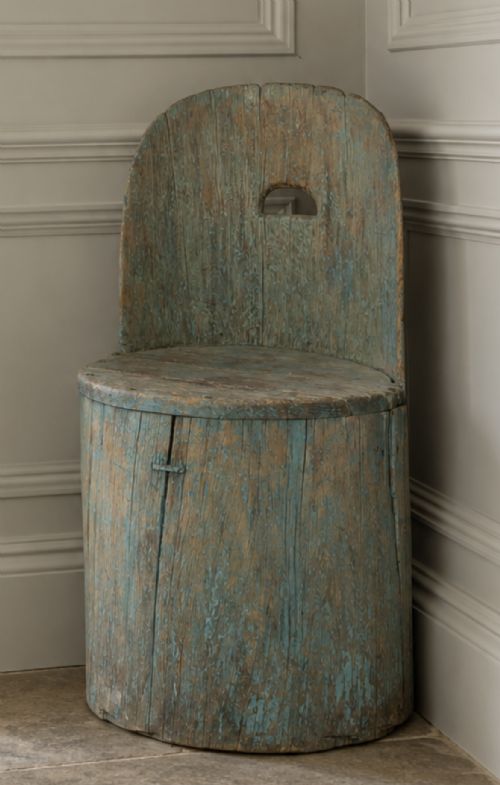


Antique Swedish Trunk
An antique swedish trunk brings robust domestic storage and rich folk art tradition into a modern interior.
Antique Swedish Trunk
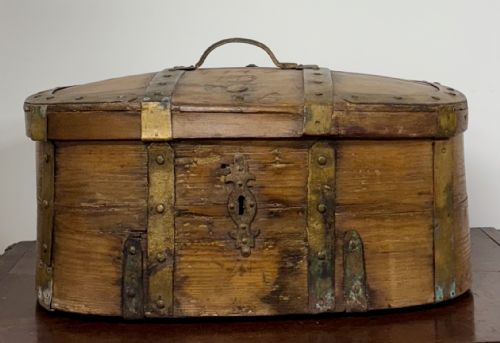
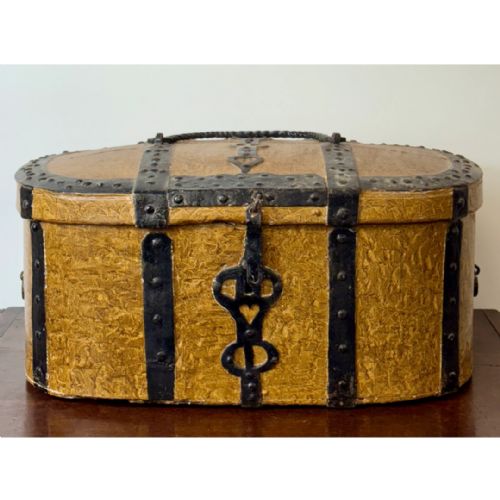
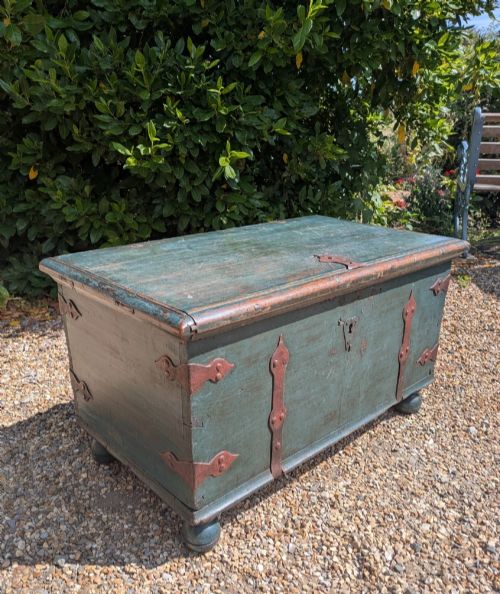
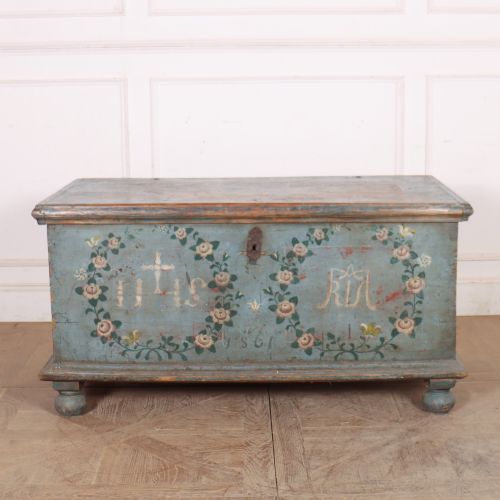
An antique swedish trunk encompasses robust storage pieces built for domestic utility, ranging from large blanket chests and dome top coffers to smaller strong boxes and marriage boxes. These items serve as practical containers that double as decorative focal points through their distinct regional ornamentation.
The pieces encountered most frequently span the eighteenth and nineteenth centuries, constructed predominantly in pine with applied paint and pigment finishes. Formats vary from simple rectangular blanket boxes to shaped strong boxes and marriage chests bearing specific historical dates.
How they were made
Carpenters utilised local pine and occasional oak timbers, constructing carcases with pegged joints and solid boards suited to regional Nordic conditions. Surfaces received coats of paint and pigment, often applied to create patinated finishes or decorative folk art motifs.
Hardware played a functional and visual role, incorporating hand forged iron strapwork and brass elements to reinforce corners and lids. Strong boxes and coffers relied on durable wrought iron hinges and locks to secure valuable household contents.
Antique Swedish Trunk Retail Price Guide 2026
Typical asking prices for swedish trunk among the pieces listed under this phrase on Sellingantiques today, from the lower quarter to the upper quarter. They describe what is for sale here now, not the wider market.
What varies in quality
Quality rests in the survival of original painted surfaces and pigment layers, separating untouched folk art pieces from later repainted examples. The sophistication of the hand painted decoration, from simple regional schemes to complex labyrinth designs, dictates the distinction between standard utilitarian items and masterworks.
Construction integrity defines the upper tier, where hand forged iron strapwork remains entirely original to the piece. The retention of dated inscriptions and marriage motifs adds historical weight that elevates specific examples above plain utility chests.
The Antique Swedish Trunk Glossary
- Marriage chest
- A celebratory storage piece commissioned for a wedding, frequently inscribed with dates and initials. These items often display the finest folk art painting within a collection.
- Coffer
- A heavy wooden storage chest featuring a lid, utilised for keeping valuables and textiles safe. They typically exhibit sturdy construction with iron reinforcements.
- Strong box
- A compact, secure chest built with heavy iron strapwork and robust locking mechanisms. These smaller containers protected currency, documents, and precious items.
- Dome top
- A curved lid construction designed to shed water and increase internal capacity. This profile appears frequently on eighteenth and nineteenth-century coffers.
- Folk art
- Traditional decorative painting and carving executed by regional craftspeople rather than formal academic artists. This style provides the vibrant surface patterns seen on Scandinavian pine furniture.
Antique Swedish Trunk: Frequently Asked Questions
How were these trunks used historically?
Households utilised these pieces primarily for storing heavy woollen blankets, winter clothing, and precious textiles away from damp floors and pests.
Larger coffers and marriage chests also doubled as seating benches or tables inside rural Scandinavian homes when floor space was limited.
What wood types should I expect to find?
Pine serves as the predominant timber across the vast majority of surviving examples, chosen for its local availability and workability.
Occasional pieces utilise oak, while related items incorporate woven pine or structural ironwork to complete the carcase.
How do I identify a marriage chest?
Marriage chests often feature specific painted dates, initials, or celebratory motifs incorporated directly into the folk art decoration on the front panel.
These pieces were traditionally created to mark nuptials and tend to display more elaborate pigment work than standard storage boxes.
Are painted surfaces original?
Original painted surfaces display natural wear, stable patination, and pigment layers that have aged harmoniously with the pine beneath.
Close inspection of the brushwork and underlying wood helps distinguish untouched eighteenth and nineteenth-century finishes from later decorative interventions.
How do I care for an antique painted box?
Keep wooden storage pieces away from direct heat sources and radical humidity shifts to prevent the pine from splitting and the paint from flaking.
Dust surfaces gently with a dry cloth and avoid harsh chemical cleaners that might strip the historic pigment layers.