


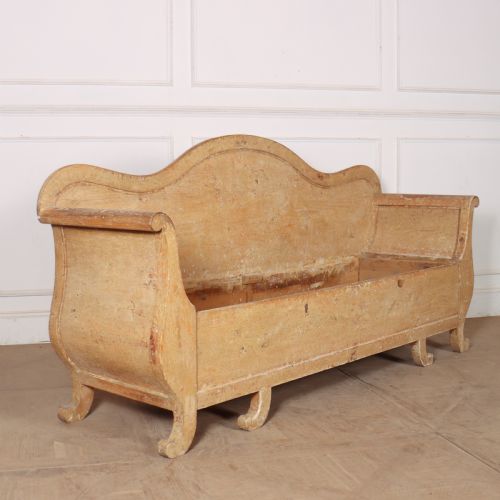

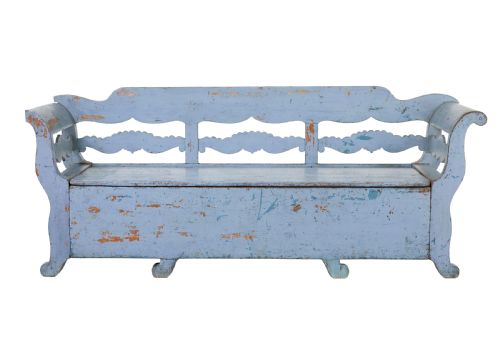


Antique Swedish Sofa
An antique swedish sofa brings restrained elegance to a room, offering classic Nordic lines alongside practical seating.
Antique Swedish Sofa
When you search for an antique swedish sofa, you encounter seating shaped by distinct Nordic design movements, ranging from Gustavian restraint to Biedermeier warmth. The pieces listed across our records span the eighteenth century, the nineteenth century, and into the early twentieth century, capturing decades of Scandinavian craftsmanship.
You are most likely to meet painted wooden frames, polished birch surfaces, or leather upholstery, taking the form of settees, settles, benches, and club sofas. Styles recorded include Gustavian, Swedish Empire, Biedermeier, and Scandinavian Country, reflecting both formal drawing-room seating and rural utilitarian forms.
Materials and construction
Makers utilised native Scandinavian timbers such as pine, birch, and mahogany, often applying painted finishes or retaining the natural grain of satin birch and tiger birch. Frames were constructed with sturdy joinery, sometimes incorporating ormolu mounts on Biedermeier examples.
Upholstery historically relied on materials like linen, hessian, and leather, paired with cane panels where lighter texture was desired. Painted wood surfaces frequently received multiple layers of pigment, creating the characteristic soft matte finish found on Gustavian and country pieces.
Some nineteenth-century storage benches double as sleeping quarters, proving that Scandinavian practicality solved small-space living centuries ago.
Distinctions in execution
The division between standard output and finer examples rests on the crispness of carved details, the selection of timber veneers such as figured satin birch, and the integrity of original painted surfaces. Superior pieces display harmonious proportions and careful attention to structural joints that withstand decades of use.
Subtlety in decorative carving and the preservation of authentic period finishes elevate certain seating above utilitarian workshop production. The balance between exposed wood grain and applied upholstery defines the visual success of each individual form.
The Antique Swedish Sofa Glossary
- Gustavian
- A Swedish neoclassical style inspired by French design under King Gustav III, characterised by pale painted finishes, fluted legs, and restrained symmetry. This aesthetic dominates much of the lighter seating seen in Nordic interiors.
- Biedermeier
- A Central European and Scandinavian style popular during the nineteenth century, focusing on utilitarian comfort, clean lines, and striking wood veneers like birch and mahogany without excessive ornamentation.
- Settle
- A wooden bench with high backrests, solid arms, and often an enclosed lower storage compartment, designed to shield occupants from draughts in traditional interiors.
- Ormolu
- Gilded bronze applied as decorative mounts to furniture frames, frequently seen on polished Biedermeier and Empire pieces to add metallic contrast to wood.
- Bergere
- An enclosed upholstered armchair or sofa design featuring wooden frames and cane or fabric sides, providing a lighter visual weight in formal rooms.
Antique Swedish Sofa: Frequently Asked Questions
How do I identify a Gustavian sofa?
Gustavian pieces typically feature pale painted wood, straight tapered legs, and subtle neoclassical carvings like fluting or rosettes. The overall silhouette remains restrained and symmetrical.
These designs date predominantly from the late eighteenth to the early nineteenth century, reflecting French influence filtered through Swedish craftsmanship.
What is the difference between birch and mahogany in these sofas?
Birch, particularly satin birch and tiger birch, offers a light, golden tone with striking grain patterns that suit Scandinavian interiors. Mahogany provides a darker, denser reddish-brown surface often associated with Biedermeier luxury.
Both timbers were chosen for their stability and capacity to take a fine polished finish.
Were these sofas painted originally?
Many Swedish wooden frames were painted from the outset, often in soft greys, cream, or muted blues, to mimic more expensive materials or brighten dimly lit rooms. Original paint layers show appropriate wear and subtle craquelure over time.
Subsequent repainting is common, so examining the underlying pigment helps determine age.
How do I care for leather upholstery on an antique sofa?
Leather surfaces benefit from regular dusting with a soft cloth and occasional treatment with appropriate conservation balms to prevent drying. Avoiding direct sunlight and strong heat sources preserves the suppleness of older hides.
Natural patination should be encouraged rather than hidden, as it reflects the age of the material.