


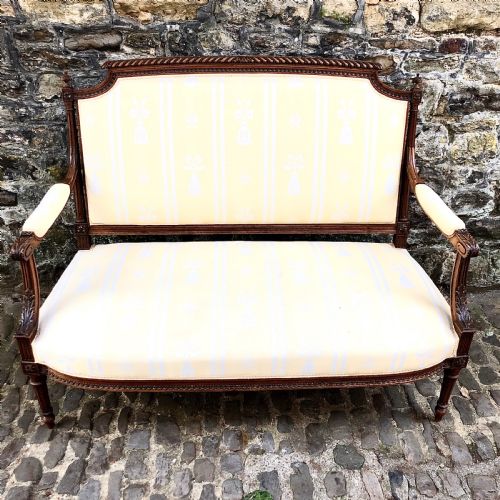
19th Century Empire Settee
A 19th century empire settee brings neoclassical scale and architectural presence to a room, offering grand seating shaped by continental design.
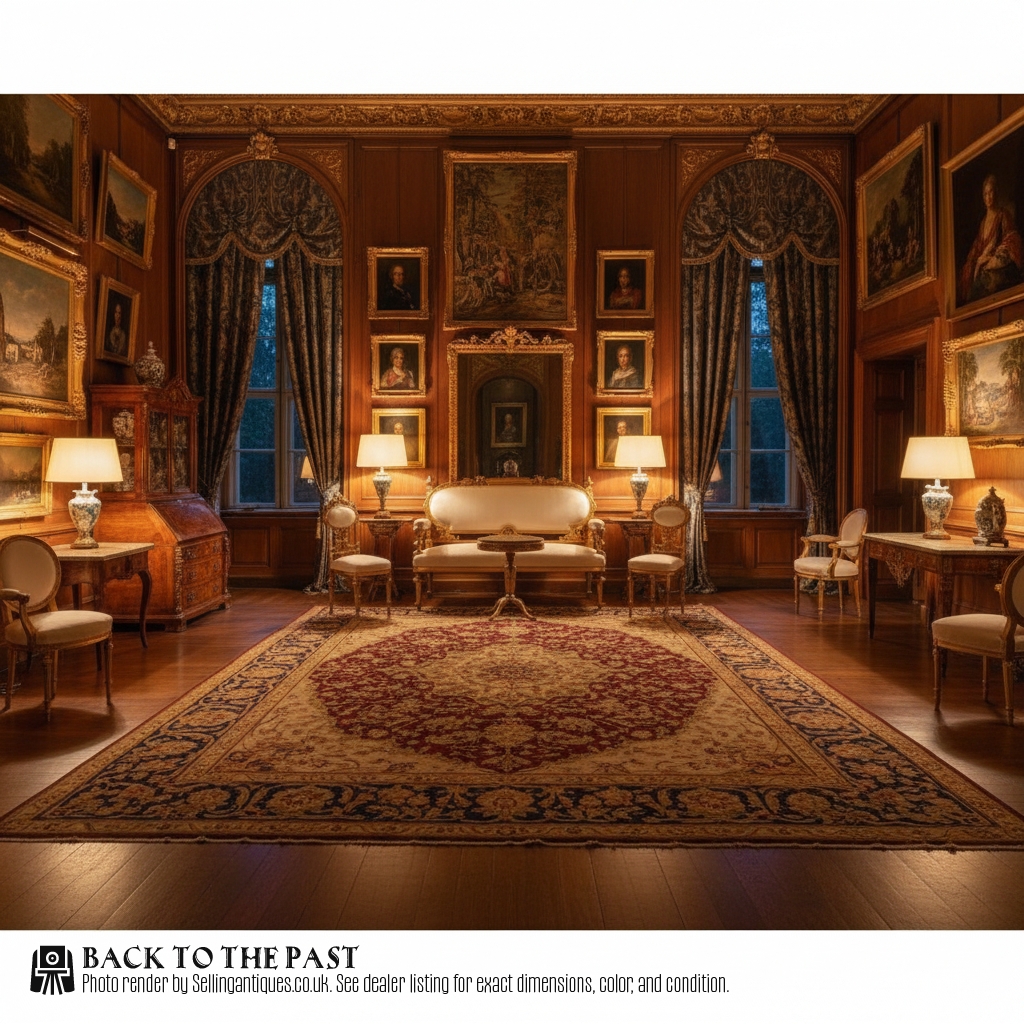
19th Century Empire Settee
When you search for a 19th century empire settee, you encounter grand seating forms originating across diverse European workshops from the 1800s onwards. These pieces span French, Swedish, Dutch, and Italian interpretations of neoclassical design, alongside Regency and Second Empire variations.
The physical forms present on this page include large salon suites, day beds, and individual sofas. You are most likely to meet birch and mahogany frames, often styled with giltwood or marquetry details.
Originating during periods of revival and classical influence, these settees function as both architectural statements and functional seating. Their design vocabulary draws heavily on antique precedents adapted for nineteenth-century interiors.
What varies in quality
The standard of a settee rests upon the crispness of its carved wooden details and the integrity of its timber frame. Pieces exhibiting refined marquetry work or deliberate giltwood applications demonstrate a higher level of workshop execution.
Construction quality also appears in the handling of distinct regional styles, where French and Swedish interpretations show varying degrees of decorative restraint. The cohesion of the timber grain across large expanses like the sofa back distinguishes superior examples.
Listings demonstrate timber choices dominated by mahogany, walnut, and birch, accompanied by fabric and gesso treatments.
Thomas Hope
The 19th Century Empire Settee Glossary
- Giltwood
- Wood carved and surfaced with a thin layer of gold leaf. This finish highlights decorative neoclassical motifs on the frame.
- Marquetry
- The art of applying pieces of veneer to a structure to form decorative patterns. Dutch examples frequently employ this technique.
- Neoclassical
- A style reviving classical Roman and Greek architectural forms. It governs the proportions and decorative vocabulary of these settees.
- Regency
- A British period style overlapping with the early nineteenth century. It shares affinities with contemporary continental empire designs.
- Birch
- A pale hardwood utilised extensively in northern European cabinetmaking. Swedish workshops favoured it for its clean grain.
19th Century Empire Settee: Frequently Asked Questions
What defines a 19th century empire settee?
These settees are large seating pieces shaped by nineteenth-century neoclassical ideals, featuring timber frames in mahogany, walnut, or birch.
They often incorporate regional stylistic elements from French, Swedish, or Dutch workshops.
How do I identify a Swedish empire sofa?
Swedish pieces frequently utilise pale birch timber, contrasting with the darker mahogany favored in French or British workshops.
Their carved details tend toward clean, architectural lines characteristic of Scandinavian neoclassical design.
Where were these settees originally used?
Cabinetmakers produced these large seating forms for formal reception rooms and grand salons across Europe.
They served as both functional furniture and prominent decorative focal points within nineteenth-century interiors.
How do I care for a historic wood frame?
Protect the timber and gesso surfaces by maintaining stable room humidity and avoiding direct sunlight.
Dust the carved wooden elements gently with a dry, soft cloth to preserve the finish.