
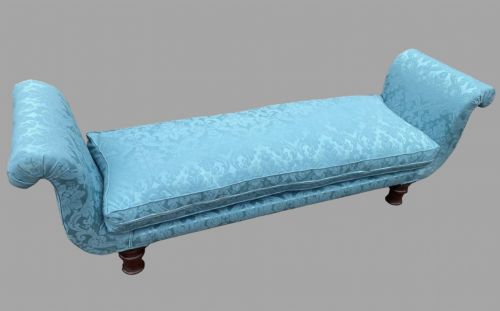
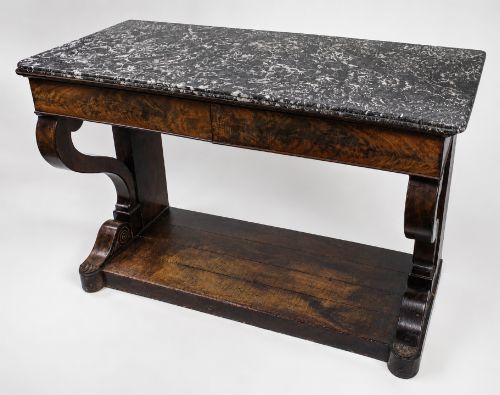


Antique Empire Sofa
An antique empire sofa brings architectural dignity and classical proportion to a room, grounding the space with bold timbers and refined mounts.
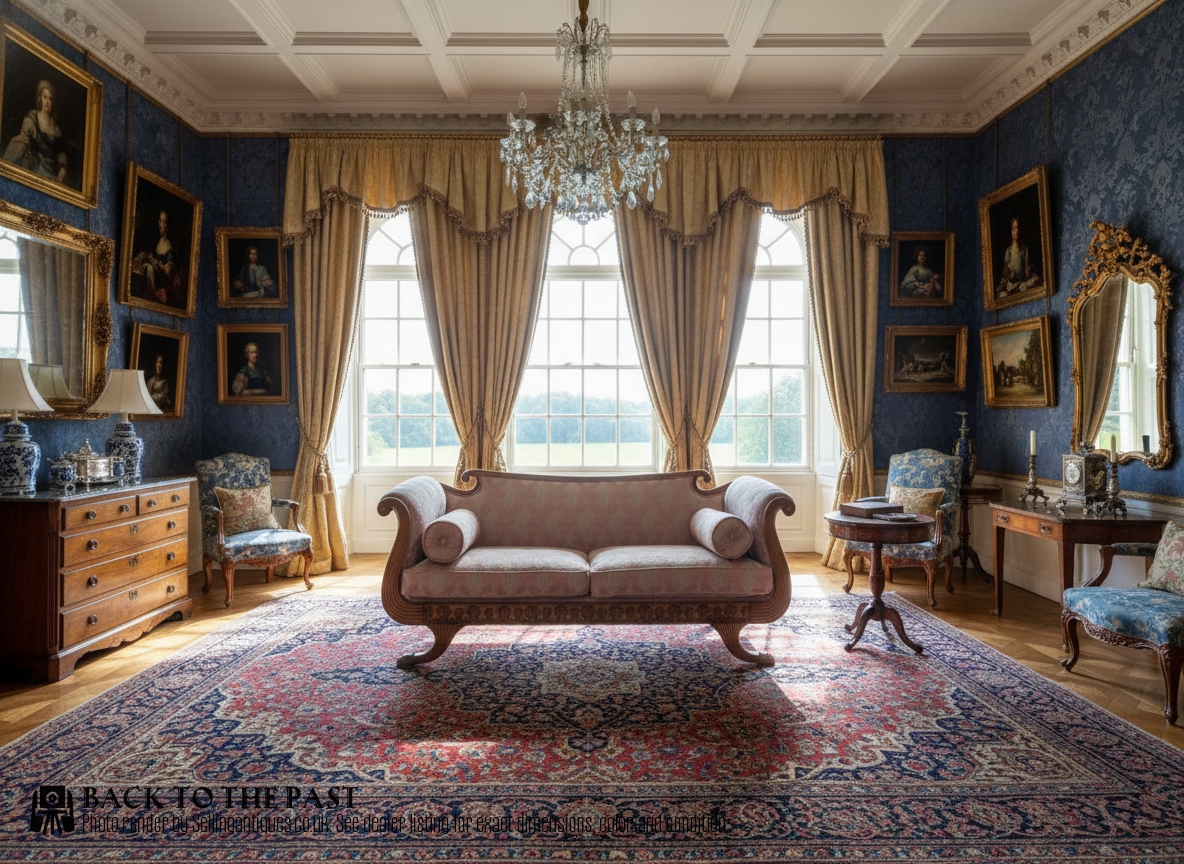
Antique Empire Sofa
When searching for an antique empire sofa, buyers encounter heavy timber frames, scrolled arms, and classical mounts rooted in early nineteenth-century design. These seating pieces emerge in various iterations, from French models to Scandinavian and Biedermeier interpretations, reflecting the widespread reach of the neoclassical movement.
The versions most commonly met on this page span the nineteenth century and subsequent revival periods, including French Empire, Empire Revival, and Swedish Empire pieces. Alongside full-size sofas, the selection encompasses settees, daybeds, and smaller chaise forms constructed from rich cabinet woods.
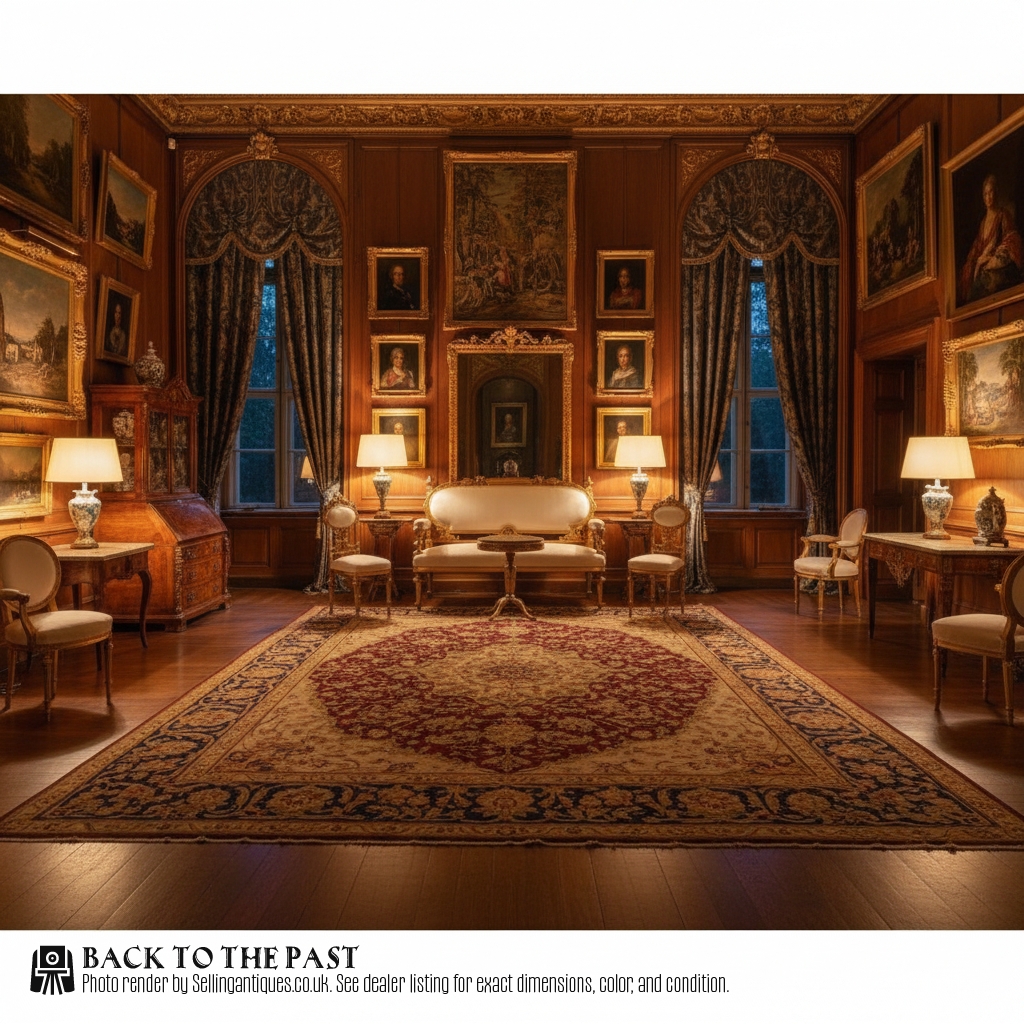
How they were made
Cabinetmakers built these seating forms using dense hardwoods such as mahogany, walnut, and birch, often selecting flame-figured veneers for visual depth. Ebonised wood and rosewood also appear, providing dark, contrasting surfaces that highlight carved structural elements.
Gilt bronze and ormolu mounts punctuate the timber frames, secured with brass fixings to accentuate the architectural lines of the piece. Upholstery relies on traditional textile fabrics, supported by internal webbed frames designed to hold structured cushions.
Some nineteenth-century makers evidently believed that if a sofa could not conquer a room, it needed heavier bronze mounts.
What varies in quality
The grade of an antique empire sofa depends heavily on the precision of the timber selection and the crispness of the applied ormolu mounts. Finer examples display carefully matched veneers and hand-chiselled bronze work that retains sharp definition across classical motifs.
Structural integrity and the retention of original surface patination distinguish finer items from later reproductions. Pieces retaining their original gilt bronze details and stable hardwood joinery command stronger presence within a room.
Jean-Joseph Chapuis
The Antique Empire Sofa Glossary
- Ormolu
- Gilded bronze cast and chased into decorative mounts for furniture. This technique provides metallic contrast against dark mahogany and walnut timbers.
- Flame mahogany
- Timber cut from the fork of the mahogany tree to produce a flickering, flame-like grain pattern. It was favoured for prominent panels on nineteenth-century seating.
- Biedermeier
- A Central European style spanning the early to mid nineteenth century, focusing on clean lines and domestic comfort. Karelian birch and walnut feature prominently in this tradition.
- Giltwood
- Timber carved and coated with a thin layer of gold leaf. Swedish Empire pieces frequently utilise this finish to brighten architectural frames.
- Settee
- A long wooden or upholstered seat with a back and arms, designed to accommodate multiple people. These forms mirror the proportions of larger empire sofas.
Antique Empire Sofa: Frequently Asked Questions
Where should I place an antique empire sofa?
These seating pieces suit formal living spaces, large hallways, or drawing rooms where their architectural proportions can command the room. Position them against plain walls to let the timber grain and gilt mounts stand out without visual competition.
Because of their substantial length and high backs, they also function effectively as statement furniture in open reception areas or spacious studies.
How do I care for the timber and mounts?
Maintain the wood surfaces using a quality beeswax applied sparingly with a soft cloth, buffing gently to preserve the natural patina. Avoid liquid polishes and keep the furniture away from direct heat sources and strong sunlight to prevent veneer splitting.
Clean the ormolu mounts with a dry cloth only, taking care not to use abrasive metal cleaners that could strip the original gilding.
What is the difference between French Empire and Biedermeier?
French Empire pieces lean heavily into military and classical triumphs, featuring dark mahogany, prominent ormolu mounts, and imposing silhouettes. They draw direct inspiration from Greco-Roman antiquity.
Biedermeier furniture, by contrast, adopts a more restrained approach intended for domestic interiors, prioritising lighter woods like birch and walnut with minimal metal ornamentation.
Can I use an empire sofa for daily seating?
These pieces were built for formal entertaining, so daily lounging requires careful consideration of the historic frame and internal padding. Many examples have been reupholstered to offer comfortable support while retaining their traditional profile.
Ensure that sitters use the sofa gently to protect the joined hardwood frame and historic veneer work from undue strain.