
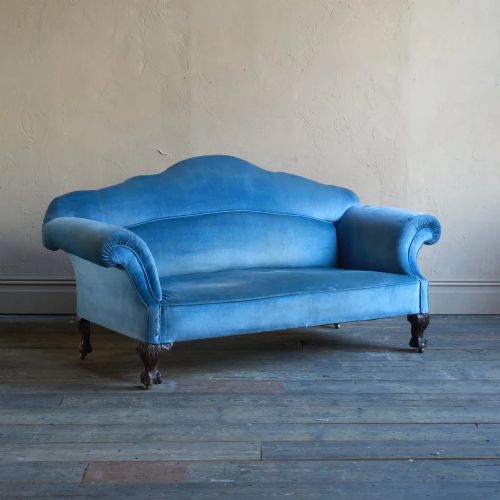


Antique Blue Settee
An antique blue settee brings rich colour and enduring form to a room, offering a comfortable seat wrapped in velvet, fabric or textile.
Antique Blue Settee
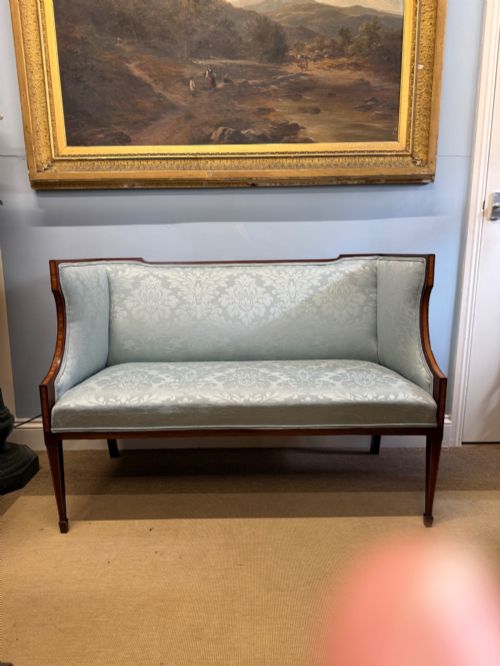
An antique blue settee represents a seating form designed for multiple persons, spanning compact bedroom seats to large reception room couches. When exploring an antique blue settee, buyers encounter pieces fashioned across the nineteenth and early twentieth centuries.
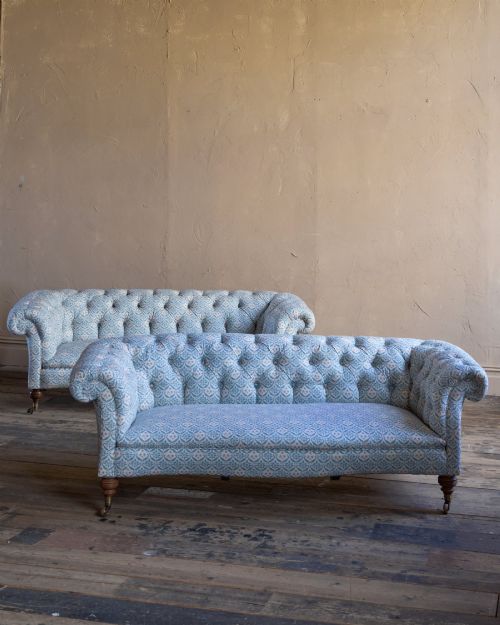
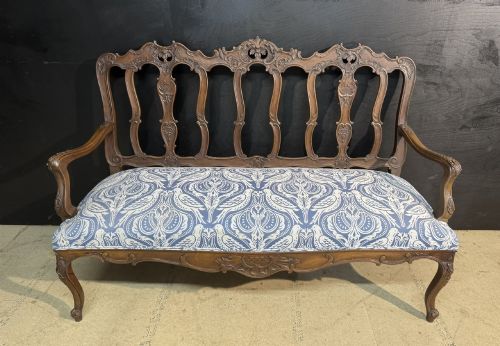
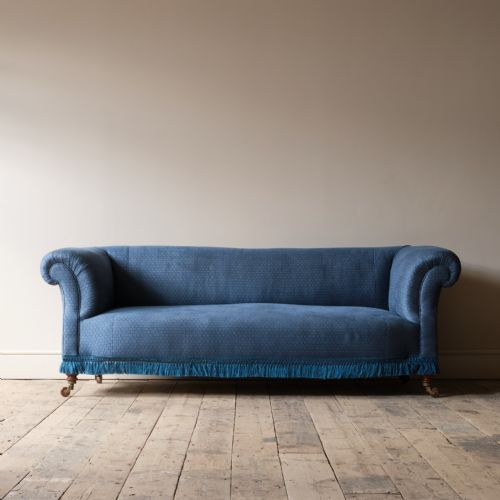
Forms range from traditional English chesterfields and camelback sofas to French painted caned bergères and salon suites. These pieces originate from English country house traditions as well as continental workshops.
How they were made
Cabinetmakers and joiners constructed the supportive frames using hardwoods like mahogany, walnut and birch, often incorporating carved details, ball and claw legs, or fluted supports. Joinery techniques relied on traditional mortise and tenon joints to ensure structural integrity across the frame.
Upholstery involved textile coverings such as velvet and woven fabrics fixed over internal padding and springs. Brass accents, tassel trims and cane work provided decorative finishing touches to the wooden and upholstered structures.
What varies in quality
Quality reveals itself in the crispness of the wood carving and the proportional balance of the frame, whether in a simple mahogany structure or a gilded French piece. Superior examples display thoughtful timber selection and precise joinery that withstands centuries of use.
The refinement of the upholstery work, the integrity of cane panels, and the retention of original decorative elements such as brass fittings or tassel trims distinguish finer pieces. Maker attribution through stamps or established workshop characteristics also elevates a settee's standing.
Howard and Sons·Hampton and Sons
The Antique Blue Settee Glossary
- Chesterfield
- A large upholstered sofa traditionally characterised by deep button tufting and rolled arms of the same height as the back. These sturdy pieces anchor formal rooms and libraries.
- Canapé
- A decorative French-style settee with an exposed wooden frame and upholstered seat and back. They frequently showcase carved woodwork and cabriole legs.
- Camelback
- A sofa style featuring a distinctive undulating curved top rail that resembles a camel's hump. This design gained prominence during the eighteenth century and inspired later revival pieces.
- Satinwood
- A durable, yellowish timber native to India and Sri Lanka used for fine inlay and veneering. Furniture makers utilised it to create contrasting geometric patterns on mahogany surfaces.
Antique Blue Settee: Frequently Asked Questions
How do I clean an antique blue velvet settee?
Vacuum the velvet gently using a soft brush attachment to remove surface dust and prevent pile crushing. Address spots immediately with dry cleaning solvents recommended for delicate textiles.
Avoid using water or harsh detergents on vintage velvet as moisture permanently flattens the pile and damages the underlying fabric structure.
Can I use an antique blue settee every day?
Many sturdy nineteenth century frames handle regular daily seating when the internal webbing and springs remain secure. Lighter decorative salon pieces suit moderate use better than heavy family room sofas.
Inspect the frame stability and upholstery support regularly to ensure the settee safely accommodates everyday lounging.
How do I date an antique blue settee?
Examine the timber species, joinery methods and stylistic clues like cabriole legs or Edwardian inlays to determine the era. Victorian pieces often display heavier proportions and button tufting, while Edwardian examples lean towards lighter mahogany frames.
Maker stamps on wooden rails or under upholstery provide definitive chronological evidence when present.
Where should I place a blue settee in my home?
Position a large chesterfield sofa as the focal point of a living room or study to anchor the seating arrangement. Smaller bedroom settees or hall seats fit well in entryways, dressing rooms or at the foot of a bed.
Keep antique textiles away from direct sunlight to prevent the blue colour from fading over time.