
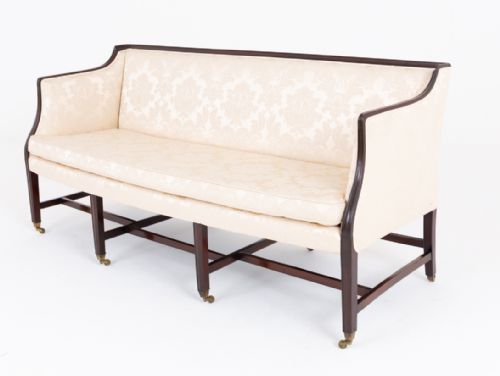


Hepplewhite Style Settee
A hepplewhite style settee brings architectural grace to a drawing room through delicate woodwork and balanced upholstery.
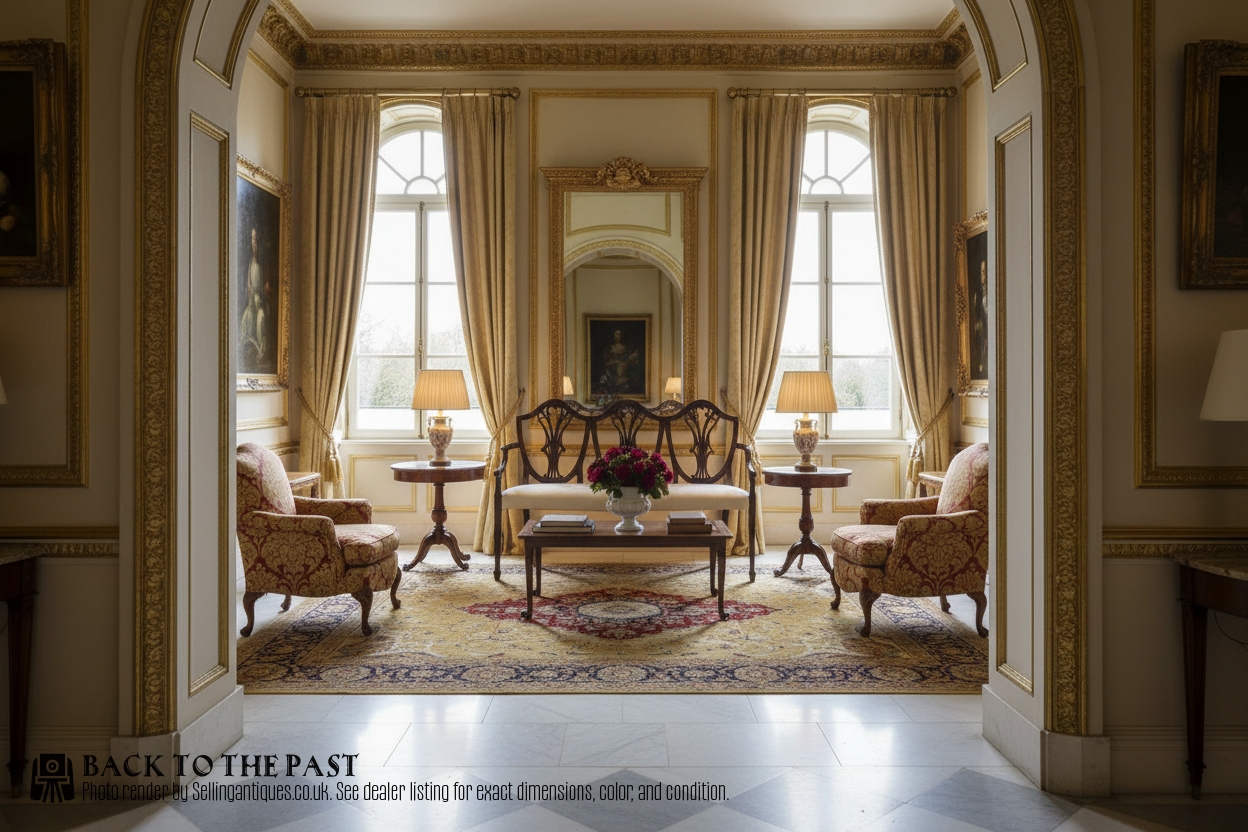
Hepplewhite Style Settee
A hepplewhite style settee is a seating piece defined by light proportions, curved woodwork, and classical motifs that echo eighteenth-century design. When searching this phrase, a buyer encounters forms ranging from original Georgian pieces to revival pieces from the nineteenth and early twentieth centuries.
The most common formats on this page are chair-back settees featuring shield or triple backs, alongside serpentine front camel back sofas. These pieces draw on Georgian, George III, Edwardian, and revival aesthetics, uniting traditional joinery with upholstered comfort.
How they were made
Makers constructed the frames of these settees primarily in mahogany, occasionally incorporating satinwood for contrast and inlay work. Joinery relied on traditional techniques to support the characteristic curved backs and slender legs.
Upholstery materials recorded in the evidence include horsehair, canvas, damask, and modern fabric, secured over traditional frames alongside brass details.
Horsehair stuffing sits quietly beneath the damask, remembering centuries of polite posture.
What varies in quality
The distinction between tiers of quality rests upon the crispness of the woodwork carving and the precision of inlaid details in the mahogany or satinwood frames. Superior examples display fluent lines in shield or camel backs and harmonious proportions across multiple chair-back sections.
Another factor is the integrity of the underlying frame construction and the fidelity to period revival styles, where meticulous hand-shaping separates ambitious workshop production from simpler output.
The Hepplewhite Style Settee Glossary
- Shield back
- A chair back shaped like a heraldic shield, tapering towards a narrower base. This form is a hallmark of the design vocabulary associated with the period.
- Camel back
- A sofa back featuring a continuous convex curve resembling a camel's hump. This profile provides both lumbar support and a graceful silhouette.
- Serpentine
- A line or edge that curves outward centrally and inward at the sides. It appears frequently along the front rails of these settees.
- Chair-back settee
- A seating form where the back is constructed as a series of conjoined chair frames. It often appears in double or triple configurations.
Hepplewhite Style Settee: Frequently Asked Questions
What is a hepplewhite style settee?
A hepplewhite style settee is an antique or revival seating form characterised by graceful curved woodwork, shield or camel backs, and slender proportions.
These pieces draw on eighteenth-century design principles and appear in various iterations from the Georgian period through the Edwardian era.
How do I tell an original from a revival?
Distinguishing original pieces from revival items involves examining the timber ageing, construction methods, and tool marks on the underside of the frame. Revival pieces often date from the nineteenth or early twentieth century while closely following earlier forms.
The recorded materials and stylistic cues help contextualise the age of each specific piece.
Were these settees used in dining rooms?
Chair-back settees were typically placed in formal reception rooms, hallways, or large parlours alongside matching set of chairs. Their wooden backs echoed dining chair designs of the era.
Camel back variants provided fully upholstered seating primarily intended for drawing rooms and sitting spaces.
What woods were used?
Mahogany is the predominant timber found in these frames, valued for its strength and rich grain. Satinwood also appears, frequently utilised for decorative inlay.
These timbers provided the structural stability needed for slender carved legs and delicate back rails.