


Antique Sugar Dredger
An antique sugar dredger is a perforated vessel used for dusting fine sweets, bringing tactile elegance and period craftsmanship to the table.
Antique Sugar Dredger
When you search for an antique sugar dredger, you are looking at functional tableware designed to dispense powdered sugar or spices across food. These pieces appear in forms such as sugar casters, sugar sifters, and spice shakers.
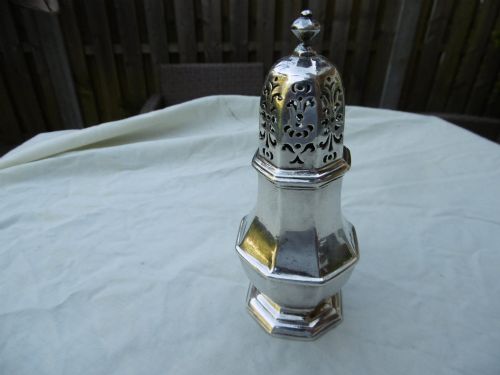
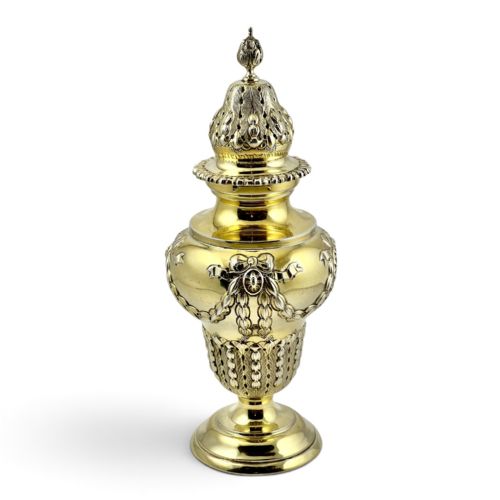
The versions you are most likely to meet on this page span several centuries and styles, ranging from heavy 18th Century sterling silver octagonal casters to Edwardian silver-gilt examples and later mid-20th Century designs.
Makers utilised a variety of durable media, producing items in sterling silver, brass, and cut glass with lead crystal, often following Georgian, Victorian, Art Nouveau, or Georgian Revival aesthetics.
Materials and construction
Silversmiths constructed metal vessels using sterling silver and silver-gilt, frequently shaping them into octagonal or rounded profiles with fitted, pierced lids for sifting.
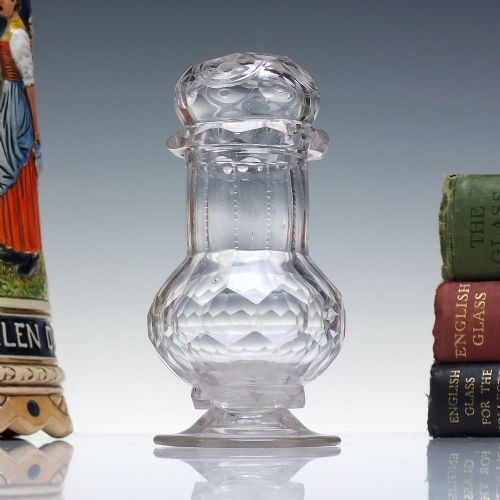
Glass examples combine cut glass or lead crystal bodies with screw foot mounts or metallic tops, uniting transparency with structural metal components.
Judging quality and execution
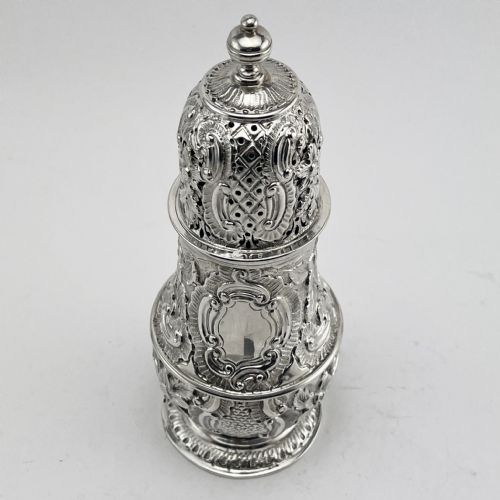
The distinction between ordinary and exceptional pieces rests on the crispness of the piercing in the cover, the weight of the silver, and the harmony of the overall proportions.
Early Huguenot work and output from noted makers display superior engraving, armorial details, and heavier gauge metalwork compared to standard production wares.
Simon Pantin·Barker Brothers·James Dixon And Sons Ltd·Evald Nielsen·Thomas Pritchard
The Antique Sugar Dredger Glossary
- Sugar caster
- A tall, cylindrical or pear-shaped vessel with a pierced dome top used for sprinkling sugar. It is the primary form found across 18th Century and later periods.
- Silver-gilt
- Silver that has been coated with a thin layer of gold on its surface. This technique adds a rich, warm tone to Edwardian and other formal tableware.
- Lead crystal
- A heavy, high-clarity glass containing lead oxide, used for the bodies of cut glass sugar shakers. It offers superior brilliance and weight compared to standard glass.
- Armorial
- A coat of arms or heraldic device engraved upon metalwork. These personal insignia frequently indicate high status and bespoke commissioning on early pieces.
Antique Sugar Dredger: Frequently Asked Questions
What is a sugar dredger used for?
An antique sugar dredger served to sprinkle fine sugar or spices over desserts and baked goods at the dining table. The perforated lid allowed for an even, controlled distribution.
Over time, these vessels evolved in decorative style from plain early forms to elaborate Victorian and Edwardian iterations while retaining their fundamental purpose.
How do I date an antique sugar dredger?
Dating relies primarily on hallmarks stamped into the metal, which indicate the assay office and year of manufacture. Stylistic clues such as an 18th Century octagonal shape or Art Nouveau curves also help identify the period.
Consulting makers' marks provides further precision regarding the workshop of origin.
What materials are sugar dredgers made from?
The listings show that these pieces are predominantly fashioned from sterling silver, silver-gilt, brass, and cut glass with lead crystal components. Metal bodies were often cast and pierced by hand.
Combinations of glass bodies with silver tops became particularly common by the Edwardian era and later decades.
How should I care for a silver sugar dredger?
Silver vessels require gentle cleaning with a specialised, non-abrasive polish to preserve the original hallmarks and surface detail. Storing them in a dry environment prevents tarnishing.
Glass bodies can be washed cautiously in warm, soapy water, avoiding harsh scrubbing on any delicate cut patterns or metal mounts.