
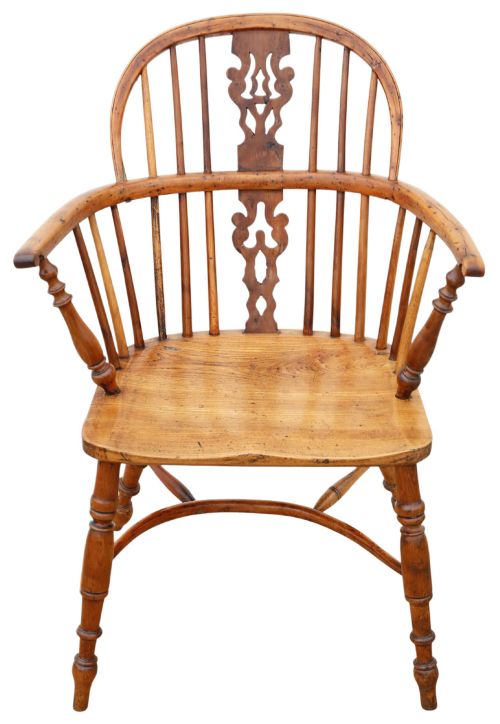
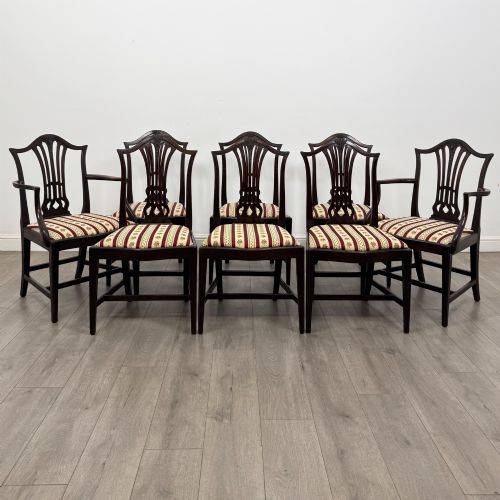
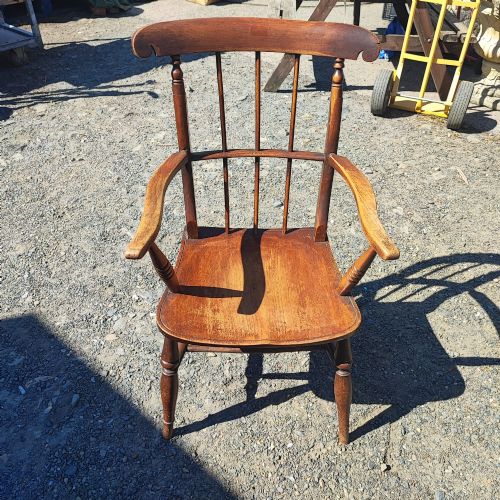
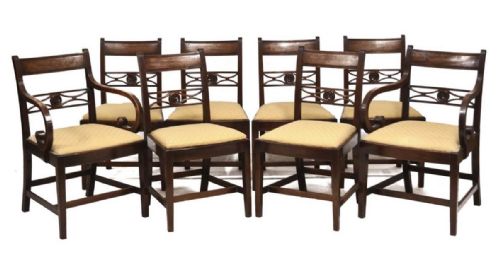

Antique Style Carver Chairs
Antique style carver chairs bring architectural presence to a dining table or desk, offering robust timber frames and generous armrests.

Antique Style Carver Chairs
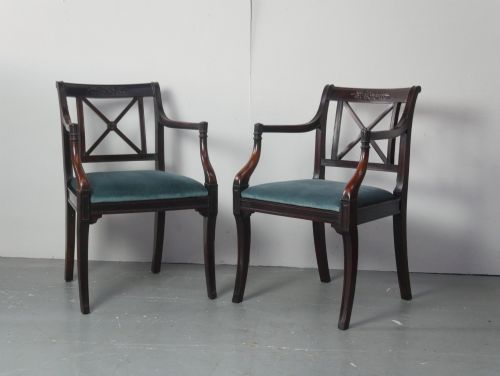
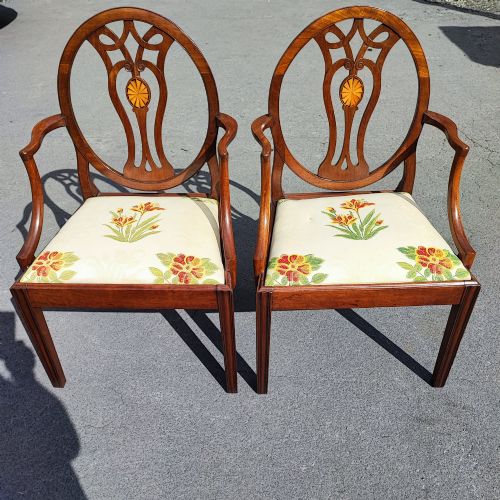
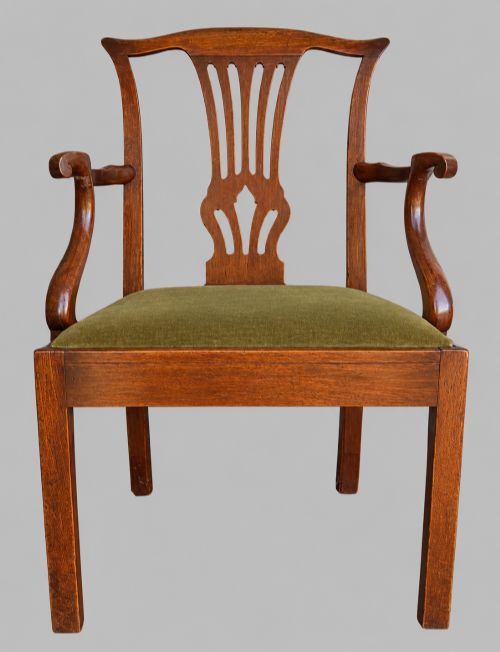
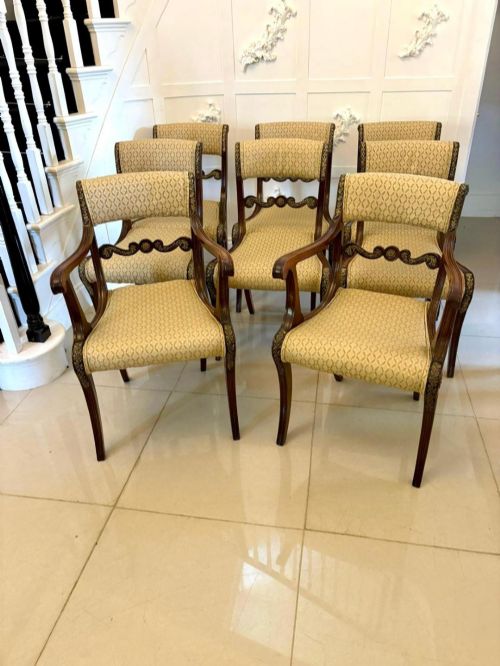
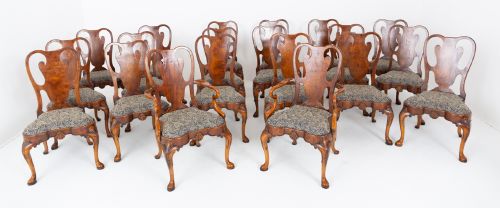
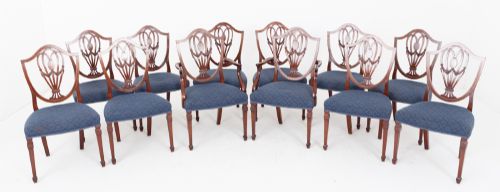
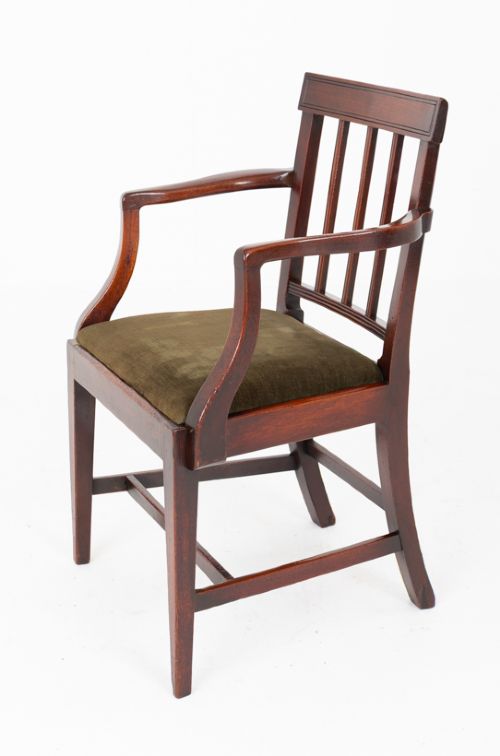
When you search for antique style carver chairs, you encounter seating built with integrated armrests designed to sit at the head of a dining table or beside a desk. These chairs take cues from formal historical idioms including Chippendale, Hepplewhite, and Queen Anne styles, often produced as part of larger dining sets or matched pairs.
The selection ranges from genuine 18th-century George III pieces to later revival pieces from the Victorian and Edwardian eras, as well as the 1920s and 1930s. Mahogany forms the predominant timber, though walnut, oak, fruitwood, ash, and elm also appear regularly across country and formal workshops.
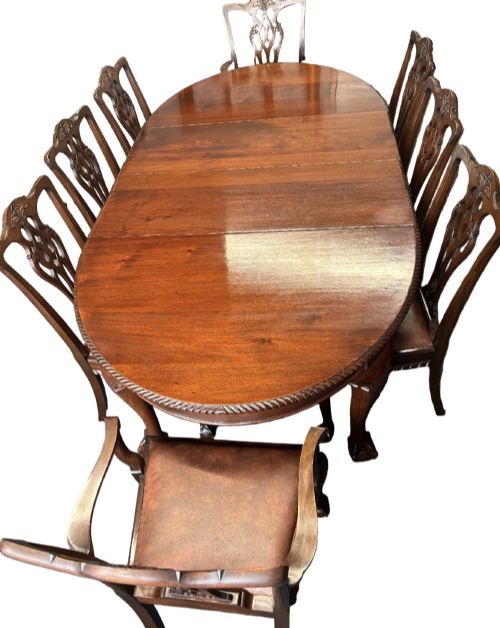
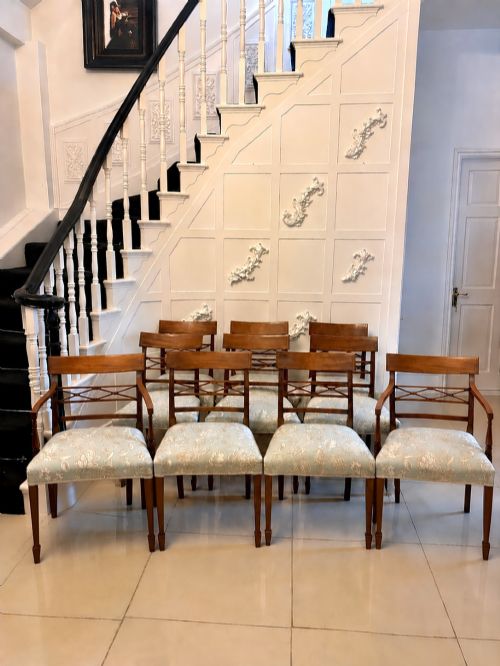
Buyers frequently find armchairs listed alongside wider suites of dining chairs, where two carvers accompany a set of single side chairs. Regional variations span English workshops alongside Scottish and Swedish interpretations of classical furniture design.
How They Were Made
Cabinetmakers constructed these frames primarily from dense hardwoods like mahogany and walnut, utilising traditional mortise and tenon joinery to ensure rigidity under daily use. Country variants relied on local timbers such as elm, ash, and fruitwood, sometimes incorporating rush seating alongside solid timber panels.
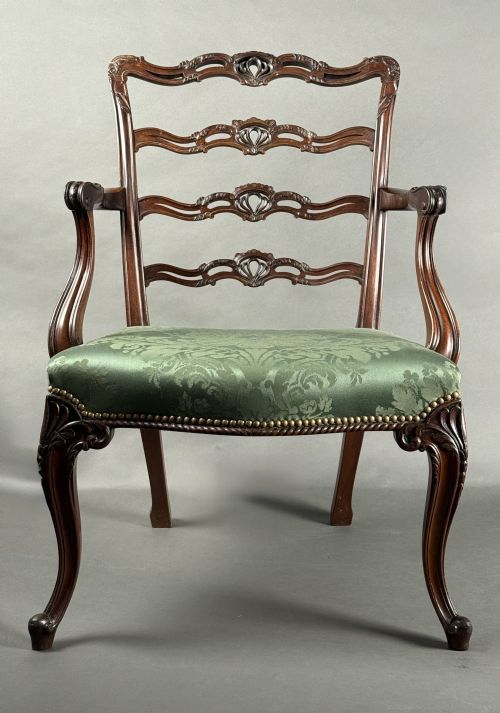
Surface ornamentation involved hand carving, inlay work, and piercing on splats and shield backs, executed with brass hardware details on select library and desk models. Upholstery methods evolved from drop-in rush pads to sprung seats covered in leather, velvet, fabric, or tapestry.
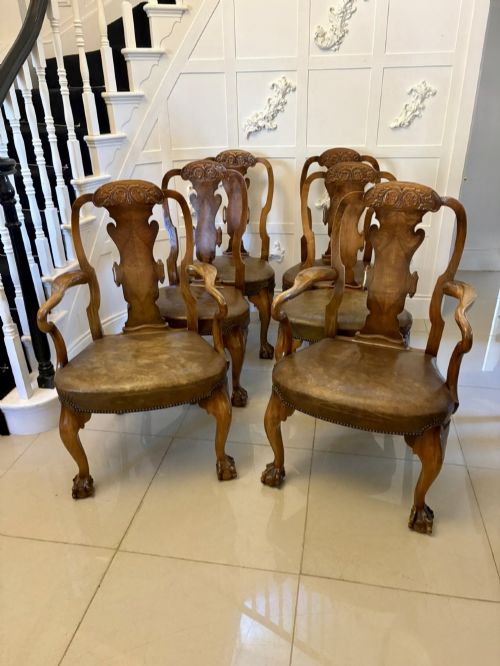
Revival pieces from later decades maintained these joinery traditions, applying period-specific proportions and decorative motifs such as lyre backs, claw-and-ball feet, and scroll arms to emulate earlier centuries.
Antique Style Carver Chairs Retail Price Guide 2026
Typical asking prices for style carver chairs among the pieces listed under this phrase on Sellingantiques today, from the lower quarter to the upper quarter. They describe what is for sale here now, not the wider market.
Listings feature mahogany, walnut, oak, elm, ash, and fruitwood across Georgian, Victorian, Edwardian, and 20th-century periods.
What Varies in Quality
The distinction between tiers rests upon the crispness of the hand-carved detailing, the weight and grain figure of the primary timber, and the architectural harmony of the proportions. Superior examples display deep, clean relief work on the splats and arms rather than shallow, machine-cut replication.
Structural integrity dictates the upper echelon of surviving seating, where tight joints and original timber patination remain undisturbed by heavy restoration. Matched sets command greater cohesion, preserving uniform colour and grain across every individual frame in a dining arrangement.
Liberty Morris And Co·Alfred Allen Of Birmingham·Maple And Co
The Antique Style Carver Chairs Glossary
- Carver
- An armchair with integrated armrests traditionally placed at the head of a dining table. These frames match or complement the surrounding single chairs.
- Shield Back
- A chair back shaped in the outline of a heraldic shield, popular during the late 18th century and subsequent revival periods.
- Ladder Back
- A chair back featuring multiple horizontal wooden rails stacked vertically. This design appears frequently in country dining sets.
- Cabriole Leg
- A furniture leg that curves out in a convex arc and tapers inward to a concave arc, often terminating in a claw-and-ball foot.
Antique Style Carver Chairs: Frequently Asked Questions
How do I date a carver chair?
Dating relies on examining the timber species, joinery techniques, and stylistic markers such as back splat shapes and leg profiles. 18th-century originals exhibit hand-cut joinery and dense, patinated mahogany or walnut.
Revival pieces from the Victorian and Edwardian periods often utilise standardised machine-cut components alongside period-appropriate decorative motifs. Consulting the specific era recorded in the listing helps establish the manufacturing timeframe.
Are carver chairs comfortable?
Comfort depends upon the seat construction, arm height, and overall proportions of the frame. Many examples feature upholstered drop-in pads or sprung bases covered in leather, fabric, or velvet.
Low or open arm designs allow the chair to slide neatly beneath standard dining tables. Solid timber seats paired with fitted squab cushions offer another traditional seating option.
Can I mix carvers with modern tables?
Carver chairs integrate smoothly into contemporary dining schemes by introducing rich timber textures and historical contrast. Measuring the arm height against the underside of the table ensures the chair can slide in properly.
Pairs or single armchairs work effectively as host seating at either end of a minimalist or modern table.