




Antique Sterling Salt Pair
An antique sterling salt pair brings period silver onto the dining table through matching sets designed to hold salt for diners.
Antique Sterling Salt Pair
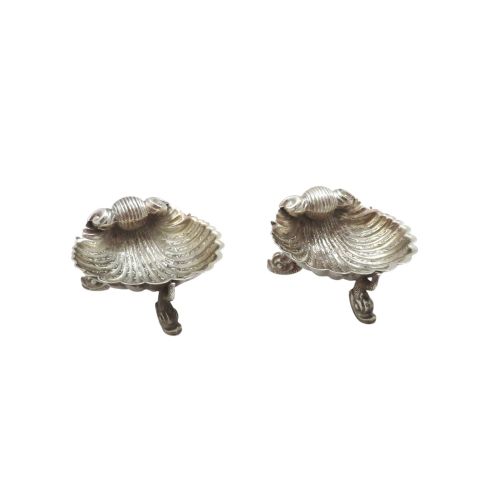
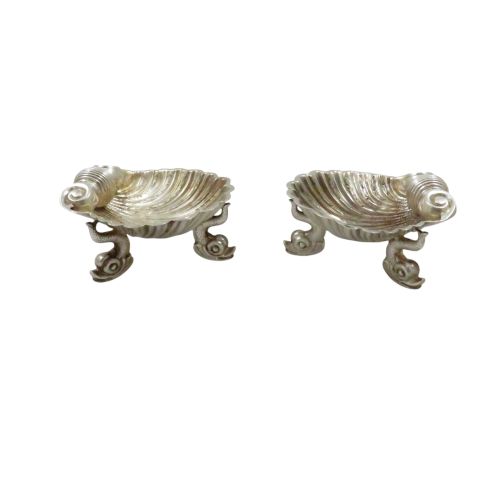
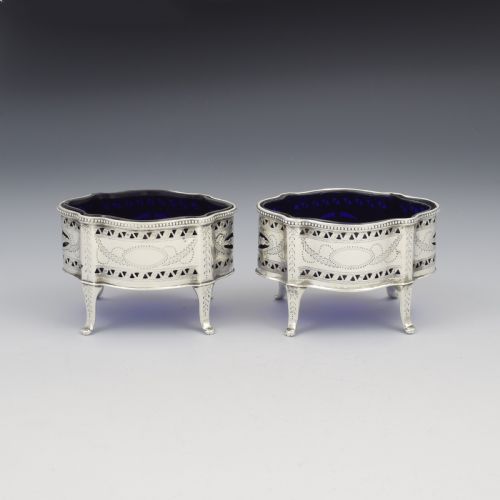
An antique sterling salt pair consists of matched table vessels utilised for holding loose salt during formal dining across the Georgian, Victorian, and Edwardian eras. These domestic items appear in various domestic forms, from traditional footed cauldrons and boat-shaped vessels to novelty configurations shaped as shells, birds, and wheelbarrows.
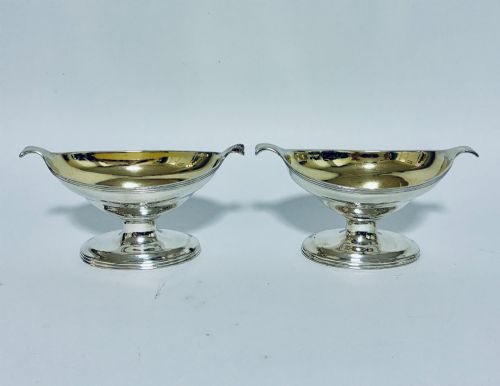
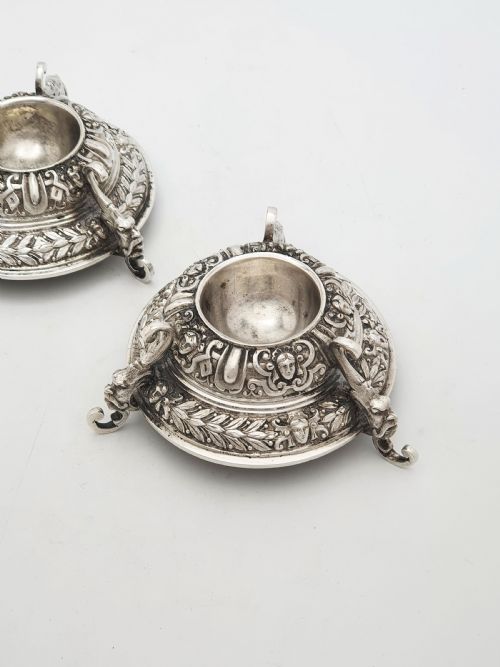
Victorian examples dominate the selection, often incorporating intricate cast details such as dolphin feet, cherub handles, or figural motifs alongside fitted spoons. Earlier pieces from the eighteenth century tend towards heavier, plain trencher forms or pedestal designs featuring gilt interiors.
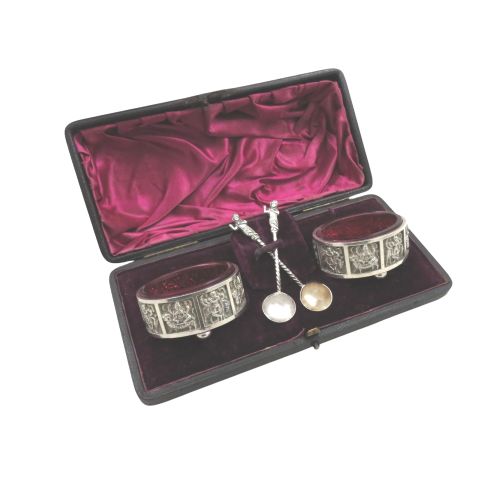
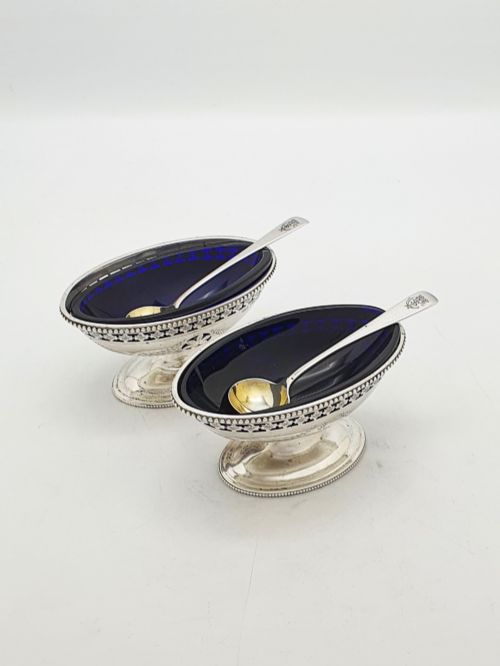
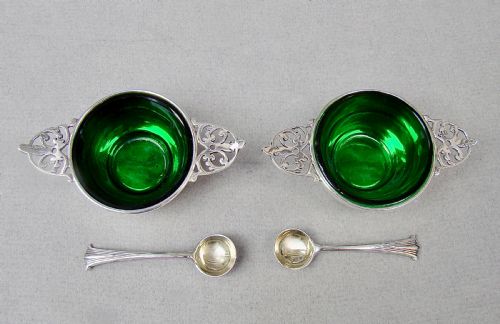
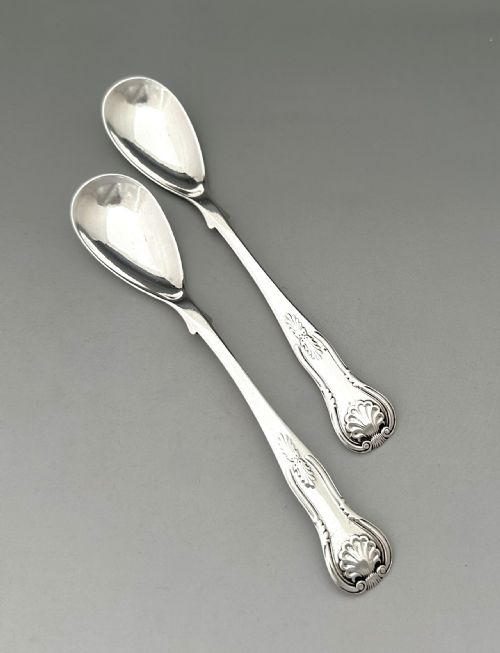
Edwardian iterations introduce lighter wirework frames and arts and crafts bowls, while cased sets pairing salts with matching spoons remain common across the latter half of the nineteenth century.
How they were made
Silversmiths formed these vessels through hammering, casting, and piercing sterling silver sheets, frequently applying chased or repousse decoration to create textural depth on bodies shaped as shells, thistles, or boats. Interiors often received a thin layer of gold gilt or vermeil to protect the silver from the corrosive properties of salt.
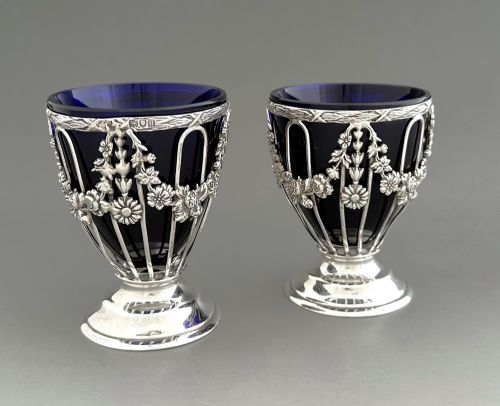
Many open salt cellars required contrasting internal elements to contain the condiment securely without direct contact with the metal. Makers integrated removable cobalt glass or deep blue glass liners, held snugly within pierced or solid silver wirework and basket frames.
Listings feature sterling silver salt pairs spanning the eighteenth, nineteenth, and early twentieth centuries, incorporating Georgian, Victorian, and Edwardian styles.
What varies in quality
The degree of artistic execution in cast novelty forms dictates much of the distinction between standard vessels and exceptional pieces, particularly in detailed figures like birds, chicks, or historical characters. Crispness in hallmarks, structural integrity of delicate pierced wirework, and the presence of original matching spoons or fitted presentation cases contribute to desirability.
Substantial gauge silver and intact, undamaged original cobalt glass liners also elevate individual items above standard domestic equivalents.
Josiah Williams & Co·David Hennell·Hamilton & Inches·John Edmonstone·Sampson Mordan·Thomas Johnson·Edward Wood
The Antique Sterling Salt Pair Glossary
- Trencher salt
- An early heavy silver salt cellar, usually square or octagonal, designed to sit directly on the dining table without elevated feet.
- Vermeil
- Sterling silver coated with a thin layer of gold on the interior surface to prevent corrosion from salt.
- Cobalt glass
- Deep blue moulded glass inserts utilised as protective liners inside open silver salt cellars.
- Repousse
- A metalworking technique where the silversmith hammers the silver from the reverse side to form a raised design in relief.
- Novelty salt
- A salt cellar manufactured in an amusing or unusual figurative shape, such as an animal, hat, or vehicle.
Antique Sterling Salt Pair: Frequently Asked Questions
How were salt cellars used on historic tables?
Dinners utilised open salt cellars placed beside each place setting or shared between guests to dispense loose salt onto the edge of a plate using small condiment spoons or fingers.
Servants filled these vessels before meals, and the inclusion of glass liners protected the silver from chemical erosion caused by the contents.
Why do some salts have blue glass liners?
Silver reacts chemically with salt over extended periods, leading to tarnishing and corrosion of the metal vessel if contents sit directly against it.
Cobalt glass liners provided a removable, inert barrier that kept the salt contained safely while adding a striking splash of colour visible through pierced silverwork.
How can I date an antique silver salt pair?
Makers stamped official hallmarks onto the sterling silver surface, recording specific assay office symbols, date letters, and purity marks that identify the exact year of manufacture.
Stylistic shifts, such as heavy Georgian pedestals versus ornate Victorian novelty shapes or lighter Edwardian wirework, also offer immediate visual clues to the period.
What is the difference between a salt cellar and a shaker?
Salt cellars are open vessels designed to hold loose crystal salt accessed with a tiny spoon or pinched by hand, common in eighteenth and nineteenth-century dining.
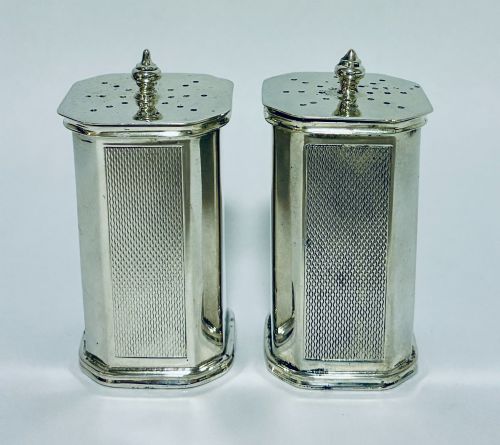
Shakers or pepperettes feature perforated tops intended for sprinkling, which became more widespread towards the late Victorian and Edwardian periods.