
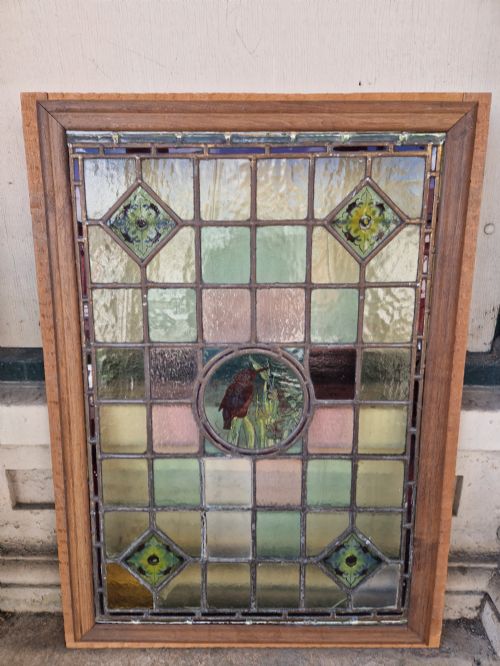


Antique Stained Glass Frame
These antique stained glass frame pieces bring rich colour and historic light into a room, holding centuries of decorative skill.
Antique Stained Glass Frame
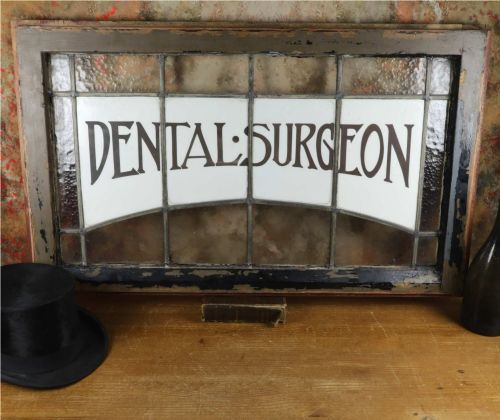
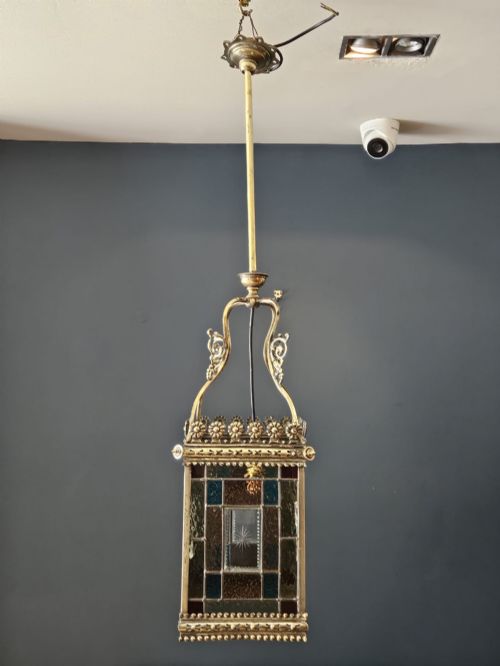
An antique stained glass frame brings together architectural salvage and decorative glazing, showing periods from the nineteenth century through the nineteen-thirties. Buyers seeking an antique stained glass frame encounter ecclesiastical church windows, domestic panels, and fire screens reflecting Victorian, Edwardian, Gothic Revival, and Art Nouveau design.
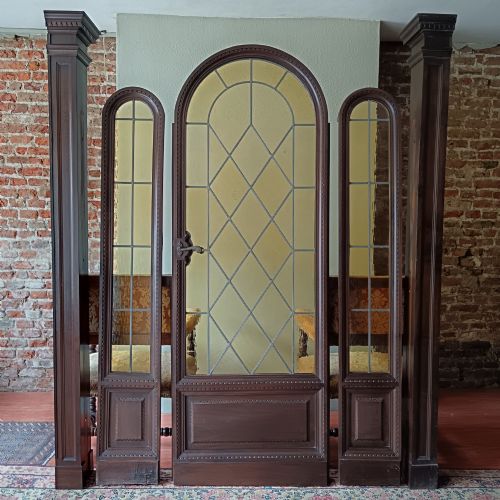
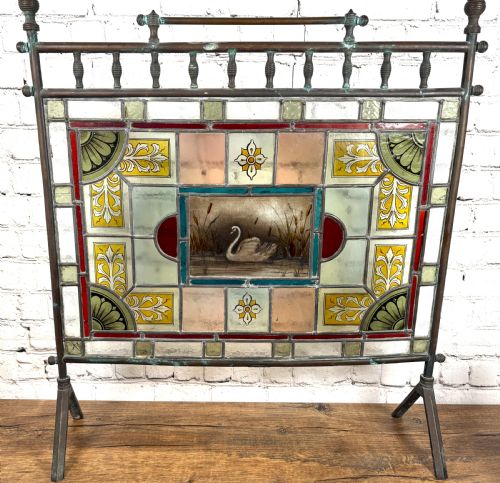
Most examples originate from domestic and institutional settings, taking the form of rectangular panels, arch top church windows, and fireguards. The selection spans structural framing items alongside decorative stained glass panels with hand-painted pictorial details.
Makers utilised timber, pine, brass, and iron to construct the surrounding supports, housing leaded glass panels with amber bullseyes or pictorial scenes. These objects capture the distinct aesthetic movements of the late nineteenth and early twentieth centuries.
Evaluating quality in these pieces
Quality rests in the complexity of the glass painting and the integrity of the leading. Hand-painted scenes showing knights, countryside vistas, or heraldic emblems demand exceptional artistic skill compared to standard geometric leading.
The choice of surrounding materials also defines the piece, with substantial brass framing or architectural timber surrounds elevating the work. Original leadwork that remains rigid and stable without extensive modern intervention indicates superior preservation.
A stoic Victorian knight in full armour stares out from one leaded window, keeping a watchful eye over the room.
The Antique Stained Glass Frame Glossary
- Came
- A slender grooved strip of lead used to hold pieces of glass together in a window. These strips form the structural grid of the design.
- Bullseye
- A circular centre piece of blown glass showing a concentric ripple pattern. They add texture and amber tones to traditional leaded windows.
- Arch Top
- A window design featuring a curved upper section rising to a rounded peak. This architectural shape is common in ecclesiastical and Victorian church windows.
- Fireguard
- A protective screen placed in front of a fireplace to block sparks. In this selection, they utilise stained glass panels within sturdy frames.
- Architectural Salvage
- Building components rescued from demolition or renovation for reuse. This category includes windows, doorways, and structural glazing panels.
Antique Stained Glass Frame: Frequently Asked Questions
How do I hang a stained glass window?
Stained glass panels require secure weight-bearing brackets rather than standard picture hooks because of the heavy lead and glass construction. They are best mounted inside a window reveal to allow natural light to pass through the coloured glass.
Alternatively, hanging them on a wall before an artificial backlight creates a similar glowing effect without requiring an exterior window opening.
Were these originally exterior windows?
Many of these pieces served as exterior or interior partition windows in Victorian and Edwardian buildings, churches, and houses. Others functioned as decorative fire screens or architectural doorways.
Their robust lead and timber construction allowed them to withstand external weather conditions while providing interior privacy and decoration.
How do I clean an antique glass panel?
Cleaning requires a soft microfibre cloth and mild soapy water, avoiding harsh chemical cleaners that might damage painted surfaces or aged lead cames. Gentle wiping preserves the delicate hand-painted details found on many nineteenth-century pieces.
Pressure washers and abrasive pads must be avoided entirely to prevent loosening the soldered lead joints holding the glass together.
How do I date an antique window?
Dating relies on stylistic clues such as the heavy ornamentation of Victorian Gothic Revival pieces or the flowing motifs of Edwardian and Arts and Crafts designs. The choice of framing materials, from cast iron to pitch pine, also points to specific manufacturing eras.
Subject matter, including hand-painted knights, Dutch children, or heraldic emblems, helps place a piece within nineteenth or twentieth-century production periods.