

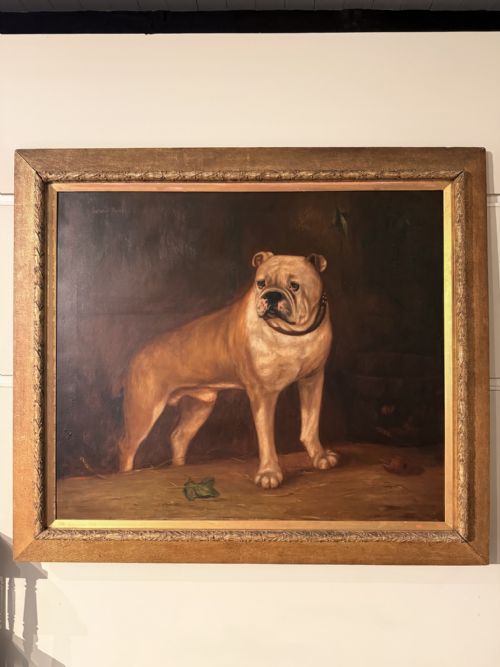
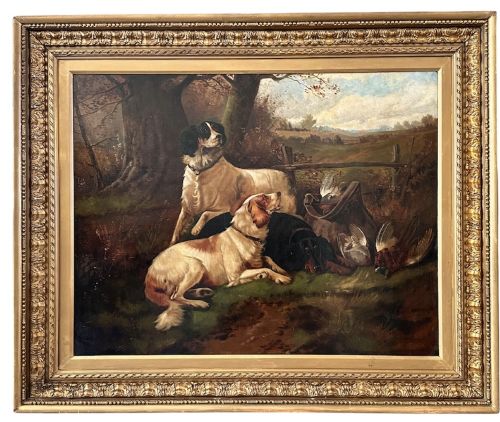
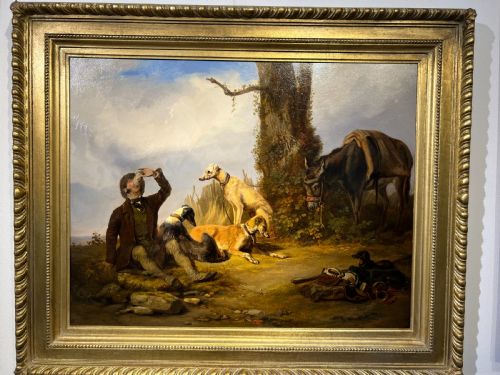

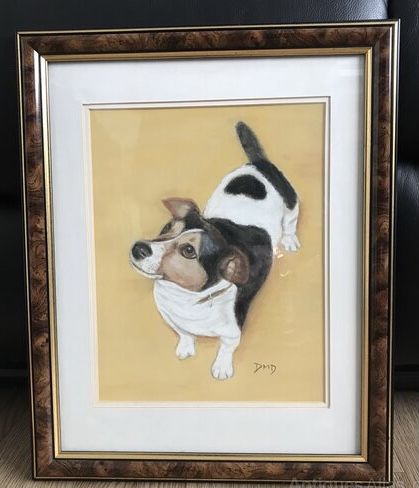
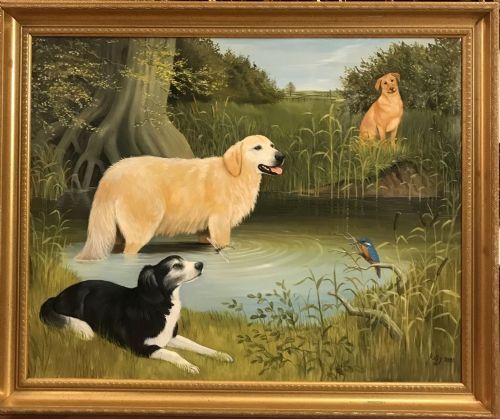


Antique Sporting Dog Painting
An antique sporting dog painting captures the working character and loyal presence of hounds, terriers, and gun dogs across centuries of British canine art.
Antique Sporting Dog Painting
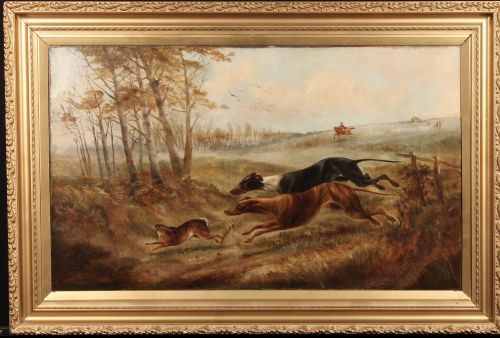
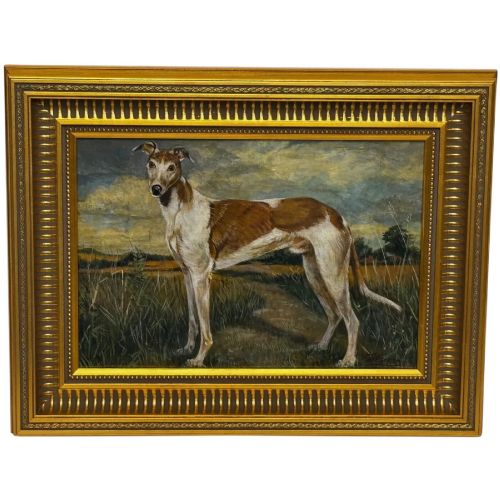
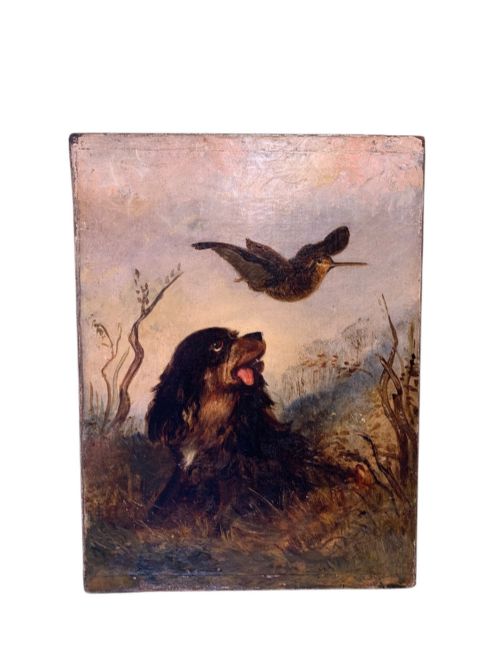
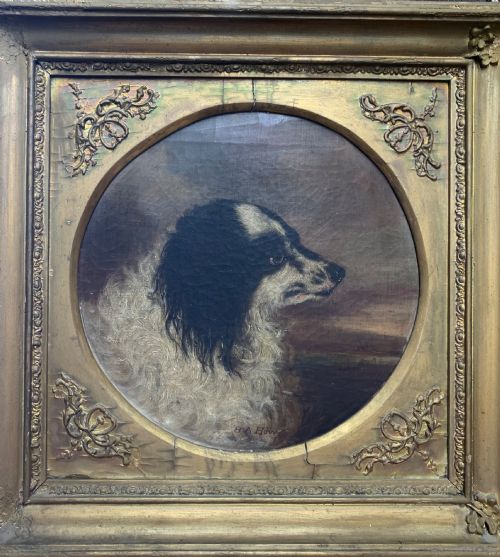
Every antique sporting dog painting on this page reflects the deep tradition of British canine portraiture and field sports, spanning from the Georgian and Regency eras through the Victorian period into the mid-twentieth century.
Buyers will encounter oil on canvas and watercolour works depicting spaniels, setters, pointers, hounds, and terriers, often shown alone in landscapes or alongside horses, guns, and the day's bag.
Materials and technique
The works rely primarily on oil paint applied to stretched canvas, panel, or artist's board, capturing the texture of animal coats and the light of outdoor landscapes.
Watercolour on paper appears in specific pieces, offering a lighter handling that suits delicate pencil sketches and finished portrait studies of dogs.
Original giltwood and gold leaf frames frequently accompany the canvases, completing the period presentation of these nineteenth and early twentieth-century artworks.
Current listings feature oil paintings and watercolours spanning from the Georgian era through the Victorian period to the mid-twentieth century.
Evaluating the artwork
Quality rests upon the artist's ability to render the correct anatomy, intelligent expression, and distinctive coat of each breed with anatomical precision.
The depth of the surrounding landscape and the handling of natural light elevate a piece from a simple record to a accomplished fine art painting.
The preservation of the original oil paint surface and the harmony of the period frame contribute significantly to the standing of the work.
Henry Barraud·George Armfield·John Sargent Noble·Sir Edwin Henry Landseer·John Emms·John Frederick Herring Senior·Arthur Wardle·William Barraud·Samuel Raven·George E Sharpe·Colin Graeme Roe·Valentine Thomas Garland·John Trivett Nettleship·Fannie Moody·Edwin Frederic Holt·Robert Cleminson·Alfred Duke·Henri Schouten
The Antique Sporting Dog Painting Glossary
- Oil on canvas
- Pigment bound in drying oil applied to a woven fabric support. This remains the primary medium for substantial nineteenth-century animal portraits.
- Giltwood
- Wood carved and coated with gold leaf or gold paint. These ornate frames define the period aesthetic of Victorian and Georgian paintings.
- British sporting art
- A genre dedicated to depicting field sports, horses, and hounds. It forms the historical backbone of canine portraiture.
- Hare coursing
- A traditional field sport involving hounds hunting hares by sight. It is a frequent subject in early sporting watercolours and oils.
- Provenance
- The documented history of a painting's ownership and origin. It helps establish attribution to specific nineteenth-century masters.
Antique Sporting Dog Painting: Frequently Asked Questions
What breeds appear most often?
Spaniels, setters, pointers, and various types of hounds dominate the canvases, reflecting the popularity of shooting and hunting in British country life.
Terriers and collies also feature prominently, appearing both as working farm companions and as cherished pets in detailed landscape settings.
How should I hang these paintings?
These works suit traditional studies, libraries, and living spaces where their rich earth tones and classic animal subjects can anchor a room.
Keep them away from direct sunlight and excessive heat sources to protect the oil paint and canvas from drying out over time.
Are these works signed by the artists?
Many pieces carry the signature or monogram of the painter, while others are attributed to specific schools or followers of major nineteenth-century masters.
Documentation and stylistic comparison help identify the hand behind unsigned works, particularly within established Victorian sporting art traditions.
What periods do these paintings cover?
The listings span from the Georgian and Regency periods of the early nineteenth century through the height of the Victorian era and into the twentieth century.
This broad timeline shows the evolution of animal painting from naive early works to highly polished academic portraits.