
Antique Spoon Pair
When searching for an antique spoon pair, collectors find matched table sets designed for serving, dessert, or dining use across centuries.
Antique Spoon Pair
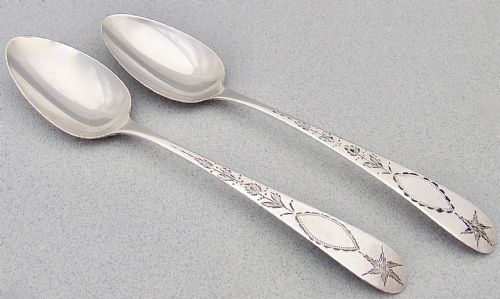
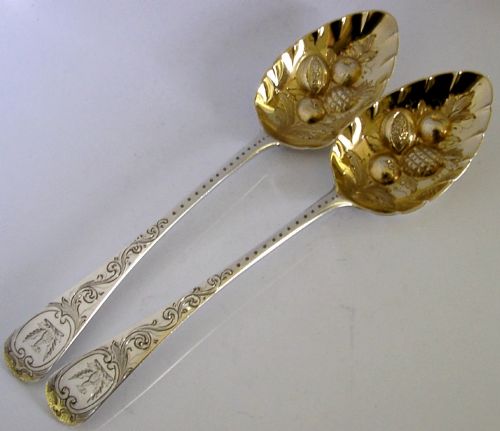
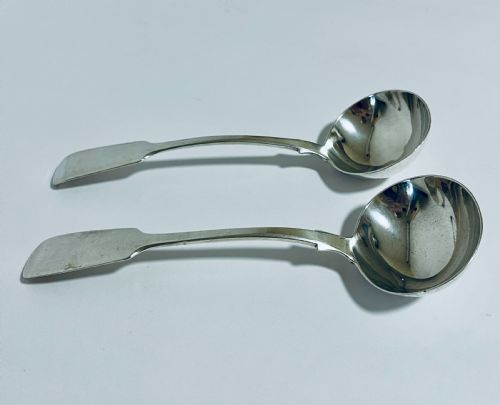
An antique spoon pair represents matched sets created for utilitarian dining, ceremonial dessert use, or elegant household service. Collectors searching this phrase encounter items spanning the eighteenth, nineteenth, and early twentieth centuries, encompassing Georgian, Victorian, and Edwardian eras. The selection ranges from plain provincial tablespoons and basting implements to heavily ornamented berry spoons and cased presentation sets.
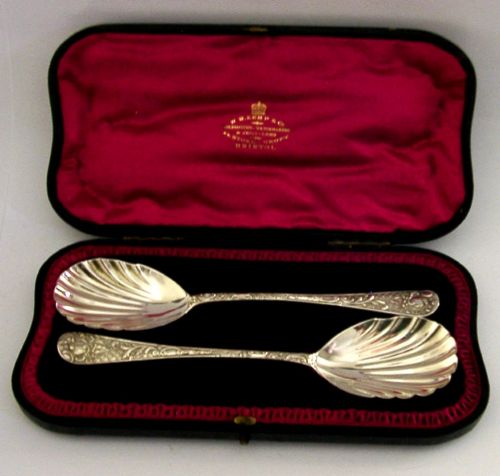
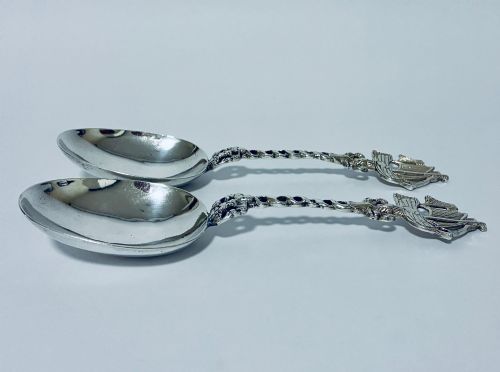
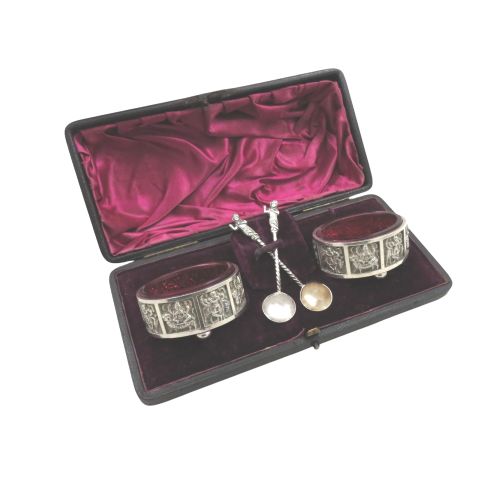
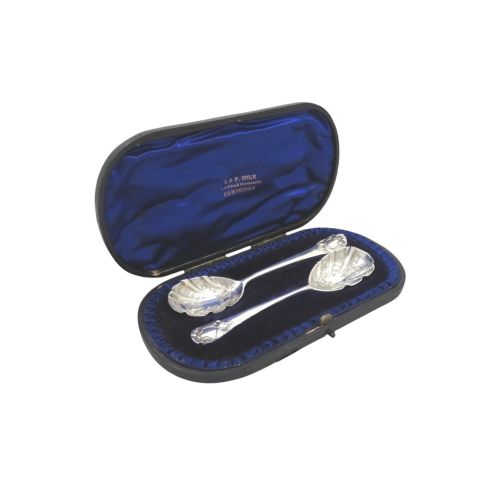
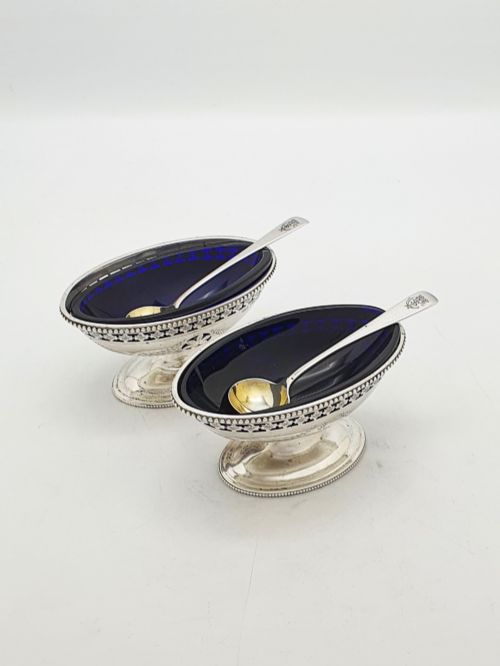
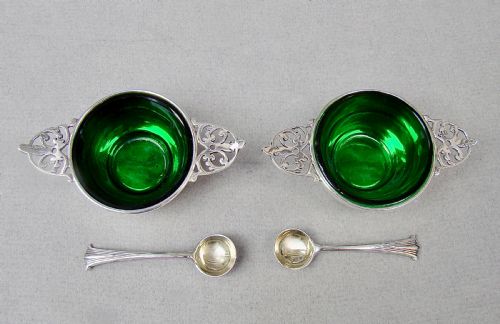
Many surviving examples combine silver tableware with fitted presentation cases lined in velvet or silk, often accompanied by matching salt cellars or glass liners. Specialised forms include dessert spoons, ladles, mustard spoons, and novelty Apostle designs. These matched sets reflect formal dining traditions where symmetry and presentation held significant importance on the dining table.
How They Were Made
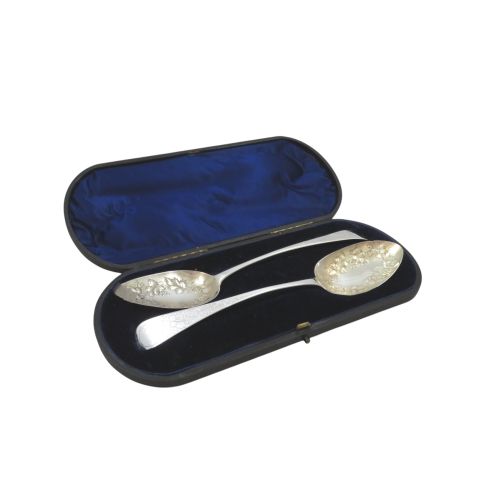
Makers shaped these utensils primarily from sterling silver or solid silver, occasionally applying a silver gilt wash to the bowl interiors for decorative contrast. Certain Victorian and Georgian variations incorporate delicate piercing techniques, hand-engraved handle motifs, and embossed fruit or berry designs pressed into the bowl surfaces.
Fitted presentation boxes utilise supportive wooden structures wrapped in tactile materials such as leather, mahogany, or walnut, lined internally with soft fabrics to protect the metalwork. Salt cellars frequently incorporate fitted cobalt glass liners held securely within pierced or solid silver frames.
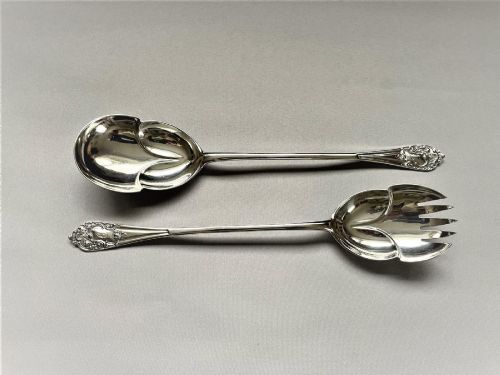
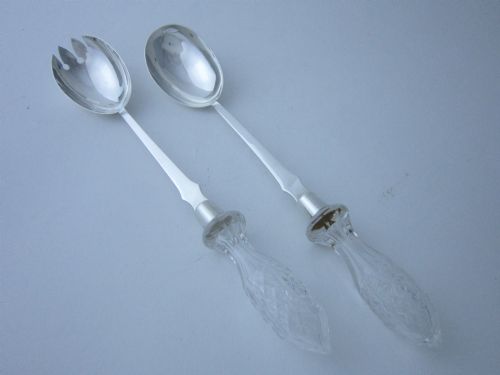
Object variations span serving spoons, salt cellars, ladles, butter knives, and complete cased presentation sets.
What Varies in Quality
The standard of an antique spoon pair depends heavily on the crispness of the chased or engraved ornamentation upon the handles and bowls. Superior examples retain deep, legible hallmarks and sharp relief work that has not suffered from excessive polishing over generations.
Provenance and completeness also dictate distinction, particularly when original fitted presentation cases, matching salt liners, and maker cased sets remain entirely intact. Master silversmith output demonstrates superior balancing, weighty gauge silver, and fine structural symmetry between the matched pair.
John Pittar·Josiah Williams And Co·Hester Bateman·Peter And Anne Bateman·John Edmonstone·John Locker·Isaac Davenport·James Tait·Smith Nicholson And Co·Walker And Hall
The Antique Spoon Pair Glossary
- Berry spoon
- A serving spoon featuring embossed and engraved fruit or floral motifs applied to the bowl long after initial manufacture, popular during the Georgian and Victorian periods.
- Hallmark
- An official stamped mark applied to precious metals indicating the standard of silver, the assay office, the maker, and the year of production.
- Rat tail
- A traditional tapering spine running down the reverse of a spoon bowl from the handle junction, offering structural reinforcement.
- Gilt
- A thin layer of gold applied to the surface of silver items, commonly seen inside spoon bowls or across entire ceremonial presentation pieces.
- Basting spoon
- An unusually large utensil designed for applying juices during meat preparation, often featuring extended handles and generous bowl capacities.
Antique Spoon Pair: Frequently Asked Questions
What were antique spoon pairs used for?
These matched utensils served specialised dining functions including serving fruit, dishing preserves, or transferring berries during formal meals.
Many sets were also designed specifically for presentation and gift-giving, housed securely within custom velvet-lined leather cases.
How do I identify a Georgian spoon pair?
Georgian examples typically display simpler, elegant lines or distinctive Celtic point handles dating between the mid-eighteenth and early nineteenth centuries.
Examining the stamped hallmarks provides precise assay office symbols and date letters corresponding to the reigning monarch.
Can I use antique silver spoons daily?
Sterling silver utensils withstand gentle everyday use provided they are washed by hand using mild detergents and soft cloths.
Avoiding harsh abrasives preserves the delicate hand engravings, gilt washes, and historic hallmarks accumulated over centuries.
Why are some spoons gilded?
Silver gilt finishes were applied to protect the metal from acidic foods such as fruit juices and preserves while adding visual contrast.
This decorative technique remained especially popular on dessert services, berry spoons, and novelty salt sets.