




Antique Spirit Burner Kettle
An antique spirit burner kettle brings portable warmth and period hospitality to a room, combining a fitted metal vessel with its own under-mounted flame source.
Antique Spirit Burner Kettle
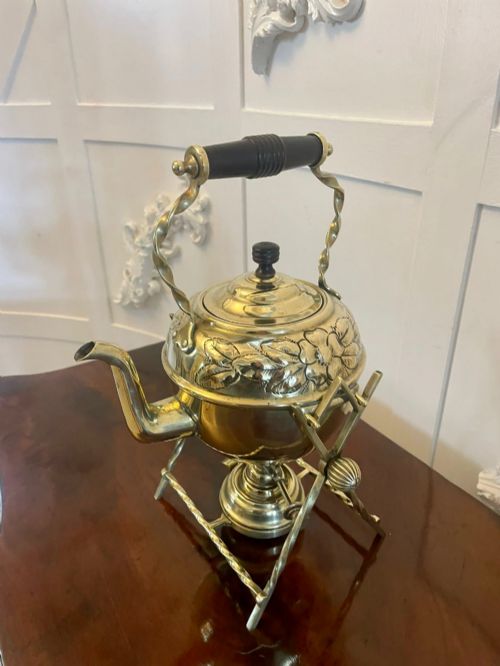
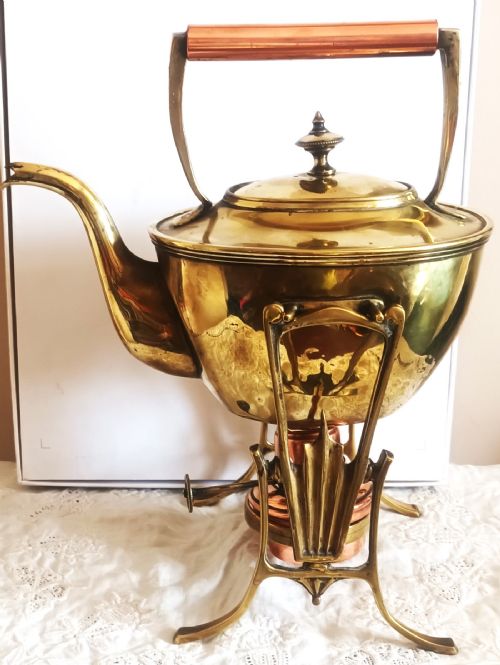
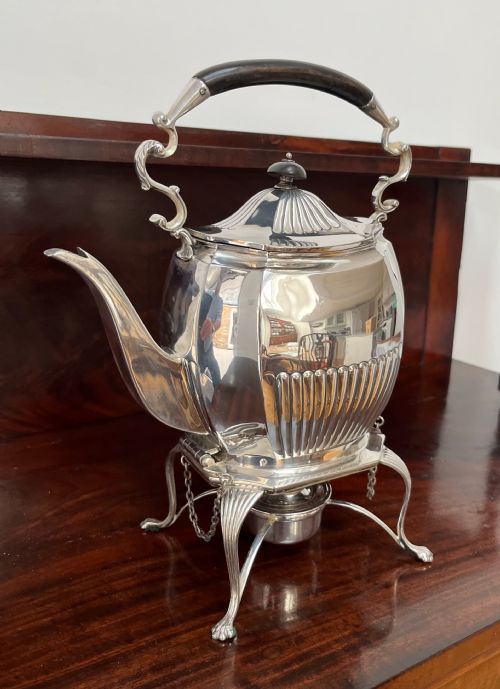
An antique spirit burner kettle sits upon a dedicated metal stand housing a small fuel burner beneath the water vessel. These functional tea pieces appear across Victorian, Edwardian, and Arts and Crafts periods, featuring forms designed for table service.
The standard configuration on this page pairs a silver-plated, brass, or copper kettle with a matching stand and functional burner. Makers produced these pieces from the mid-nineteenth century through the early twentieth century for keeping water hot during long drawing-room teas.
Materials and construction methods
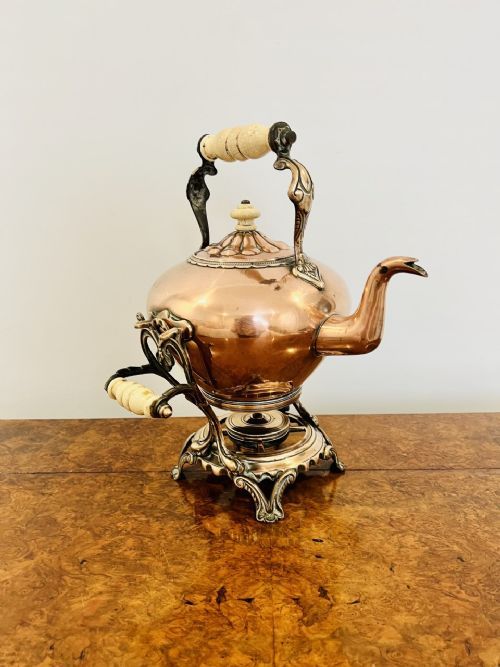
Metalworking techniques shape the bodies of these kettles, utilising heavy sheets of copper, brass, and silver plate formed into rounded or panelled vessels. Artisans incorporated insulating touches like wood, ebony, and bone on lifting handles to protect hands from conducted heat.
Stands and burners required intricate assembly, employing wrought iron and cast brass to support the suspended water container securely above the flame. Riveted joints, hinged bails, and articulated swing frames show the careful hand-assembly typical of the period workshops.
Hanging copper kettles swing gently from their frames, offering a rustic hearth aesthetic designed for Victorian drawing rooms.
Distinguishing quality across periods
Substantial metal gauge and balanced proportions separate sturdy functional pieces from lighter decorative examples. Heavier brass, copper, and thick silver plating endure decades of polishing while retaining crisp lines on mouldings and stands.
Design ambition distinguishes standard production from exceptional pieces influenced by the Aesthetic Movement or Arts and Crafts ideals. Integration of matching burners, original wooden or bone handle insulators, and harmonious stand architecture elevate the overall object.
William Soutter & Sons·Fenton Brothers·Frederik Ellis Tim & Co
The Antique Spirit Burner Kettle Glossary
- Spirit burner
- A small metal vessel containing a wick and filled with methylated spirit or alcohol to heat the water above. It sits securely within the base of the stand.
- Spirit kettle
- A tea kettle suspended over a small lamp or burner, designed to keep water simmering at the dining or drawing-room table.
- Stand
- The metal frame that holds the kettle at a fixed height above the burner. Stands often incorporate hinged arms or chains to secure the burner.
- Bail handle
- The arched overhead handle attached to the sides of the kettle body, typically fitted with an insulated grip made of wood, bone, or ebony.
- Silver plate
- A thin layer of silver fused or electroplated onto a base metal such as copper or brass. This technique offered the brilliance of solid silver at a lower cost.
Antique Spirit Burner Kettle: Frequently Asked Questions
How do you use an antique spirit burner kettle?
Fill the main vessel with water and place it securely on the metal stand above the unlit burner. Fill the small burner reservoir with methylated spirits, light the wick, and adjust the flame to keep the water hot during tea service.
Exercise caution when handling burning spirit fuel and hot metal components. Ensure the stand is placed on a heat-resistant surface before lighting the burner underneath the suspended kettle.
What metals are these kettles made from?
The listings show a prevalence of heavy copper, polished brass, and silver-plated base metals. Many pieces combine copper bodies with brass fittings to create a warm two-tone appearance.
Handles frequently incorporate secondary materials like wood, ebony, or bone to act as thermal insulators. Wrought iron also appears occasionally in the construction of stands and hanging apparatuses.
How do I tell Victorian from Edwardian kettles?
Victorian examples often feature heavier brass or copper construction with robust proportions and ornamentation reflecting historic revival styles. Aesthetic Movement pieces from this era lean towards simpler, more artistic forms.
Edwardian pieces tend to favour bright silver-plated finishes and lighter, more refined stands reflecting changing dining fashions. Circa dates around 1900 help place pieces securely in this transitional stylistic period.
Are these kettles safe for boiling water?
Many antique kettles retain their structural integrity, but interior linings may have degraded over time. Silver-plated and tinned interiors require inspection before direct food use to ensure cleanliness.
Most buyers use these pieces primarily for decorative display in period interiors rather than daily boiling. If used, verify that the burner mechanism and stand remain entirely stable and leak-free.