





Victorian Tea Kettle Burner
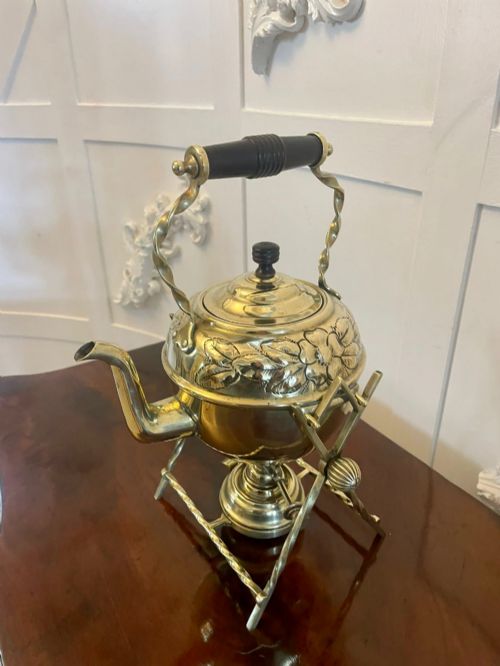
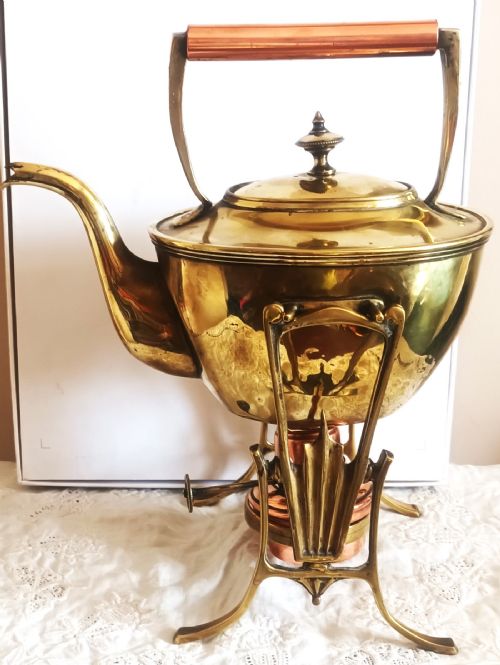
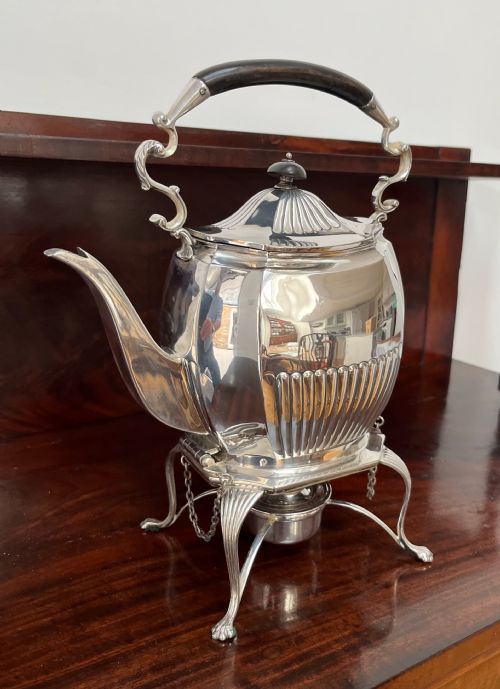
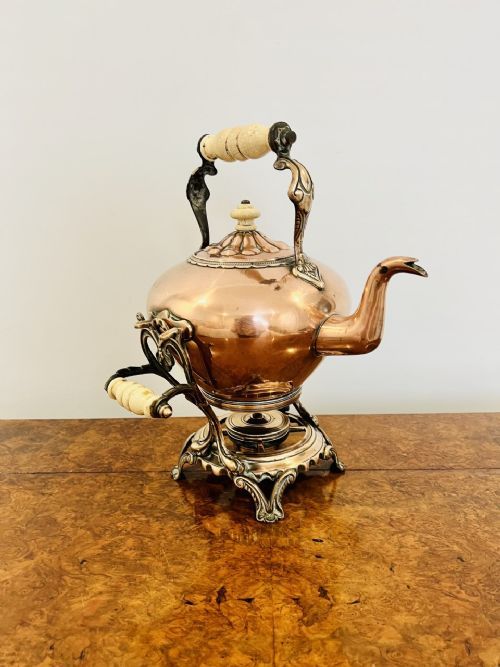
A victorian tea kettle burner is a brass, copper or silver-plated vessel on a stand with its own spirit burner, built to keep water hot at the table.
Victorian Tea Kettle Burner
A victorian tea kettle burner combines a spirit kettle on a metal stand with a small integral lamp, forming a complete tea service accessory from the nineteenth and early twentieth centuries. The form spans several decades, appearing in Victorian, Edwardian, and Arts and Crafts iterations.
Most examples found here take the shape of spirit kettles mounted in frames of brass, copper, or silver plate, often complete with stands and burners. These vessels originate primarily from English workshops of the period, reflecting domestic tea rituals.
Makers such as William Soutter & Sons and Fenton Brothers produced these pieces in substantial numbers during the late nineteenth century. Collectors encounter variations that include dresser style models and hanging copper kettles alongside standard table stands.
How they were made
Metals form the core of construction, utilising brass, copper, and silver plate shaped over stands and frames. Handles frequently incorporate insulating elements of wood, bone, or ebony to protect hands from heat.
Craftsmen joined sheets of copper and brass through soldering and riveting, mounting the vessels on wrought iron or matching metal stands. Burners sat below the kettle body to hold the spirit fuel.
Materials across these listings span brass, copper, silver plate, wrought iron, wood, bone, and ebony.
What varies in quality
Quality rests in the weight of the metal and the crispness of the chasing and mounting. Heavier gauge copper and solid brass display superior durability compared to lighter stamped alternatives.
Design execution distinguishes standard utilitarian objects from works by named makers like William Soutter & Sons or Fenton Brothers. The integration of materials like ebony and bone handles elevates the work.
William Soutter & Sons·Fenton Brothers·Frederik Ellis Tim & Co
The Victorian Tea Kettle Burner Glossary
- Spirit kettle
- A kettle mounted on a metal stand above a small burner. This setup kept water warm for tea without returning to the kitchen.
- Silver plate
- A thin layer of silver applied to a base metal such as copper or brass. This technique offered the appearance of solid silver at a lower cost.
- Aesthetic Movement
- A late nineteenth-century design style emphasising visual beauty over narrative content. Pieces from this movement often feature simplified forms and Japanese-influenced details.
- Arts and Crafts
- A design movement valuing handcraft and traditional materials over mass production. Metalwork from this tradition displays visible hammer marks and honest construction.
Victorian Tea Kettle Burner: Frequently Asked Questions
How do I use the burner?
The small spirit burner sits in a ring beneath the suspended kettle on the metal stand. Filling the reservoir with methylated spirit or similar lamp fuel provides the flame.
Regulating the flame height allows the water inside the kettle to remain at a gentle simmer during tea service.
Are these kettles food safe?
Most antique kettles feature tin linings inside the copper or brass bodies to prevent direct contact with the metal. Over decades of use, these linings can wear thin.
Buyers intending to boil drinking water should inspect the interior surface closely or limit use to decorative display.
How do I clean brass and copper?
Maintaining the surface requires gentle wiping with a soft cloth to remove dust and airborne oils. Aggressive polishing removes the patina accumulated over the decades.
Preserving the aged appearance keeps the character intact, though mild metal cleaners work on unlacquered surfaces if bright shine is preferred.
How do I date a kettle?
Dating relies on stylistic markers, maker marks stamped into the metal, and construction methods. Victorian pieces often display heavier cast mounts and ornate chasing.
Edwardian and later examples shift toward simpler lines, while Arts and Crafts pieces show hand-beaten textures on copper bodies.