



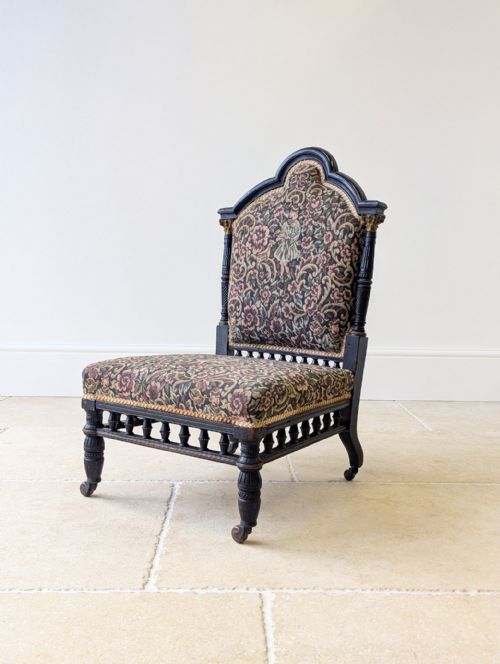
Antique Spindle Armchair
An antique spindle armchair brings honest timber and turning into a room, offering sturdy country seating built for daily use.
Antique Spindle Armchair
The antique spindle armchair covers a broad family of seating, from vernacular country windsors to office desk chairs and low salon seats. A buyer exploring this search phrase will regularly encounter nineteenth-century English farmhouse examples alongside earlier Georgian provincial pieces.
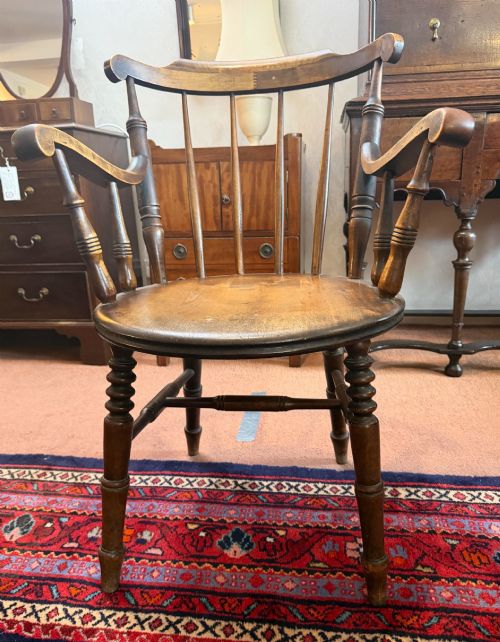
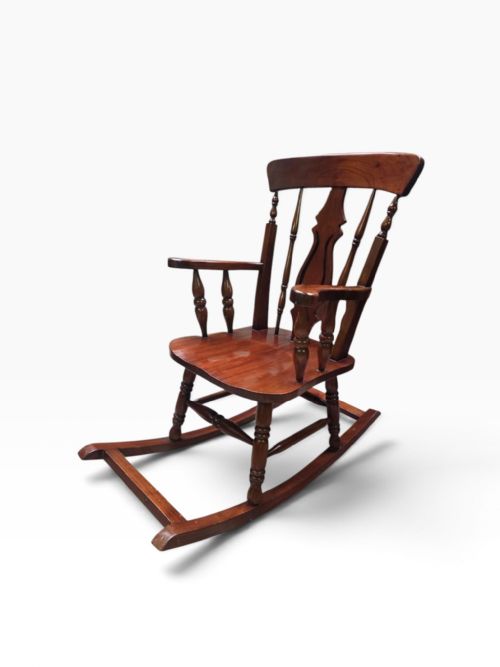
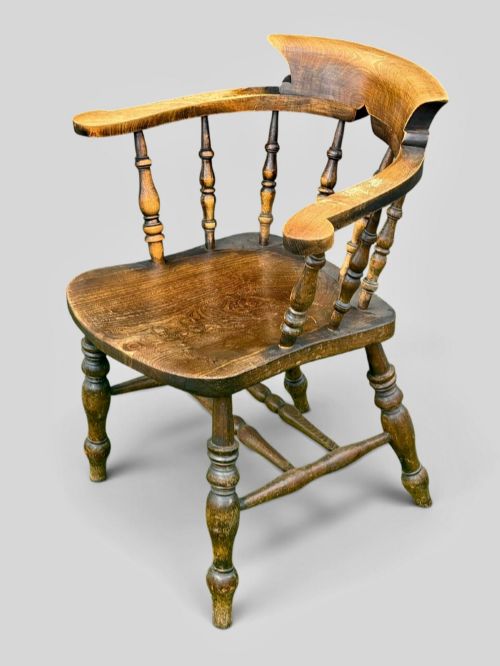
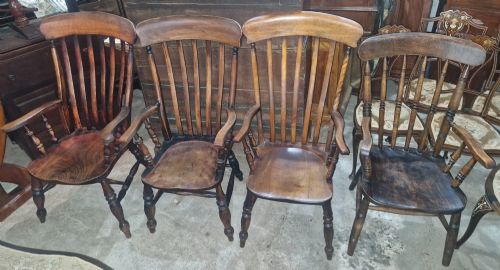
The inventory on this page ranges across kitchen armchairs, smokers' bows, captain's chairs, and rocking versions. Elm, ash, and oak dominate these regional forms, often combined in a single chair for strength and contrast.
Timber and Construction
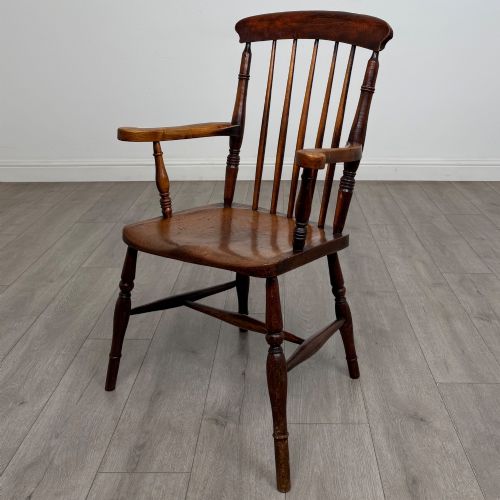
Maker traditions relied on pairing contrasting woods, commonly uniting elm seats with ash or beech spindles and undercarriages. This material strategy utilised the tough, non-splitting grain of elm for the solid seat while employing pliable ash or beech for bent elements and turned members.
Joinery depended heavily on traditional Windsor and vernacular methods, using wedged through-tenons and steam-bent components. Turnery on legs, stretchers, and back supports was executed on pole lathes, producing characterful variations across individual frames.
Listings feature eighteenth-century vernacular chairs alongside Victorian Windsor, office, and rocking forms in elm, ash, and oak.
Evaluating the Build and Survival
Quality rests in the integrity of the original timber components, the retention of well-turned spindles, and the depth of surface patina. Chairs that retain their original wedge joints and uncompromised undercarriages sit at the higher end of the range.
Proportion and comfort distinguish superior vernacular seating from lesser workshop output. The sweep of a crinoline stretcher or the clean profile of a wheel back elevates an example far above standard utility production.
J Spencer·Philip Webb
The Antique Spindle Armchair Glossary
- Spindle
- A slender, turned wooden rod forming part of a chair back or underframe. These elements provide structural support while keeping the chair light.
- Windsor
- A traditional chair construction method where legs and back pieces are fitted directly into a thick solid wooden seat. This design creates a robust, integrated frame.
- Crinoline stretcher
- An arched under-stretcher linking the legs of a chair, typical of mid-eighteenth to early nineteenth-century country designs. The curved shape resembles the hoop of a crinoline skirt.
- Smoker's bow
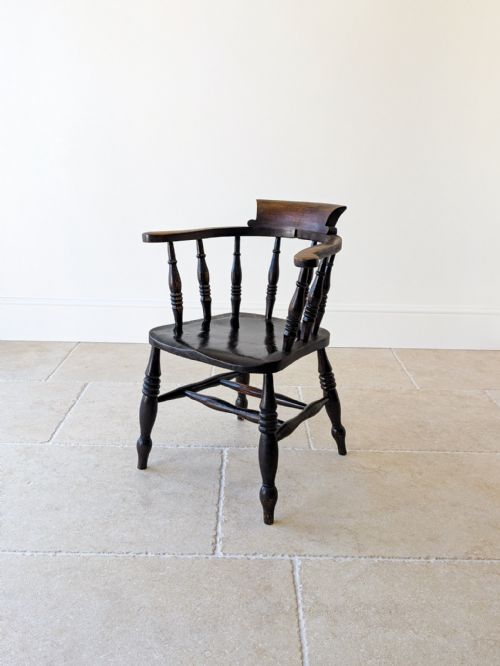
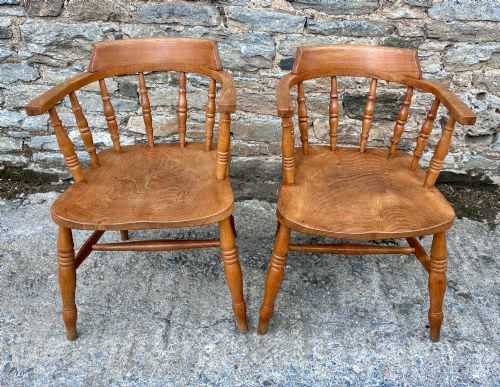
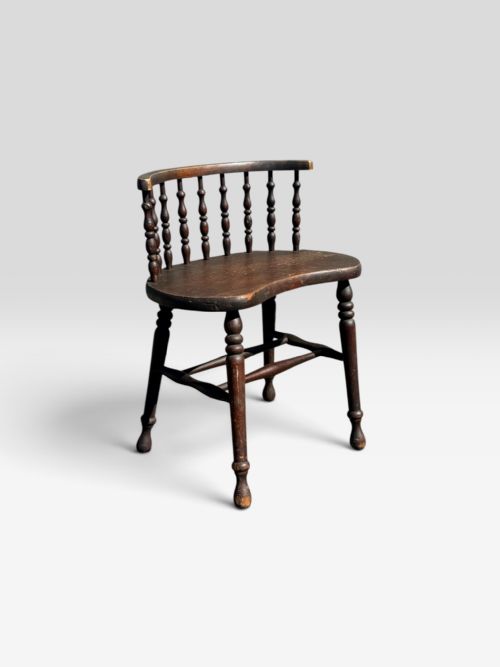
- A low-backed wooden armchair with a continuous bentwood rail and turned spindles, commonly found in nineteenth-century provincial settings. These seats offer sturdy, compact arm support.
Antique Spindle Armchair: Frequently Asked Questions
What defines an antique spindle armchair?
These chairs combine turned wooden uprights with solid seats, originating largely from English country workshops and regional makers. They rely on traditional peg and wedge construction rather than factory assembly.
Most surviving examples date from the eighteenth to the late nineteenth centuries, utilising native timbers like elm, ash, and beech.
How were Windsor and spindle chairs used originally?
Originating as practical seating for farmhouses, kitchens, and provincial offices, these chairs provided reliable everyday support. Their robust construction suited demanding domestic and working environments.
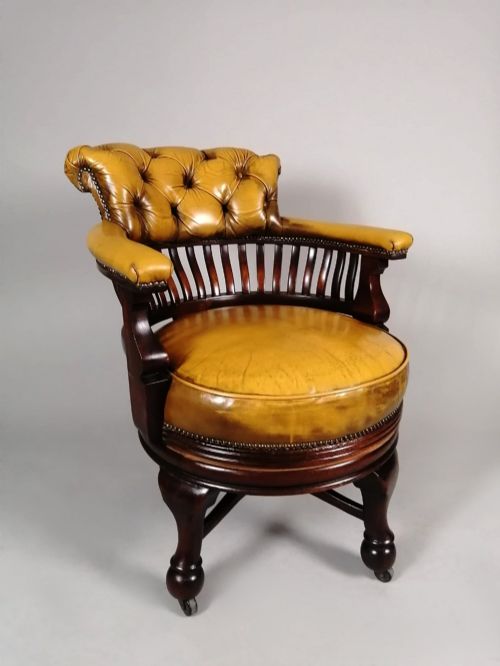
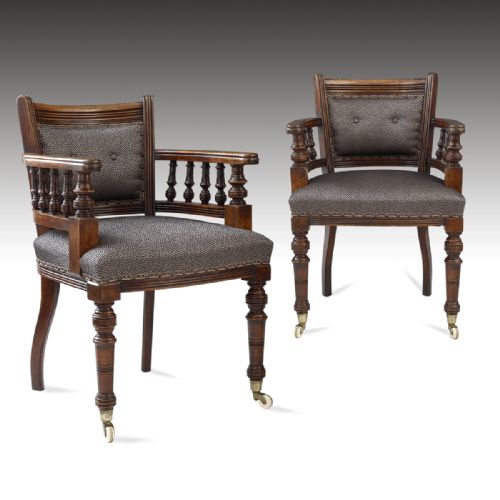
Later Victorian iterations adapted the form for office desks, libraries, and smoking rooms, introducing swivel mechanisms and upholstered elements.
How do I live with a wooden armchair?
Place timber armchairs away from direct heat sources and drastic humidity shifts to prevent wood shrinkage and joint loosening. Regular dusting and occasional waxing help preserve the dry, honest surface of old elm and ash.
Their sturdy nature makes them suitable for daily desk or dining use, provided the joints remain firm and stable.
How do I tell different periods apart?
Earlier eighteenth-century pieces often feature high hoop backs and crinoline stretchers, showing hand-turned irregularities in the spindles. Nineteenth-century versions frequently introduce broader steam-bent rails, elm seats shaped with deep adze marks, and occasional factory stamps.
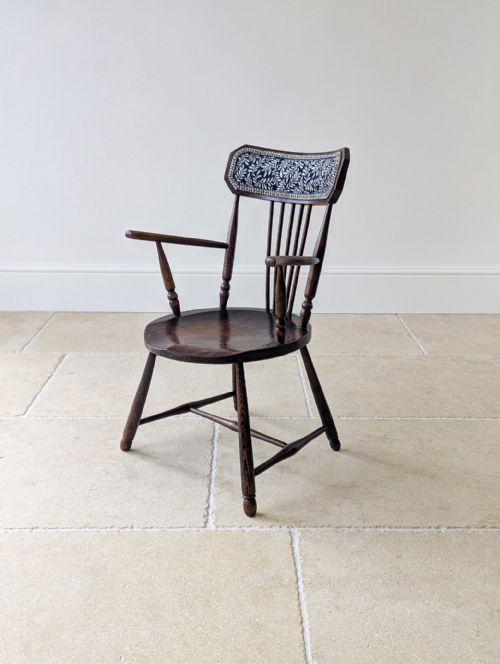
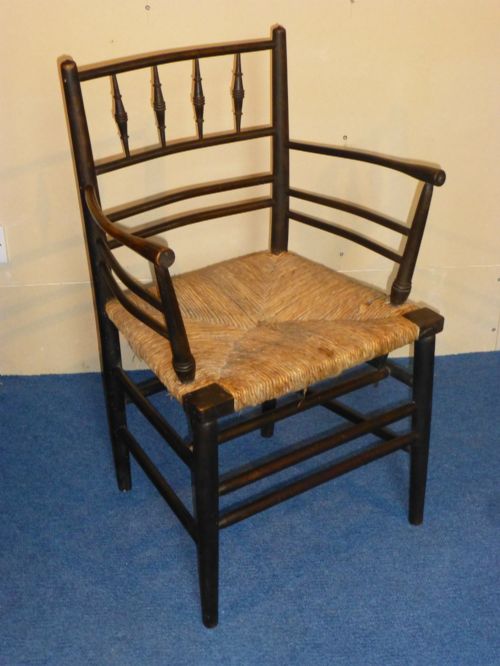
Late Victorian examples sometimes incorporate ebonised finishes, influenced by the Aesthetic Movement and Arts and Crafts ideals.