

Gothic Oak Armchair
A gothic oak armchair brings heavy architectural lineage and medieval spirit directly into a modern interior.
Gothic Oak Armchair
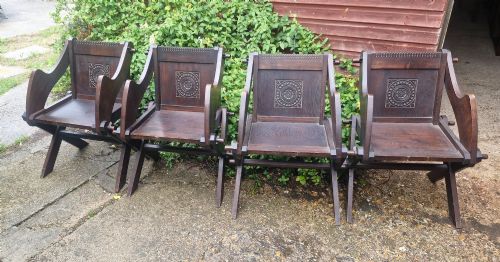
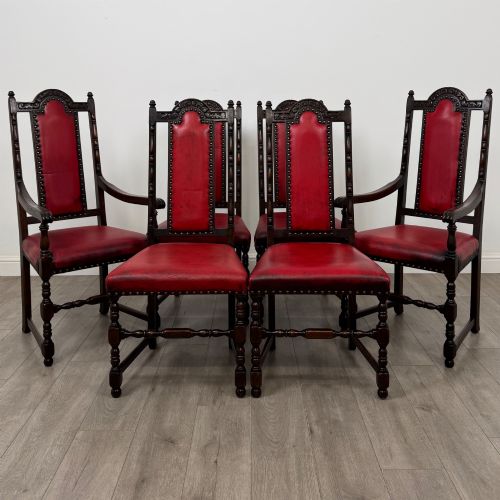
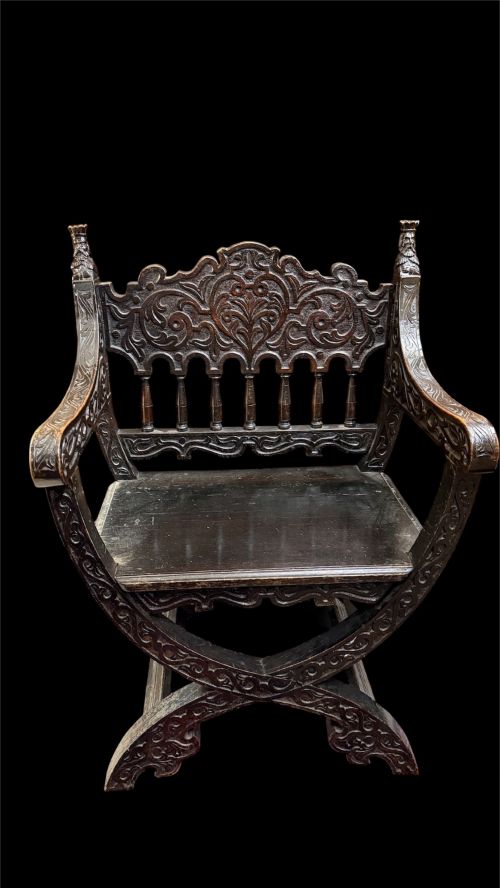
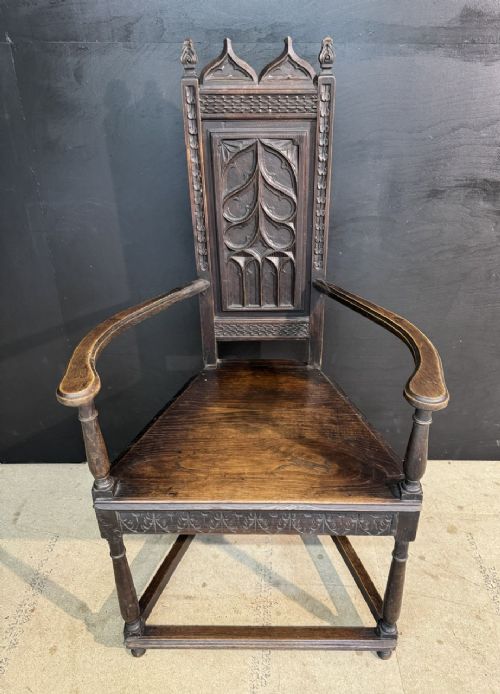
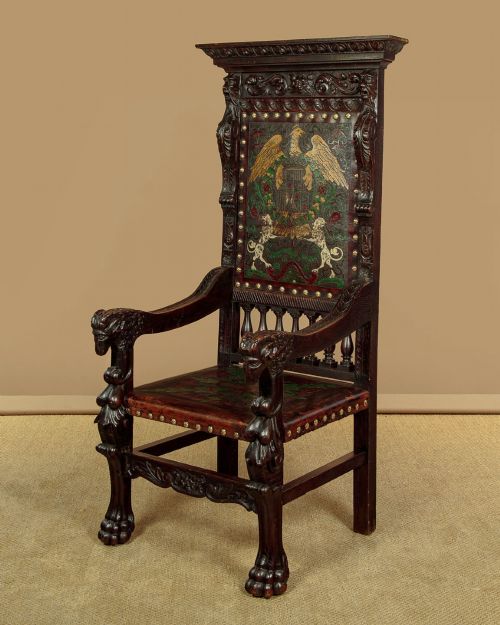
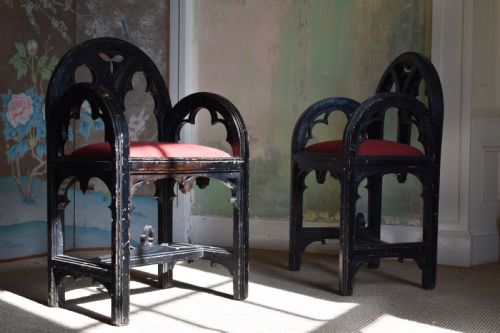
A gothic oak armchair draws upon medieval architectural motifs, ecclesiastical seating and nineteenth-century revivals to create a commanding seat. The majority of pieces encountered here date from the nineteenth century and the Victorian era, often bearing the heavy influence of the Gothic Revival style.
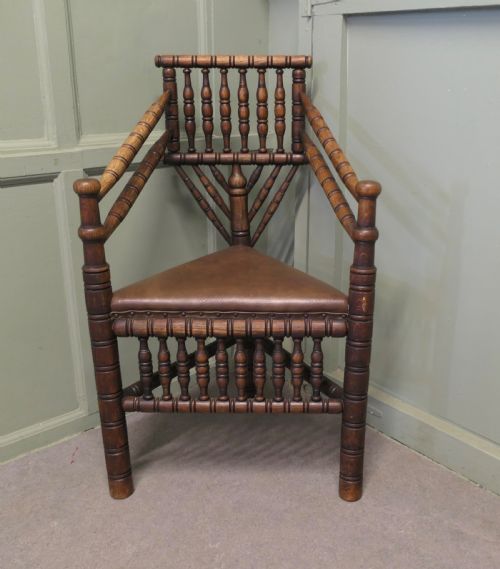
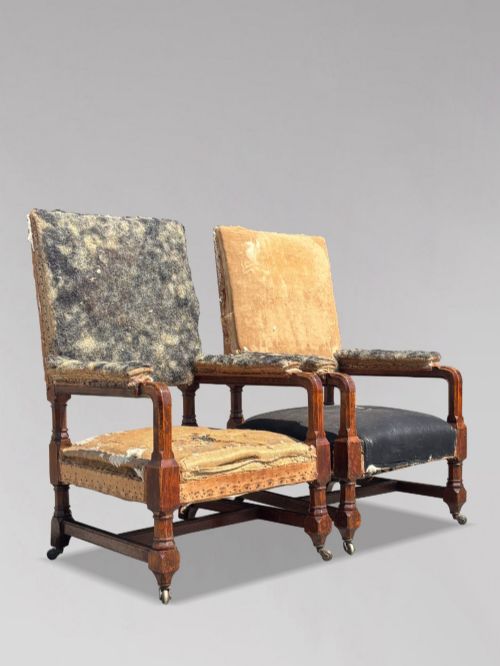
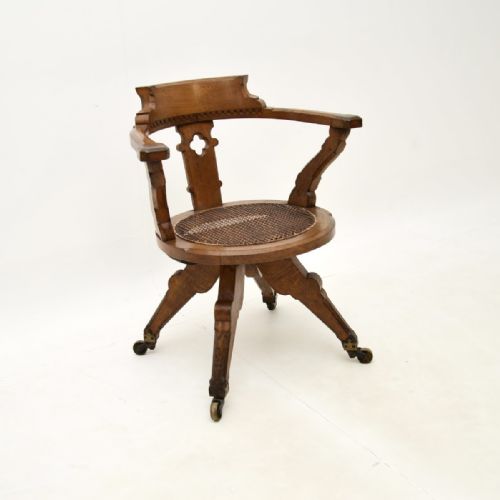
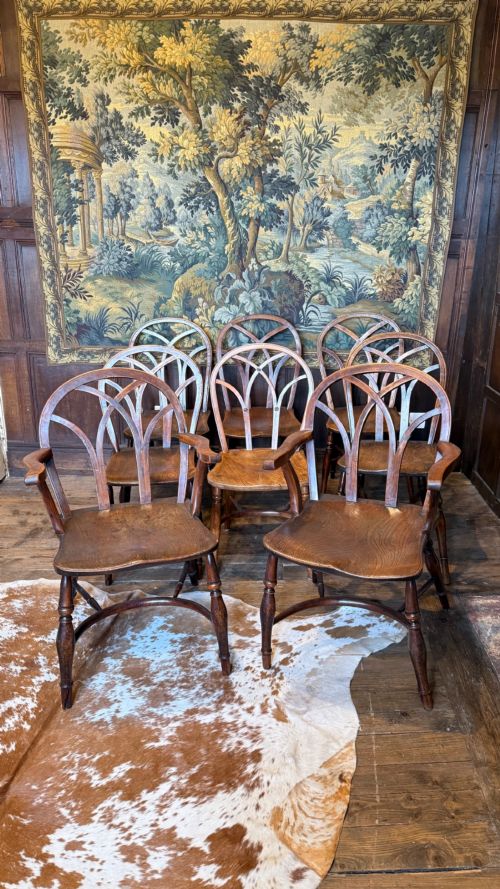
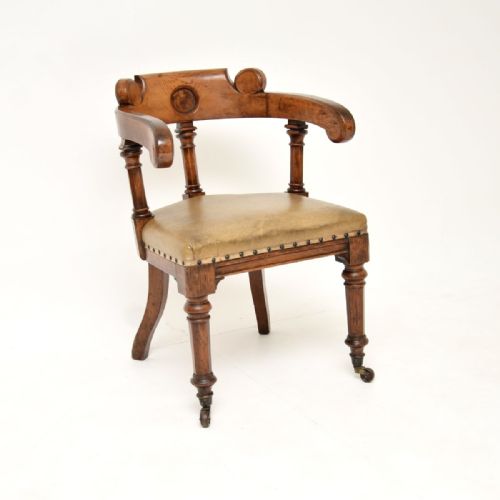
Forms range widely from solid wainscot and turner's chairs to grand throne chairs, library armchairs and swivel desk chairs. Buyers look for these seats to anchor a room with substantial timber presence and historic detail.
Materials and construction
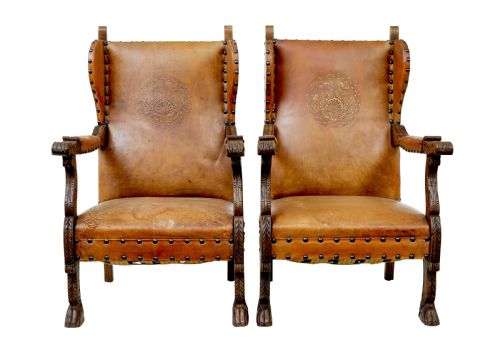
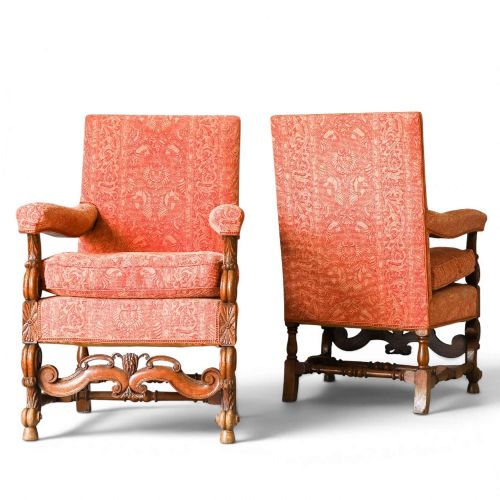
Solid oak serves as the structural foundation for these chairs, frequently paired with secondary materials such as embossed leather, painted leather, tapestry or cane panels. Joinery relies on traditional pegged mortise and tenon construction to support the heavy framing required for monumental seating.
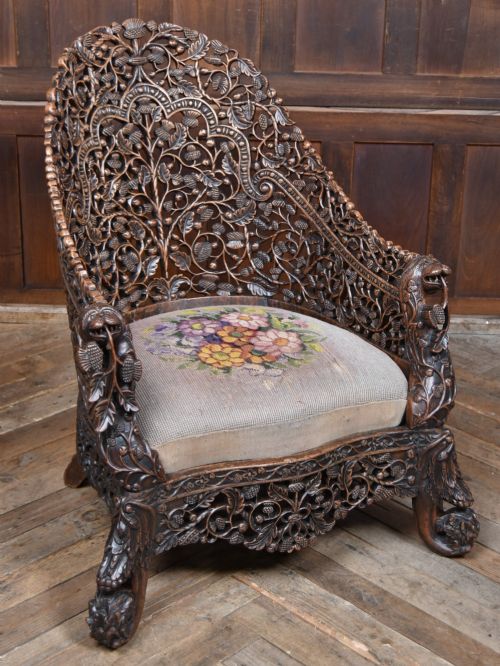
Carving defines the surface texture, ranging from crisp tracery and trefoils to deep relief work depicting green men, thistles or heraldic lions. Metal accents including brass studs or mechanical swivel components appear on later nineteenth-century desk and library variants.
Listings feature nineteenth-century oak furniture utilising leather, brass, and tapestry, spanning styles from Jacobean Revival to English Country.
Assessing quality and distinction
The distinction between standard commercial seating and exceptional examples lies in the depth and sharpness of the carved detail. Master carvers executed architectural elements with crisp undercutting and balanced proportions, whereas lesser workshop pieces display shallow, mechanical surface decoration.
Proportion and timber selection also dictate hierarchy, with high-end library and throne chairs utilising richly figured golden oak and generous dimensions. Attributions to notable designers or makers elevate certain pieces far beyond standard domestic production.
Gillows·Bruce James Talbert·S&H Jewell·Alfred Waterhouse·G Tilley of Birmingham·Pugin
The Gothic Oak Armchair Glossary
- Gothic Revival
- An architectural and decorative movement spanning the eighteenth and nineteenth centuries that revived medieval forms, pointed arches and ecclesiastical motifs. This style heavily influenced Victorian furniture design.
- Wainscot chair
- An early form of wooden armchair constructed with panelled backboards and solid box seats. They are typically heavy in construction and made entirely of oak.
- Turner's chair
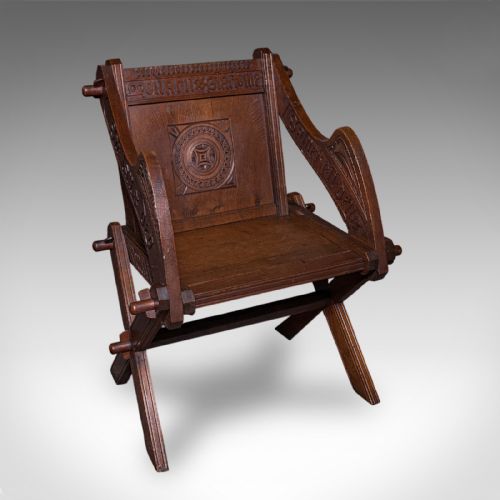
- A type of chair constructed from turned wooden spindles assembled in a triangular or circular geometry. They are also known colloquially as Glastonbury or old Saxon chairs.
- X-frame chair
- A folding or rigid chair built with intersecting diagonal supports forming an X shape. Also referred to as a curule or Dante chair, this form dates back to antiquity and was revived during the Renaissance and nineteenth century.
Gothic Oak Armchair: Frequently Asked Questions
What defines a gothic oak armchair?
These chairs combine dense oak framing with medieval architectural motifs such as pointed arches, tracery, crockets and linenfold panelling. Most examples date from the nineteenth-century Gothic Revival rather than the medieval period itself.
Craftsmen drew inspiration from church furniture, cathedrals and early domestic seating like wainscot and turner's chairs to create imposing, sturdy seats.
Where were these chairs used?
Original placements varied from ecclesiastical settings and monastic chapels to grand libraries, studies and panelled dining rooms. Throne chairs and bishop's chairs served ceremonial or authoritative functions in large halls.
Later Victorian iterations adapted the heavy aesthetic for domestic comfort, producing swivel desk chairs, library armchairs and hall seats.
How do you distinguish periods?
Earlier seventeenth-century examples display austere, pegged construction with simple chip carving and heavy proportions. Nineteenth-century Gothic Revival pieces often exhibit machine-assisted turning alongside hand-carved tracery, sometimes featuring modern upholstery or brass swivel mechanisms.
Detailing such as machine screws, castors and secondary wood choices typically point toward Victorian or Edwardian manufacture rather than true antiquity.
How do you live with one?
A gothic oak armchair acts as a strong focal point in a room, pairing well with plain walls or minimalist modern decor that allows the carved timber to stand out. Due to their generous proportions and substantial weight, they require adequate floor space to breathe.
Protecting the original leather, tapestry or unpolished oak surfaces from direct sunlight and excessive dry heat preserves the finish over time.