
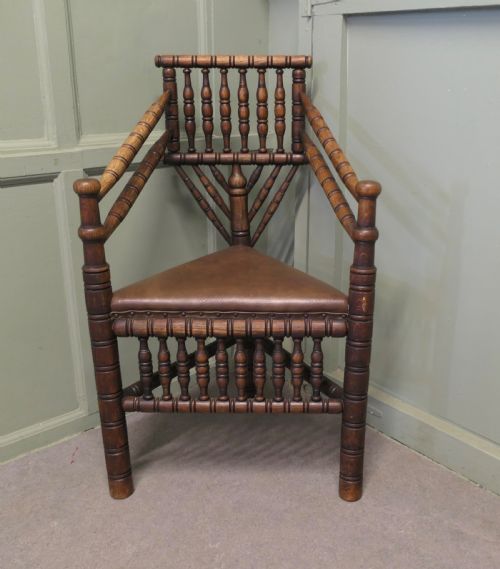


Triangular Oak Seat
A triangular oak seat offers a sturdy, historic form with three legs and a solid plank or rush base, bringing distinct medieval character to any room.
Triangular Oak Seat
A triangular oak seat brings together sturdy three-legged forms and heavy timber construction, appearing here primarily as nineteenth-century armchairs, elbow seats, and stools. These pieces draw heavily on traditional vernacular designs, often associated with historic turner's chairs or old Saxon styles.
The selection on this page centres around Victorian interpretations of earlier forms, including Gothic and Saxon revivals alongside Arts and Crafts pieces. Buyers will encounter both low stools and substantial armchairs designed with triangular frames.
English vernacular and regional traditions heavily influence these listings, connecting domestic seating directly to nineteenth-century cabinet-making and turning traditions. Each example utilises the inherent stability of a three-legged footprint.
How they were made
Makers built these pieces primarily using solid English oak, frequently pairing the main frame with secondary woods such as beech. Turned spindles and heavy corner posts form the structural skeleton of the chairs.
Joinery relies on traditional turning and pegged joints to handle the stress placed upon a three-legged frame. Seats are fashioned from solid timber planks or woven rush, sometimes complemented by leather elements.
Sitting in a three-legged chair requires learning the exact art of positioning your feet to avoid tipping the unyielding frame backward.
What varies in quality
Quality rests upon the crispness of the turning and the substance of the timber used in the frame. Heavier oak construction and deeply moulded turnings elevate an example above standard utility pieces.
Fidelity to historical revival styles dictates the sophistication of the design, with finer interpretations showing careful attention to vernacular proportions and joint integration.
The Triangular Oak Seat Glossary
- Turner's chair
- A sturdy seat constructed entirely from turned wooden spindles and posts, historically assembled without complex carving. These items rely on the skill of the pole lathe turner.
- Saxon revival
- A nineteenth-century design movement that reinterpreted early medieval forms and domestic furnishings. This style brings rustic proportions and heavy turned woodwork into Victorian interiors.
- Vernacular
- Everyday furniture built by local craftsmen following regional traditions rather than high-style metropolitan fashions. These pieces prioritise practical utility and local materials.
- Arts and Crafts
- A design movement valuing handcraftsmanship, simple construction, and traditional materials over industrial manufacturing. Such pieces celebrate the natural grain of the wood.
Triangular Oak Seat: Frequently Asked Questions
What is a triangular oak seat?
A triangular oak seat is a three-legged stool or armchair built with a distinctive three-sided frame. These items range from vernacular turners' chairs to Arts and Crafts stools.
They provide a compact footprint while maintaining remarkable structural stability due to their geometric base.
How were these chairs used historically?
These seats served as practical, everyday furniture in domestic interiors, studies, and libraries. Their three-legged design prevented rocking on uneven flagstone or timber floors.
Elbow seats offered sturdy support for working or reading by the hearth.
How do I date a Victorian revival piece?
Dating relies on examining the tool marks, timber characteristics, and the specific style of the revival movement. Nineteenth-century interpretations often blend historical forms with Victorian turning techniques.
Makers working in the 1850s to 1900s combined seasoned oak with machine-assisted lathe work.
Are these seats comfortable to sit in?
Most examples feature solid wooden plank seats or firm rush bases designed for upright posture rather than lounging. Adding a small cushion is common practice for modern living.
The supportive arms on armchair versions provide a secure and enclosed sit.
How do I care for antique oak?
Maintain the timber by keeping it away from direct heat sources and sudden humidity changes. Regular dusting and occasional applications of appropriate wax preserve the finish.
Avoid commercial polishes containing silicone to protect the historic surface.