
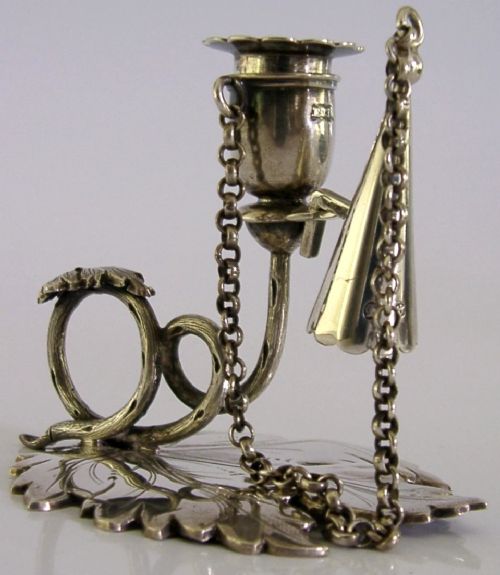


Antique Silver Snuffer
These antique silver snuffer pieces offer the refined utility of Georgian and Victorian lighting, designed to extinguish candle flames cleanly.
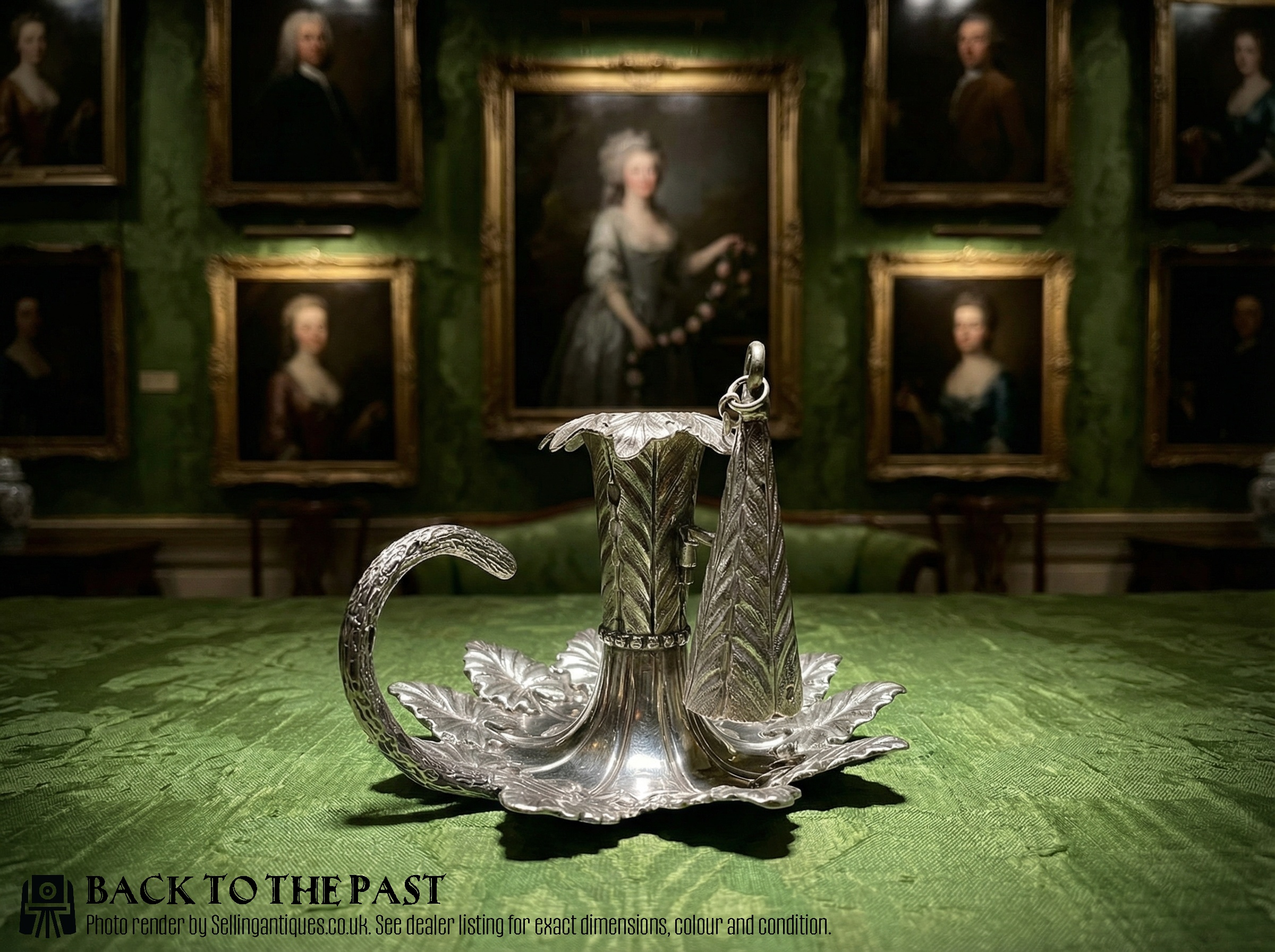
Antique Silver Snuffer
An antique silver snuffer covers a distinct range of candle lighting equipment, most commonly appearing as chambersticks, scissor-action snuffers, and dedicated oval trays. When searching for an antique silver snuffer, a buyer encounters forms spanning the Georgian, Regency, William IV, and Victorian eras.
The pieces on this page lean heavily towards chambersticks and snuffer trays executed in sterling silver, silver plate, and Old Sheffield Plate. Makers from the late eighteenth century through to the Edwardian period produced these items for domestic illumination in rooms lacking fixed lighting.
Scissor-type snuffers with internal spring action appear alongside matched trays and naturalistic chambersticks bearing floral or crested details. These functional items reflect the changing domestic habits of households across the nineteenth century.
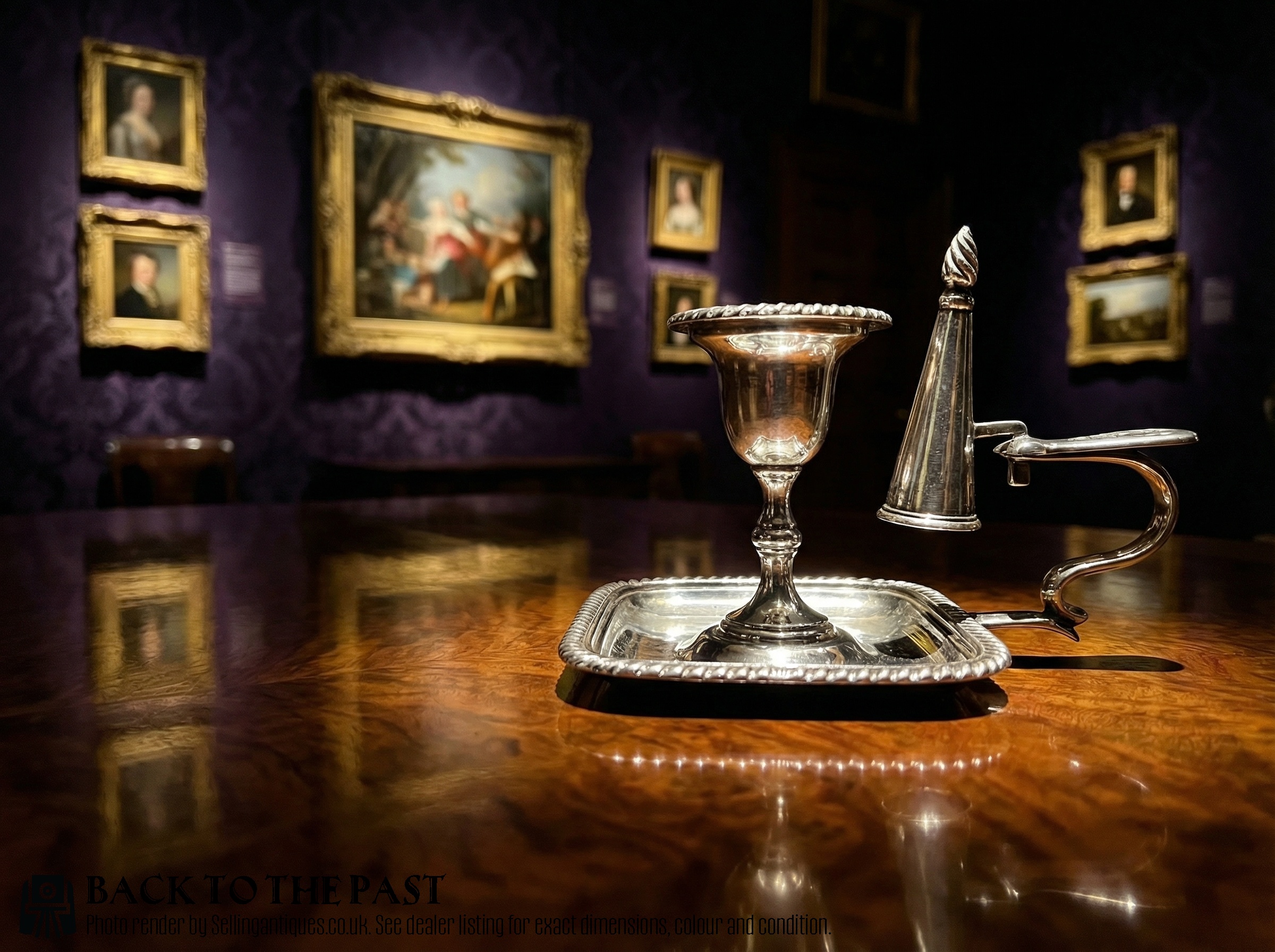
Variations in quality
Quality rests upon the crispness of hallmarks, the weight of the silver or plate, and the integrity of applied decorative borders. Pieces by prominent silversmiths demonstrate superior hand-finishing in chased floral motifs and heraldic crests compared to standard commercial output.
The survival of original spring actions in scissor snuffers and the retention of silver on Old Sheffield Plate pieces dictate desirability. Substantial gauge metal in chamberstick pans and well-defined socket seams separate standard domestic items from finer examples.
Object types include chambersticks, scissor snuffers, candle accessories, and oval trays designed to hold snuffer sets.
Peter and Anne Bateman·Paul Storr·Barnard
The Antique Silver Snuffer Glossary
- Chamberstick
- A low portable candleholder fitted with a handle and a pan to catch dripping wax, often holding a separate nozzle or snuffer. These devices lit bedrooms and hallways before fixed gas or electric lighting.
- Old Sheffield Plate
- A fused composite material made by melting a sheet of silver onto a heavier copper ingot, common in late eighteenth and early nineteenth-century wares. Examination often reveals the reddish copper tint along unplated edges.
- Snuffer
- A scissor-like instrument featuring small box-like blades designed to trim candlewicks while extinguishing the flame without smoke. They frequently rest upon matching rectangular or oval trays.
- Sterling silver
- An alloy consisting of silver and other metals, usually copper, meeting a specific fineness standard of purity. English pieces carry hallmarks indicating the assay office, standard, and date letter.
Antique Silver Snuffer: Frequently Asked Questions
What is an antique silver snuffer tray used for?
These oval or rectangular trays held scissor-action snuffers and caught the hot charred wick trimmings dropped during candle maintenance. They sat on tables or accompanied chambersticks to protect wooden surfaces from grease and soot.
In many cases, surviving trays became separated from their original snuffer scissors over the course of use and time. Collectors frequently reunite compatible trays and snuffers of matching periods.
How do you distinguish Sheffield plate from sterling silver?
Old Sheffield plate is constructed by fusing a thin layer of silver onto a copper base, which can sometimes be spotted where the silver layer has worn thin at the edges. Sterling silver items are solid throughout and bear official hallmarks proving their metal purity.
Items made of solid silver also exhibit a different weight and tactile feel in the hand compared to plated copper alternatives. Assay marks provide the definitive answer when stamps remain clear.
What is the difference between a chamberstick and a candlestick?
A chamberstick is a low-profile candleholder designed to be carried by hand from room to room, featuring a wide saucer pan and a looped handle. Standard candlesticks are taller and intended to remain stationary upon dining tables or mantelpieces.
Chambersticks often include a small conical snuffer resting directly in the pan alongside the socket. This compact design made nighttime navigation safe in unlit Georgian and Victorian hallways.
How can I date an antique silver chamberstick?
Dating relies heavily upon the stamped hallmarks on solid silver pieces, which record the assay office, reigning monarch, and specific year letter. Stylistic shifts, such as the transition from plain Georgian oval pans to naturalistic Victorian leaf designs, offer further clues.
Unmarked silver-plated items require evaluation through manufacturing techniques and stylistic proportions. Edge construction and base weights help narrow down production to specific decades.