
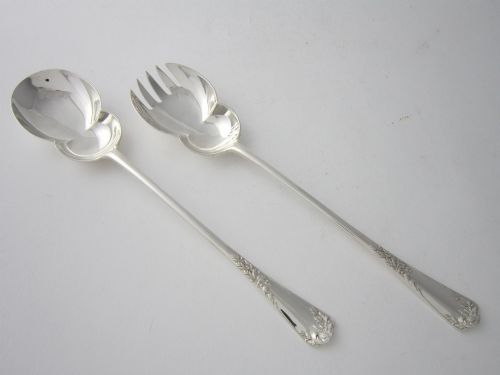


Antique Silver Serving Set
When you search for an antique silver serving set, you find matched utensils and specialised tools created to present food at the table.
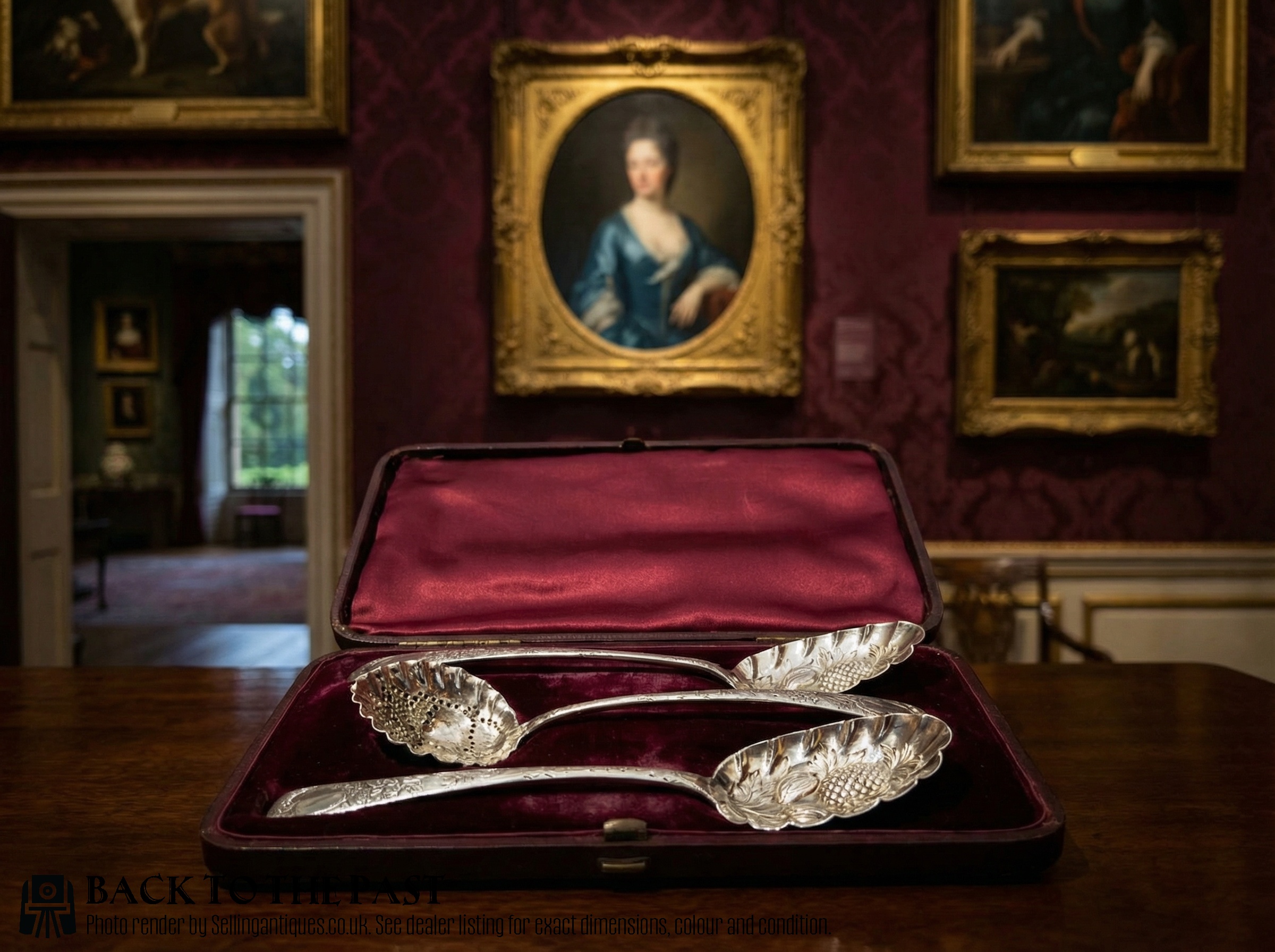
Antique Silver Serving Set
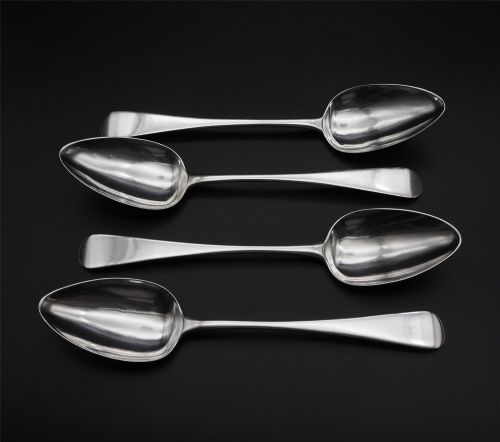
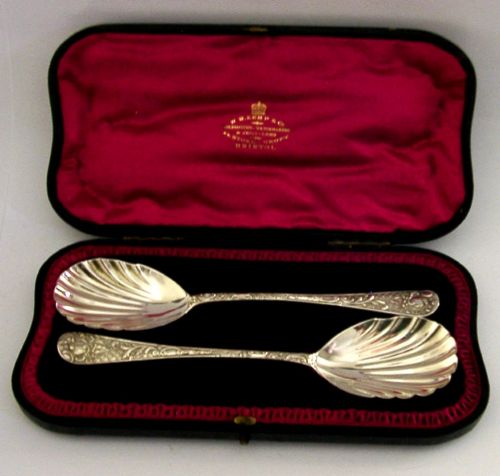
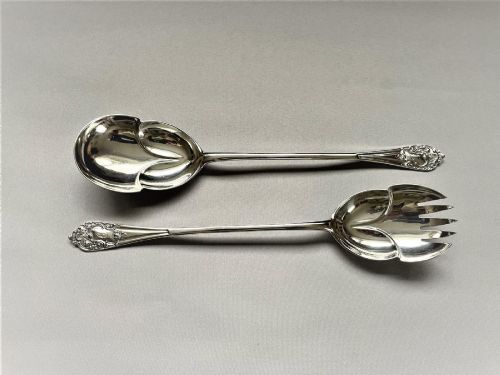
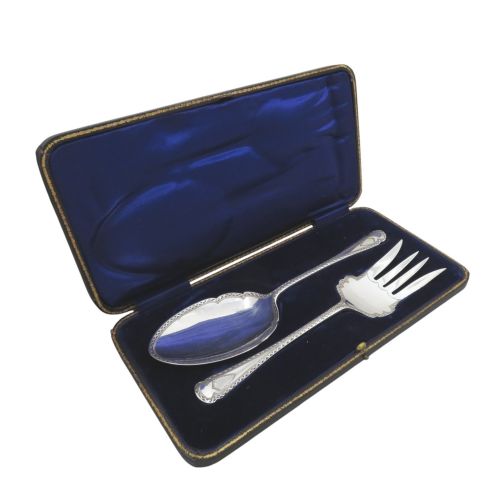
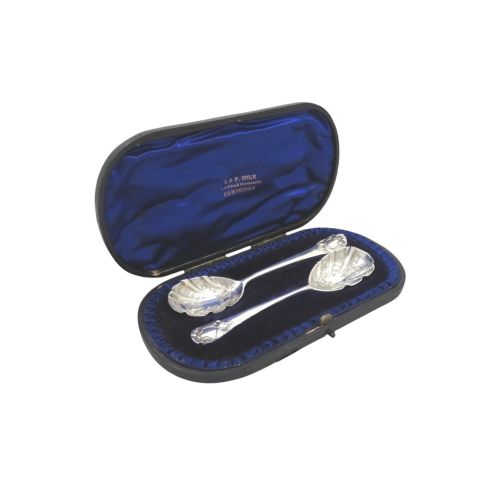
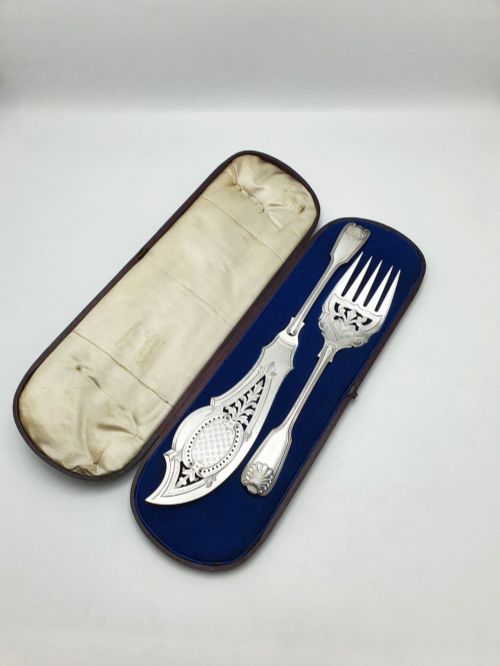
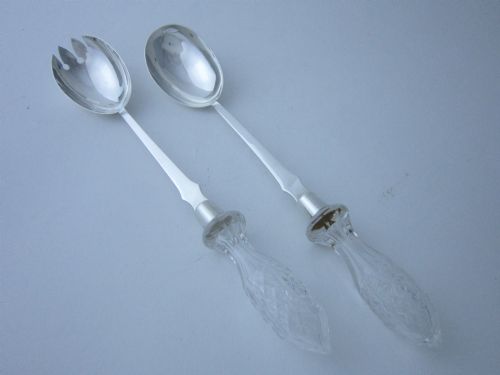
An antique silver serving set encompasses utilitarian items designed for formal dining, including fish servers, salad sets, berry spoons, and carving utensils. These groupings range from matched pairs to large cased sets containing multiple forks, spoons, and knives.
The objects frequently appear in domestic contexts spanning the Georgian, Victorian, and Edwardian eras, as well as the 1900 period. Collectors encounter everything from heavy sterling silver canteens to silver-plated apparatuses housed in velvet-lined presentation boxes.
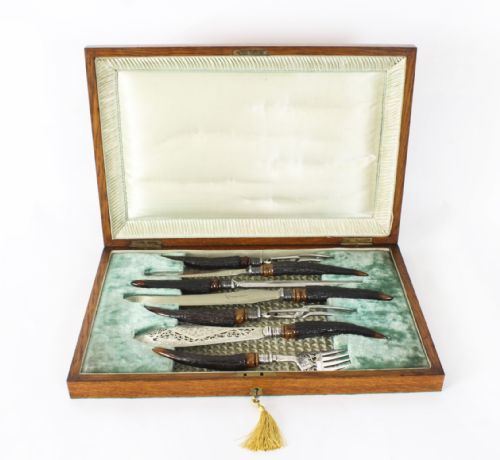
Sets often incorporate organic handles made from antler, cow horn, or mother of pearl alongside traditional metal bowls. Specialised forms include strawberry sets, asparagus servers, and cake slices tailored for specific courses.
How they were made
Silversmiths utilised sterling silver and silver plate over base metals, shaping bowls and tines through hammering, casting, and piercing techniques. Handles required diverse materials such as wood, silk, satin, and leatherette to line the protective presentation cases.
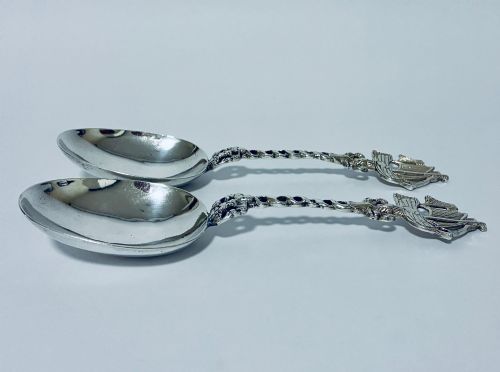
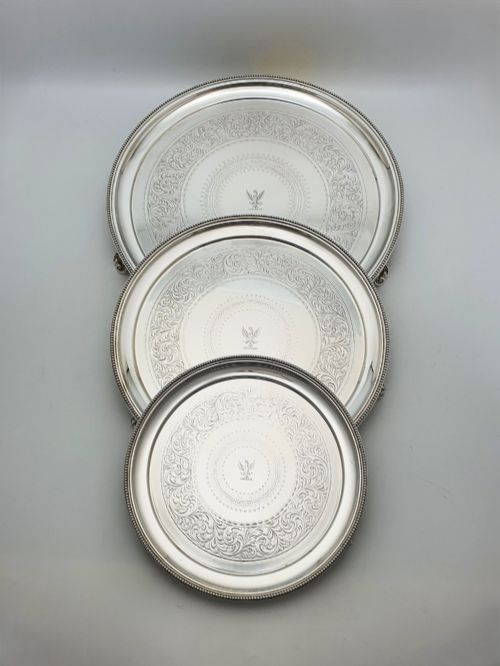
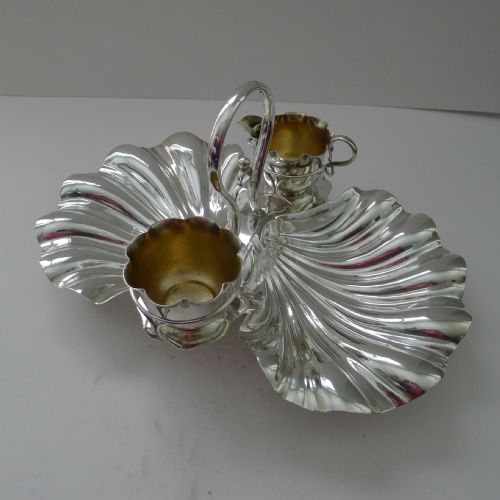
Engraving and chasing adorned the metal surfaces with floral motifs, scrollwork, and crests, while gilding added a contrasting gold wash to berry spoons and fruit forks. Antler and horn were carved and fitted with metal caps to construct durable grips for carving and fish serving implements.
Antique Silver Serving Set Retail Price Guide 2026
Typical asking prices for silver serving set among the pieces listed under this phrase on Sellingantiques today, from the lower quarter to the upper quarter. They describe what is for sale here now, not the wider market.
What varies in quality
The standard of an antique silver serving set depends upon the weight of the metal and the crispness of the chased or engraved decoration on the bowls and handles. Maker marks and clear hallmarks indicating specific towns and assay years provide primary evidence of origin and metal purity.
Completeness dictates value, particularly when pieces retain their original fitted leatherette, wood, or velvet cases with intact silk linings. The integration of specialised materials, such as enamel work or carved stag horn, distinguishes finer artisanal production from standard factory output.
Elkington·Daniel Arter·John Locker·J Ladyman·Lee & Wigfull·Ashbury·Walker & Hall
The Antique Silver Serving Set Glossary
- Sterling silver
- An alloy consisting of 92.5 percent silver and 7.5 percent other metals, usually copper, ensuring structural durability for tableware.
- Silver plate
- A manufacturing method where a thin layer of silver is fused onto a base metal such as copper or nickel brass.
- Berry spoon
- A large serving spoon with fruit motifs chased or repoussé onto the bowl, often produced during the Georgian and Victorian periods.
- Rat tail
- A prominent spine running down the back of a spoon bowl where it joins the handle, strengthening the junction.
- Hallmark
- A series of stamped marks indicating the maker, metal standard, assay office, and year of production on British items.
- Cloisonné
- An enamelling technique where metal wire forms compartments on a surface, filled with coloured glass paste and fired.
Antique Silver Serving Set: Frequently Asked Questions
What is included in a serving set?
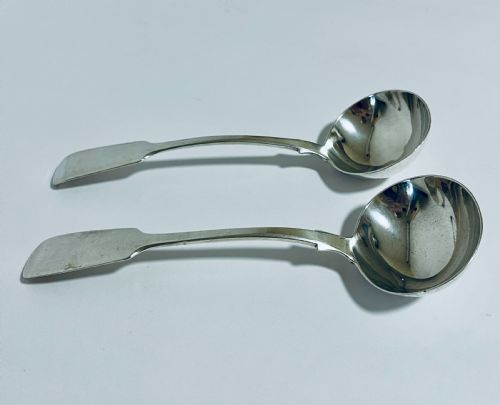
These sets comprise functional utensils designed for passing food at the table, ranging from large spoons and ladles to specialised fish servers and salad forks.
Many examples include matching knives or are assembled as cased sets intended for specific dining courses.
How do I identify the period of the silver?
Makers relied on specific stylistic cues, such as the heavy ornamentation of Victorian pieces or the clean lines associated with Edwardian and Art Deco designs.
Assay office marks and date letters stamped into the metal provide precise chronological identification for British sterling items.
Are these items suitable for daily use?
Solid sterling silver and sturdy silver-plated utensils remain robust enough for regular dining when washed by hand without harsh detergents.
Pieces featuring organic handle materials like mother of pearl or antler require more careful handling to preserve their condition.
Why do some sets have fitted boxes?
Presentation cases lined with velvet, silk, or satin protected delicate tableware from tarnish and damage during storage between formal meals.
These original boxes often contain fitted slots designed specifically for each component of the set.