







Antique Silver Pin Keeper
These antique silver pin keepers are charming desk and dressing table accessories shaped as animals, boots and everyday objects to hold sewing pins securely.
Antique Silver Pin Keeper
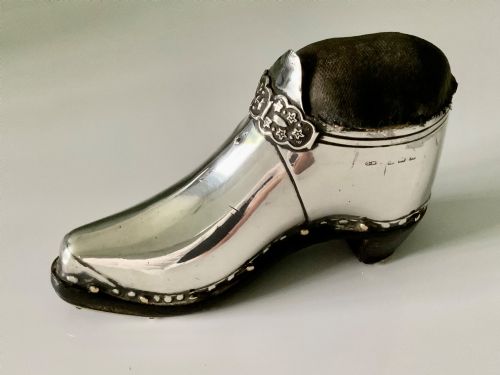
When you search for an antique silver pin keeper, you encounter small decorative pieces designed to hold pins and needles on a dressing table or desk. The listings show a strong presence of Victorian and Edwardian examples fashioned into whimsical shapes.
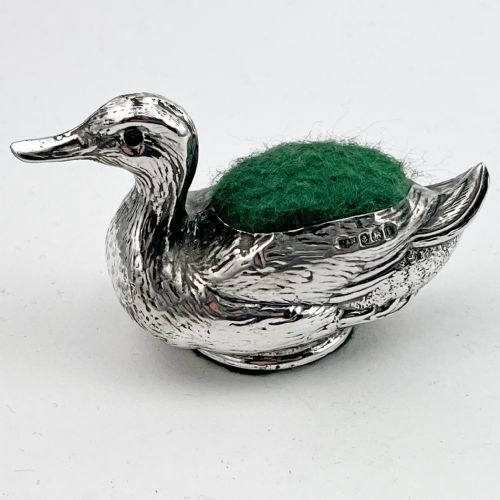
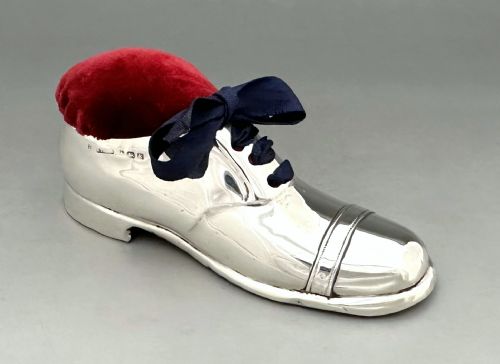
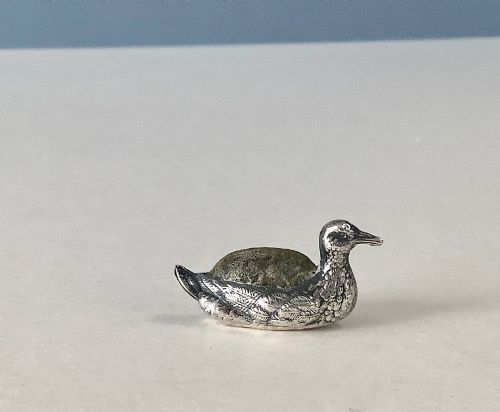
The forms span practical and novelty designs, including shoes, clogs, teapots, bellows and domestic animals. Duck, chick and bulldog figures appear alongside dog and cart groupings and heart shapes, reflecting the Victorians' and Edwardians' taste for novelty desk wares.
Dating ranges from the late nineteenth century into the early twentieth century, with Birmingham assay marks and specific makers appearing among the Edwardian and Victorian pieces. Most examples combine a solid metal frame with a soft interior pad.
How they were made
Silversmiths constructed the outer bodies from sterling silver, shaping them through casting and pressing to achieve realistic animal and object forms. Birmingham workshops produced many of these detailed casings during the Victorian and Edwardian periods.
The internal compartments contain stuffed padding materials including velvet, felt and occasionally mother-of-pearl or agate elements for decorative contrast. Pins push directly into these fabric cushions, which are secured tightly within the silver mounts.
Keep your sewing pins safely guarded by a tiny sterling silver bulldog who takes his duty very seriously indeed.
What varies in quality
Quality rests upon the crispness of the casting and the naturalism of the form, particularly in animal novelty pieces such as chicks, ducks and bulldogs. Finer examples capture realistic textures and expressions rather than smooth, generic shapes.
The condition of the interior fabric cushion and the clarity of the silver hallmarks also distinguish better specimens. Intact velvet or felt pads matching well-preserved silver mounts represent the higher end of surviving pieces.
George W Shiebler
The Antique Silver Pin Keeper Glossary
- Sterling silver
- A standard alloy consisting of ninety-two point five percent silver by mass, used for the outer bodies of these pieces. It provides durability and a bright finish for detailed novelty objects.
- Pin cushion
- A small stuffed pad or fitted container used to hold pins safely at hand. In these listings, they take elaborate novelty forms rather than simple circular pads.
- Novelty
- An object made in an amusing or unusual shape, such as a shoe, teapot or animal. These pieces gained immense popularity during the Victorian and Edwardian eras for personal desks.
- Assay mark
- A stamp or series of stamps indicating the purity of the metal and the place and year of testing. Birmingham examples frequently display these official marks on the silver body.
Antique Silver Pin Keeper: Frequently Asked Questions
How do I date an antique silver pin keeper?
Dating relies on examining the style, hallmarks and construction methods of the piece. Edwardian and Victorian examples often feature distinct animal or domestic object shapes.
Assay marks stamped into the silver provide specific towns and years of testing. Comparing the design characteristics to known periods helps narrow down the decade of manufacture.
What materials are inside the silver?
The interior houses a stuffed pad made from materials like velvet or felt to grip the pins firmly. Some pieces incorporate mother-of-pearl or agate decorative elements.
The outer casing consists of sterling silver, while the soft core provides the functional resistance needed to hold pins in place.
Why are some shaped like animals?
Makers during the Victorian and Edwardian periods embraced novelty designs to add humour and charm to utilitarian desk accessories. Animals like ducks, chicks and bulldogs proved especially popular.
These whimsical forms transformed a simple sewing tool into a conversation piece for the home. Collectors today prize these imaginative shapes above standard utilitarian designs.