




Silver Pin Cushion Holder
These silver pin cushion holder examples bring together miniature craftsmanship and practical Victorian or Edwardian vanity tradition, making them prized desk and dressing table accessories.
Silver Pin Cushion Holder
A silver pin cushion holder unites solid sterling silver work with a fabric or velvet pad designed to hold pins and needles securely. When you search for this phrase, you encounter vanity items, dressing table accessories, and miniature novelties from the Victorian and Edwardian eras.
The pieces on this page span several decades, featuring standard pin cushions alongside stands and combined needle holders. Most examples date from the Victorian and Edwardian periods, maintaining the domestic utility of the nineteenth and early twentieth centuries.
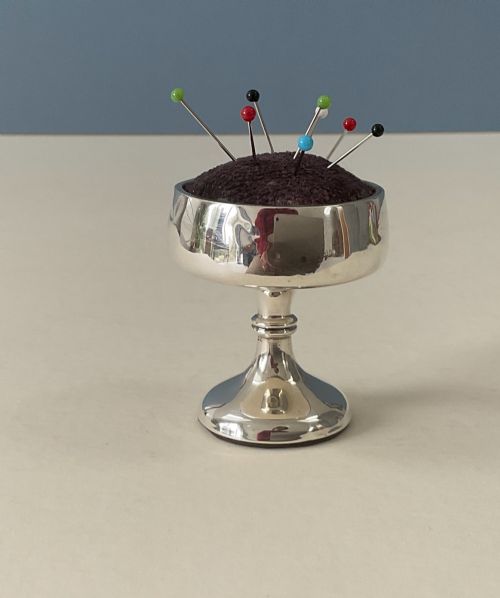
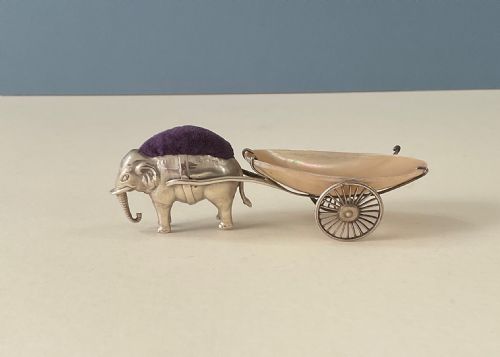
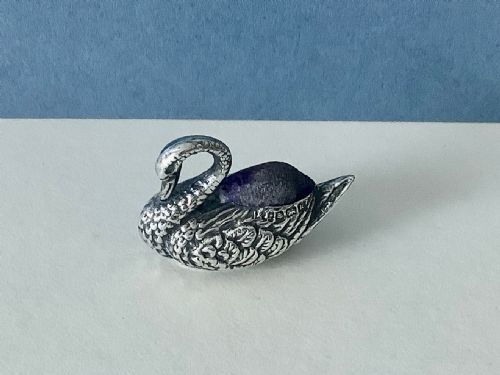
Novelty forms dominate the selection, taking shapes such as animals, birds, baskets, and miniature household objects. These sculptural creations showcase the whimsical side of silver manufacturing alongside simpler heart-shaped and basket designs.
Materials and construction
Silversmiths constructed these holders using solid sterling silver, shaping the metal through casting, embossing, and detailed chasing. The resulting miniature frames and novelty figures provide a rigid structure to house the central insert.
Makers set velvet or fabric cushions directly into the silver mounts to receive pins. This textile element contrasts with the reflective polished metal surface of the surrounding holder.
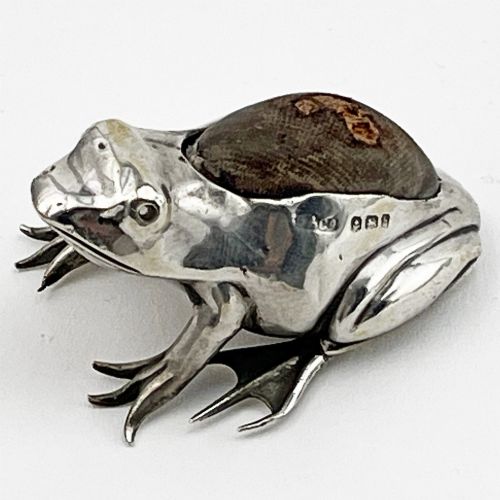
One tiny silver frog sits patiently on a cushion, holding pins in its metal grip.
Factors that distinguish quality
The integrity of the original fabric insert relative to the silver mount dictates the condition standard. Well-preserved textile pads that sit securely within the structural silver framework elevate an example.
George W Shiebler·Artificer's Guild
The Silver Pin Cushion Holder Glossary
- Novelty
- A decorative silver object shaped to resemble an animal, figure, or familiar item rather than a standard geometric form. These figural pieces were popular in the late nineteenth and early twentieth centuries.
- Sterling Silver
- An alloy of silver containing ninety-two point five percent pure silver and seven point five percent other metals, usually copper. This standard composition appears across Victorian and Edwardian items.
- Chasing
- A metalworking technique where the smith pushes the surface of the silver with a punch to create raised decorative designs without removing metal. This method defines the surface texture on figural pieces.
- Dressing Table Accessories
- Small personal items used for grooming and vanity tasks in a bedroom setting. They include pin cushions, hat pin stands, and mirrors.
Silver Pin Cushion Holder: Frequently Asked Questions
What are silver pin cushion holders?
These items are small decorative containers featuring an integrated fabric or velvet pad used to store pins and needles. Silversmiths shaped them into geometric dishes, baskets, and miniature novelty figures.
Victorian and Edwardian households placed them on dressing tables and desks for daily sewing tasks. Today they survive as collectible examples of miniature metalwork.
How do I date a silver holder?
Dating relies on hallmarks stamped into the silver, which indicate the assay office, year of production, and maker's mark. Stylistic clues such as Edwardian naturalism or Victorian florid decoration also help.
Archival comparisons with pieces from specific decades like nineteen-ten provide additional context for unmarked or foreign items.
Are novelty shapes common?
Makers frequently produced novelty forms modelled as animals, birds, frogs, bears, and everyday objects like teapots or goblets. These imaginative designs appealed to contemporary collectors of vanity items.
Figural examples stand alongside traditional basket and heart-shaped stands within the recorded pieces.
How should I clean silver holders?
Cleaning requires a soft cloth and minimal silver polish to avoid damaging the surrounding fabric or velvet cushion. Care must be taken not to let cleaning agents saturate the textile insert.
Gentle maintenance preserves the chasing and any remaining original surface patina on the metal.