




Antique Silver Sewing Items
These antique silver sewing items are small domestic tools and novelties that bring Victorian and Edwardian craftsmanship directly to the desk or workbasket.
Antique Silver Sewing Items
When you search for antique silver sewing items, you encounter functional tools and novelty pieces produced across the Victorian and Edwardian periods. The selection on this page shows specialised equipment designed to keep thread, pins, and tape measures close to hand during needlework.
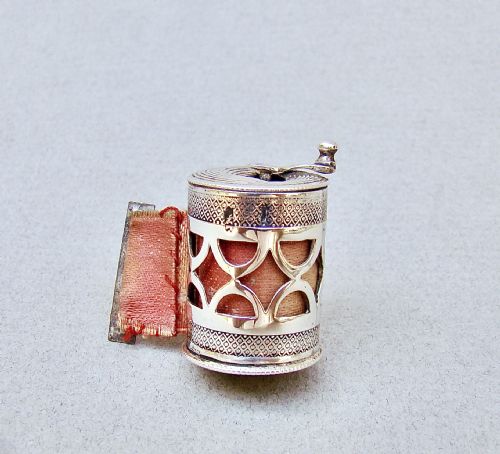
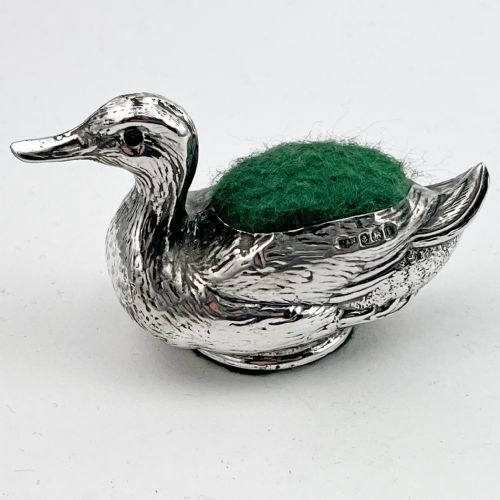
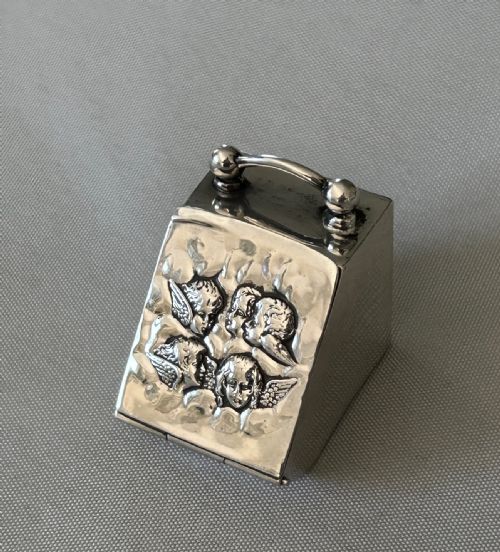
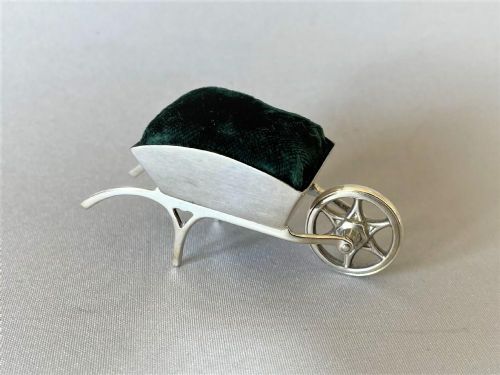
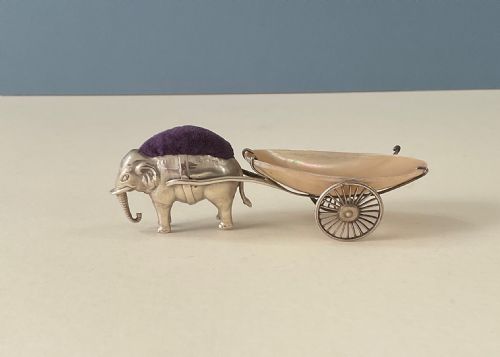
The objects take both utilitarian forms and playful novelties, reflecting the Victorian and Edwardian appetite for amusing domestic accessories. You will frequently meet novelty pin cushions modelled as animals and household objects, alongside cased thimbles and thread holders.
Originating largely from British workshops and nineteenth-century Dutch makers, these pieces combine precious metal with functional interiors lined in velvet, silk, felt, or leather. They serve as tangible examples of period craftsmanship, whether configured as a simple cotton reel holder or a drum-shaped tape measure.
How they were made
Makers shaped solid sterling silver and standard silver into intricate forms through casting, stamping, and hand-chasing. These metallic outer shells were then combined with internal linings of velvet, silk, felt, and leather to secure pins and needles safely.
Novelty pieces required precise metalwork to capture recognisable shapes such as ducks, pigs, wheelbarrows, coal scuttles, and teapots. Makers also integrated organic materials like shell and wood into the structural elements of these sewing tools.
Needleworkers of the past kept their pins stuck firmly inside miniature silver pigs, ducks, and wheelbarrows.
What varies in quality
The distinction between ordinary and superior pieces rests on the crispness of the silver casting and the detail of the engraving. Novelty forms that possess anatomically convincing shapes or accurate domestic proportions demonstrate greater skill from the silversmith.
The preservation of original internal materials, such as velvet, silk, or leather linings, elevates a piece significantly. Furthermore, clear hallmarks and legible maker marks confirm the provenance and standard of the silver.
Charles Horner
The Antique Silver Sewing Items Glossary
- Hallmark
- Official stamps applied to precious metals to guarantee the purity of the silver, the assay office, and the date of manufacture. These marks provide the primary evidence for dating an item accurately.
- Novelty
- An object manufactured in a whimsical or amusing shape, such as an animal or a domestic item, rather than a standard geometric form. In sewing accessories, these range from miniature wheelbarrows to farmyard animals.
- Sterling silver
- A silver alloy containing ninety-two point five percent silver by mass, with the remainder consisting of other metals usually copper. This standard appears frequently in British pieces from the Victorian and Edwardian eras.
- Assay office
- A statutory body responsible for testing the purity of precious metal items and applying official hallmarks. Towns such as Birmingham and Chester operated prominent offices during the nineteenth and twentieth centuries.
Antique Silver Sewing Items: Frequently Asked Questions
What are antique silver sewing items?
These pieces are small functional tools and novelty objects created during the nineteenth and early twentieth centuries to assist with needlework. They include specialised containers and holders for everyday sewing tasks.
Items range from practical cotton reel holders and tape measures to decorative pin cushions shaped as animals and household vessels.
How were silver pin cushions used?
Victorian and Edwardian needleworkers pushed pins and needles directly into the padded velvet, silk, or felt inserts secured inside the silver frames. This kept sharp implements organised and prevented them from scattering across the work surface.
Novelty versions placed these functional cushions inside amusing sculptural forms, combining utility with decorative display on a dressing table or sewing desk.
How do I date antique silver sewing items?
Dating relies primarily upon the official silver hallmarks stamped into the metal, which indicate the assay office and the specific year of testing. Stylistic clues such as Edwardian restraint or Victorian ornamentation also help place an object within its period.
The recorded pieces span the nineteenth century up to the George V era, marked by distinct shifts in design preferences.
What materials are found inside these pieces?
The structural exteriors consist of solid silver, sometimes complemented by wood or shell elements. The functional interiors utilise soft organic materials designed to grip pins or thread securely.
Velvet, silk, felt, and leather appear frequently as linings within pin cushions, thimble cases, and thread holders.
Are these sewing items meant for daily use?
While originally created for practical needlework, these delicate antiques are now primarily handled as collectable display pieces. The aged silver and fragile textile linings require gentle care.
They sit comfortably on desks or within display cabinets as examples of period domestic metalwork.