


Antique Silver Fruit Cutlery
Antique silver fruit cutlery spans Georgian, Victorian and Edwardian cased sets of knives, forks and grape shears designed for the dining table.
Antique Silver Fruit Cutlery
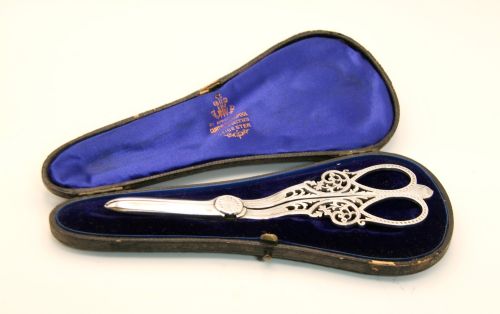
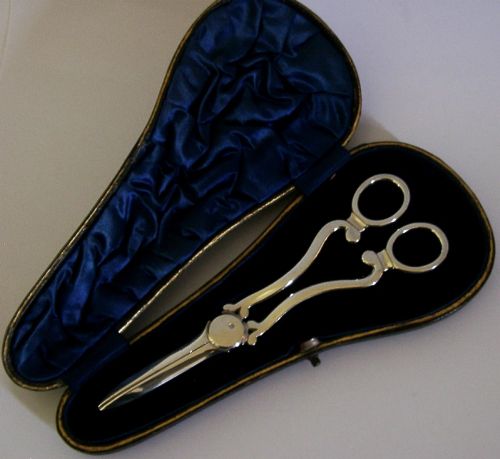
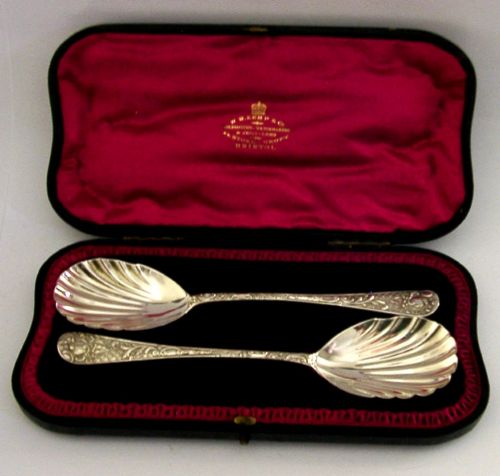
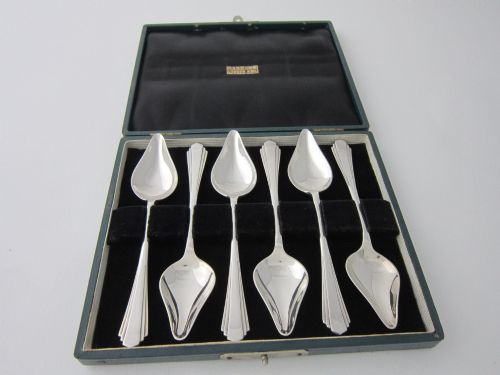
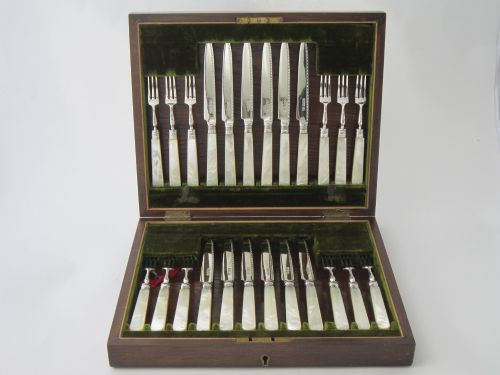
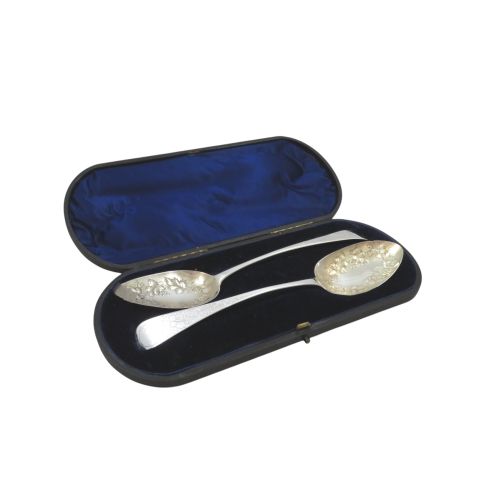
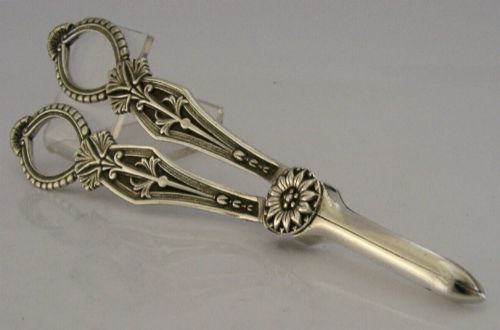
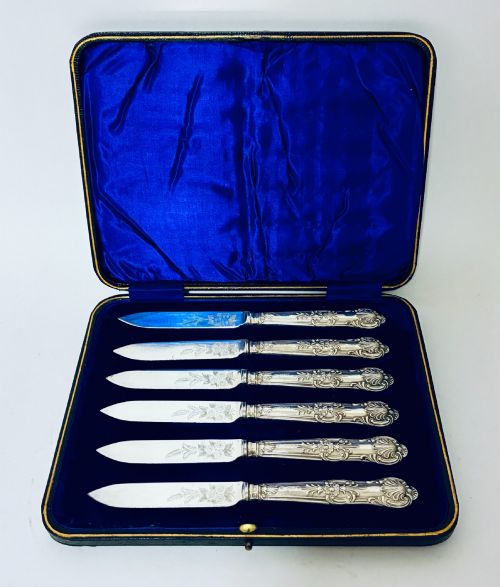
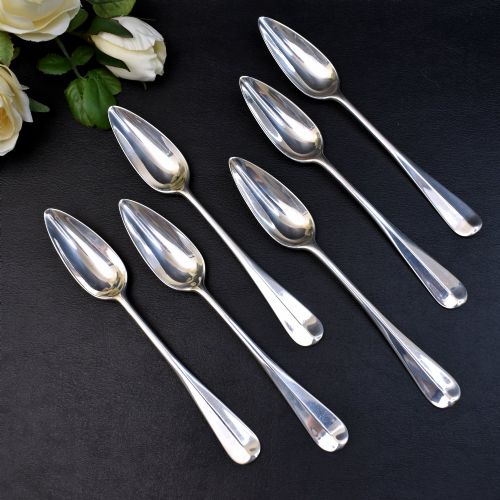
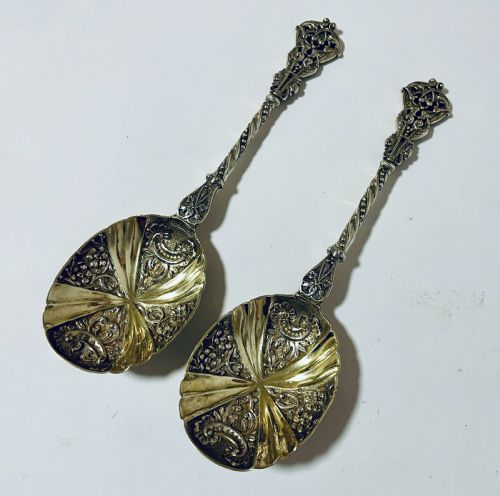
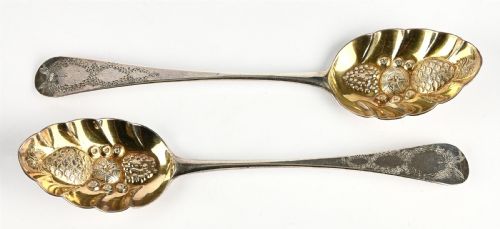
Antique silver fruit cutlery comprises specialised knives, forks, spoons and shears produced during the Georgian, Victorian, Edwardian and later periods for serving and consuming fruit. The most frequent forms encountered on this page include cased sets of dessert knives and forks, berry spoons, grapefruit spoons and grape shears.
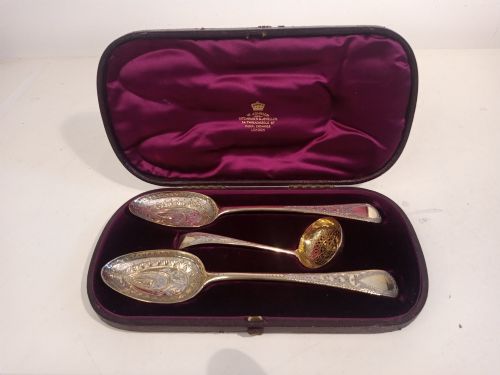
Many examples are found complete in fitted cases lined with velvet, silk, satin or leatherette, preserving the original service. Individual items such as folding fruit forks and cast blade fruit serving knives also appear across 18th-century to mid-20th-century dates.
How they were made
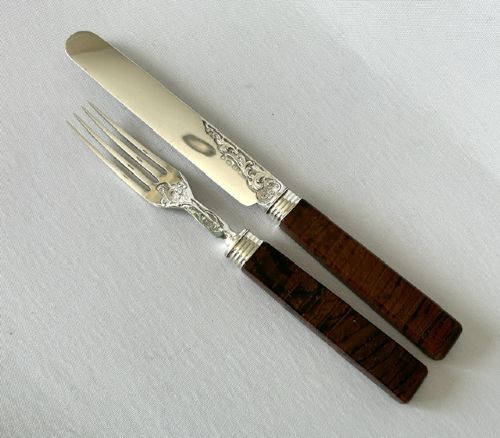
Items are formed from sterling silver, silver plate and silver gilt, often paired with organic handles fashioned from mother of pearl, agate, porcelain or naturalistic materials. Metalwork techniques involve casting, piercing, engraving and parcel-gilt finishing to ornament blades, bowls and handles.
Cased sets rely on fitted wooden or leatherette boxes lined in textiles to secure the cutlery, whilst specialised tools like grape shears utilise steel-reinforced or solid silver scissor mechanisms.
Listings feature sterling silver, silver plate, mother of pearl, agate and porcelain across Georgian, Victorian, and Edwardian periods.
What varies in quality
Quality differentiates through the weight of the silver, the crispness of hand-engraving on blades and handles, and the presence of specialist maker marks from renowned silversmiths. The selection of handle materials, such as polished mother of pearl or carved agate, and the survival of the original fitted case also influence the standard of a set.
Hamilton & Inches·Peter & Anne Bateman·E Coker·William Chawner II·Paul Storr·Reilly & Storer·Sebastian Crespell·Hukin & Heath·Jules Albrecht Geneve
The Antique Silver Fruit Cutlery Glossary
- Berry spoon
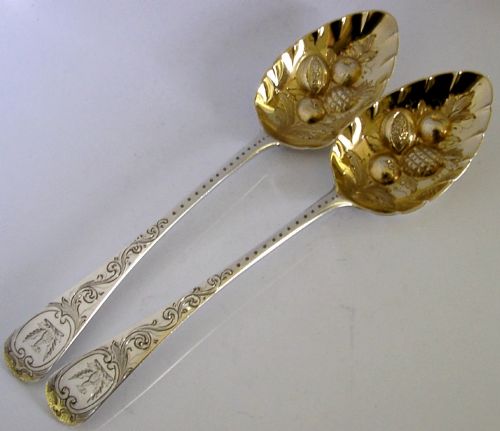
- A large serving spoon with an embossed or chased fruit bowl, often added to Georgian spoons during the Victorian era.
- Grape shears
- Scissors or shears specifically hinged for cutting clusters of grapes at the table without damaging the fruit.
- Silver gilt
- Silver objects that have been coated with a thin layer of gold on the surface, also known as vermeil.
- Mother of pearl
- The iridescent internal layer of mollusc shells, frequently sliced and pinned to form knife and fork handles.
Antique Silver Fruit Cutlery: Frequently Asked Questions
What is antique fruit cutlery used for?
These pieces were employed at the dining table for slicing, serving and eating fresh fruit such as berries, citrus and grapes.
The acidic juices of fresh fruit required silver blades or specialised materials to prevent the metallic taste that standard steel cutlery caused.
How do I store cased sets?
Cased sets should be kept in their original fitted boxes away from direct sunlight and excessive humidity to protect the internal velvet or silk linings.
Storing the cutlery dry and avoiding abrasive cleaning agents preserves both the silver and the organic handle materials like mother of pearl.
How can I tell the period?
Dating relies heavily upon the hallmarks stamped into the metal, which record the assay office, date letter and silversmith's mark.
Stylistic cues such as Gothic Revival detailing, Art Deco geometry or Victorian naturalistic engraving also assist in identifying the era of manufacture.
Why do some fruit knives have silver gilt?
Silver gilt or parcel-gilt finishes were applied to protect the metal from staining when coming into contact with acidic fruit juices.
This gold wash added a decorative contrast to the engraved blades and the polished mother of pearl or ivory handles.