

Antique Sideboard Desk
An antique sideboard desk combines heavy serving storage with writing surfaces, offering deep mahogany timber and period joinery.
Antique Sideboard Desk
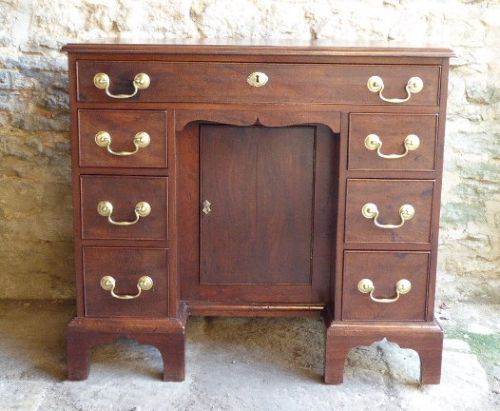
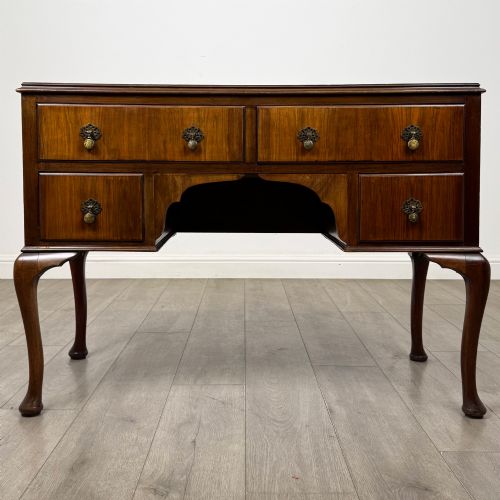
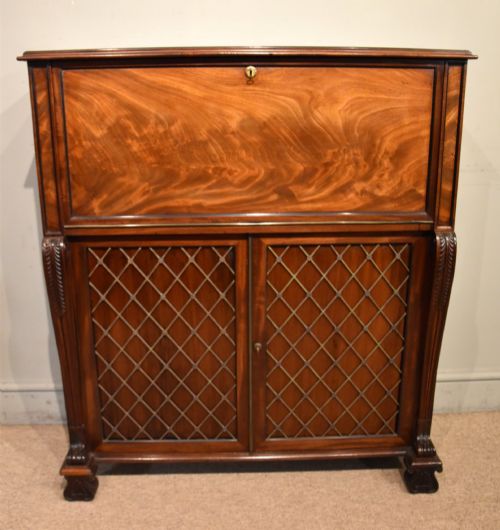
An antique sideboard desk merges the storage capacity of a dining room server with the dedicated writing space of a bureau or kneehole desk. Pieces carrying this description span Georgian, Regency, and Victorian eras, demonstrating how cabinetmakers adapted utilitarian furniture for multi-purpose domestic use.
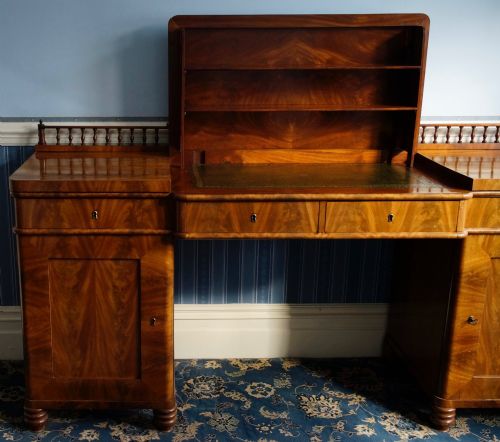
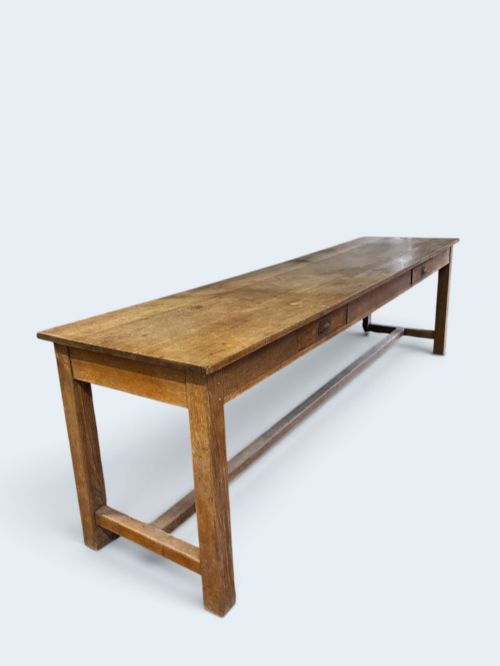
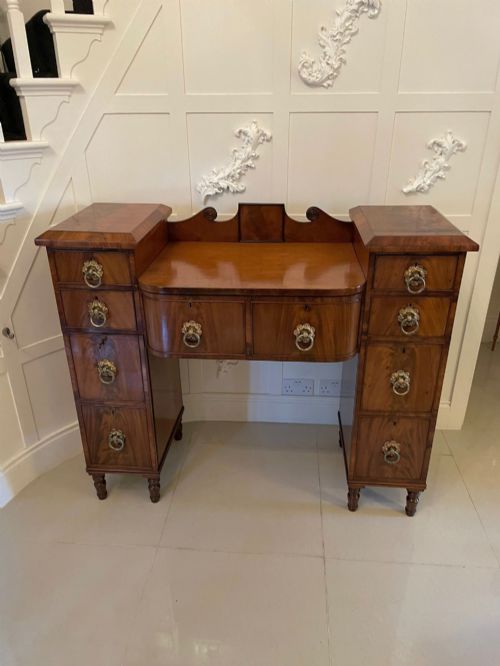
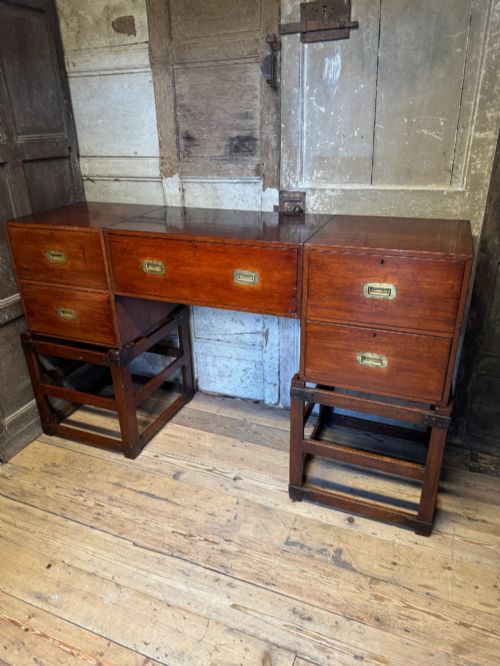
Buyers browsing this selection encounter forms ranging from small mahogany kneehole desks from around 1800 to larger breakfront sideboards with secretaire drawers. The selection includes architectural designs by makers such as Gillows alongside simpler oak and pine country pieces.
The category draws together distinct furniture types that share functional traits, including serving tables with integrated desks, pedestal sideboards with internal writing compartments, and cabinets fitted with drop-down ledger surfaces.
How they were made
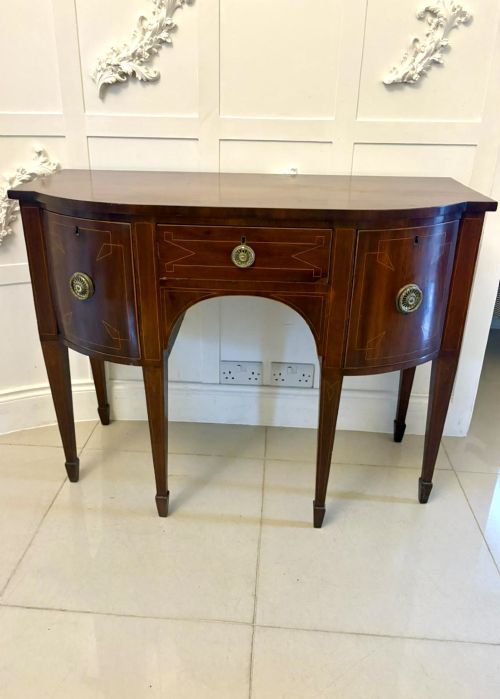
Makers relied primarily on dense hardwoods such as mahogany, walnut, and oak for the structural carcase and drawer construction, often adding secondary timbers like pine for internal partitions. Selected pieces incorporate figured mahogany veneers, boxwood stringing, and brass mounts, reflecting the decorative preferences of the Georgian and Regency periods.
Listings feature mahogany, oak, walnut, pine, and boxwood across the Georgian, Victorian, and Edwardian periods.
What varies in quality
The standard of timber selection largely defines the tier of a piece, separating workshops that used richly figured mahogany and burr walnut veneers from those employing plain domestic hardwoods. Superior examples exhibit continuous grain matching across drawer fronts and careful attention to secondary wood choices inside the carcase.
Execution of internal fittings marks the difference between standard production furniture and high workshop output. Fine secretaire drawers feature secret compartments, finely turned pull knobs, and meticulous cock-beading around the edges, whereas lesser pieces rely on plain panel construction.
Gillows·Arthur Simpson of Kendal·Étienne Kohlmann
The Antique Sideboard Desk Glossary
- Secretaire
- A cabinet or desk featuring a pull-down front that reveals a writing surface and small pigeonholes. This fitting allows a serving piece to double as a workspace.
- Kneehole desk
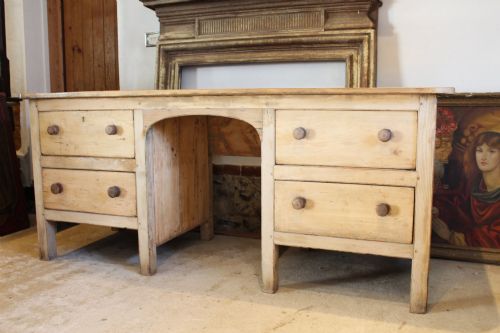
- A compact writing table featuring a central recess for the user's legs, flanked by pedestals of small drawers. This form provides substantial storage within a modest footprint.
- Cock-beading
- A narrow protruding moulding applied around the edges of drawer fronts. This detail protects the drawer edges from impact and frames the wood grain.
- Breakfront
- A piece of furniture where the central section projects forward from the flanking wings. This architectural arrangement creates depth and shadow across the front elevation.
Antique Sideboard Desk: Frequently Asked Questions
What is an antique sideboard desk?
An antique sideboard desk is a hybrid form that merges the deep storage of a dining room server with a functional writing surface. These pieces often feature a secretaire drawer that pulls out and drops down to reveal internal compartments.
They reflect a historical demand for multi-purpose furniture in domestic settings, particularly during the Georgian and Regency periods when room economy mattered.
How do I identify a Georgian sideboard desk?
Georgian examples typically feature solid mahogany or figured mahogany veneers, accented with fine boxwood stringing and brass hardware. Look for hand-cut dovetails on the drawer interiors and classic proportions associated with the late eighteenth century.
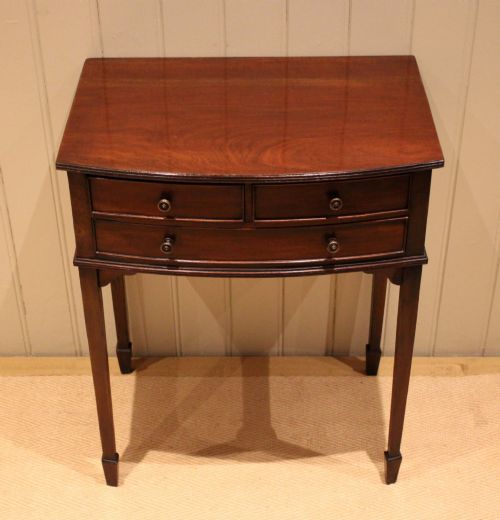
Cabinetmakers of this era focused on architectural balance, often incorporating bow fronts or breakfront profiles into the design.
Where were these pieces used?
These pieces served primarily in formal dining rooms, libraries, and private studies of large houses. The dual nature allowed the owner to store serving silver or linens while maintaining a place to manage household accounts.
In smaller nineteenth-century homes, such furniture maximised floor space by combining two essential household items into a single footprint.
How do I care for mahogany furniture?
Maintain mahogany surfaces by dusting regularly with a soft, dry cloth and avoiding direct sunlight that can fade the timber. Apply a traditional beeswax polish sparingly to nourish the wood and preserve the natural patina.
Keep the furniture away from direct heat sources and drastic humidity changes to prevent the timber and historical veneers from splitting.