

Antique Serpentine Fronted Furniture
Antique serpentine fronted furniture brings together curving drawer fronts and rich cabinet timbers to anchor a room.
Antique Serpentine Fronted Furniture
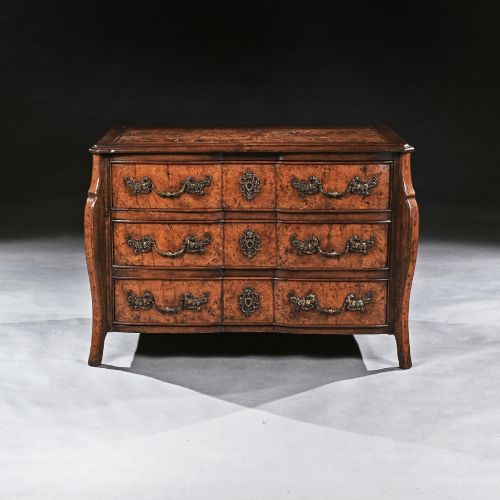
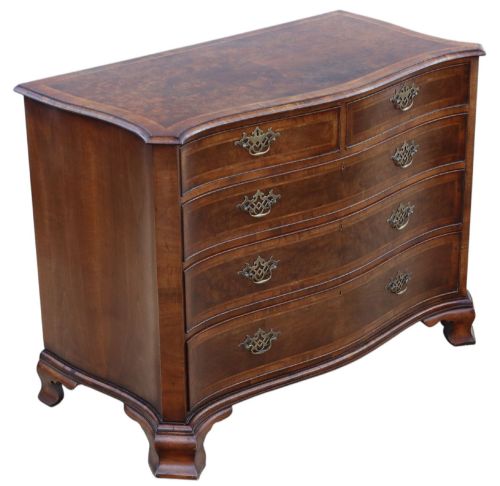
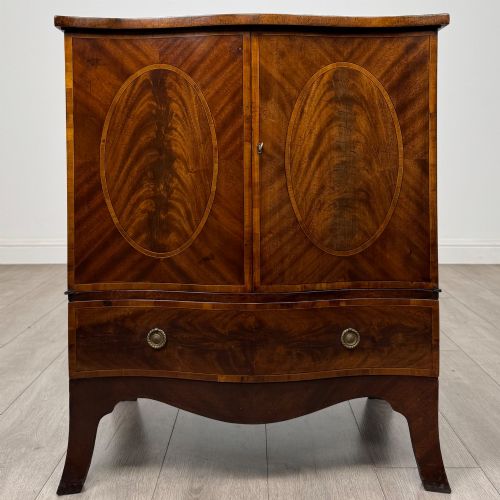
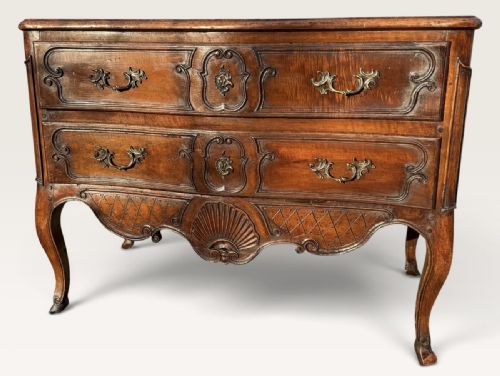
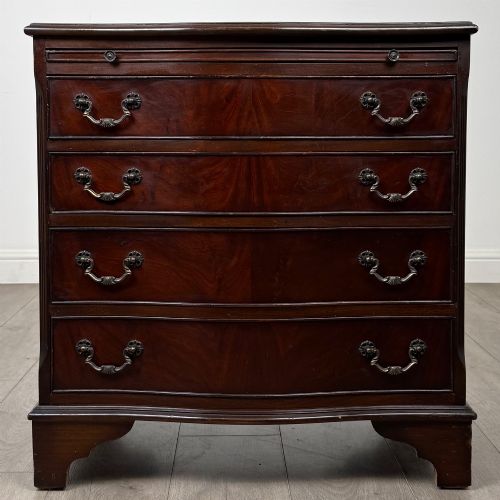
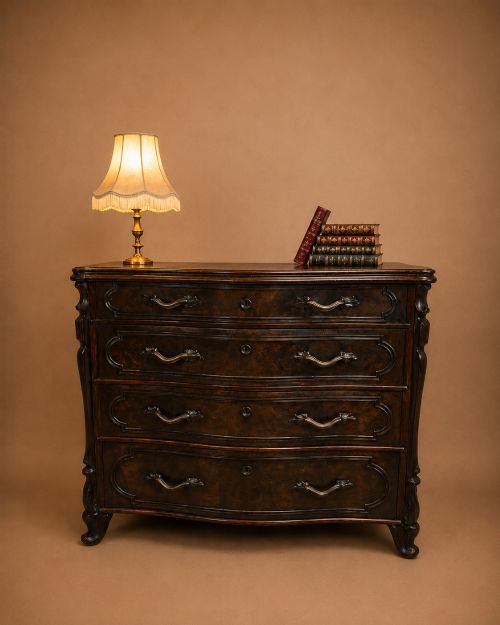
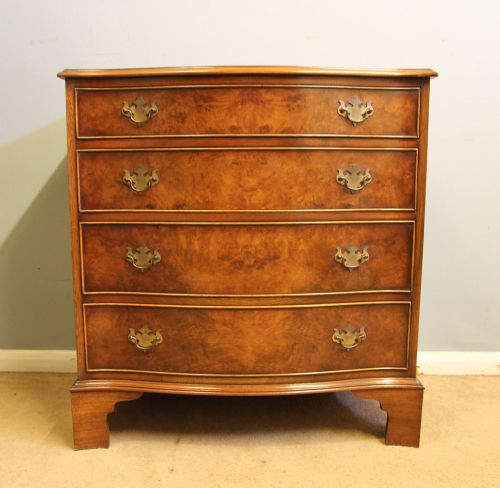
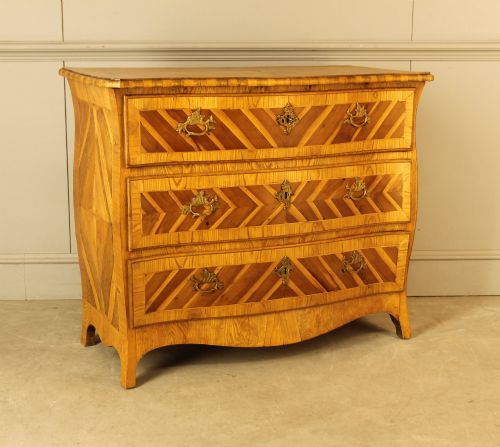
Antique serpentine fronted furniture primarily comprises chests of drawers, commodes, and side cabinets shaped with a prominent convex centre flanked by concave wings. These pieces span the eighteenth and nineteenth centuries, with later revival interpretations appearing from the Edwardian era.
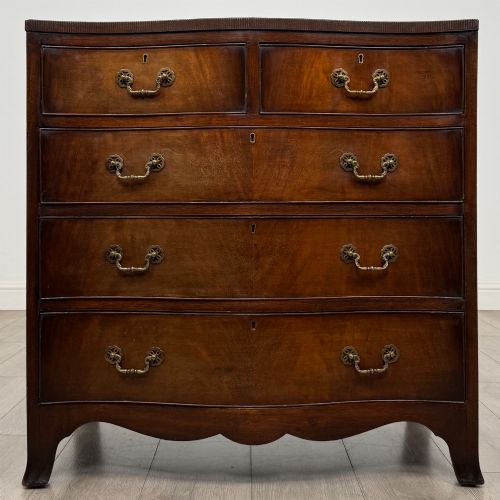
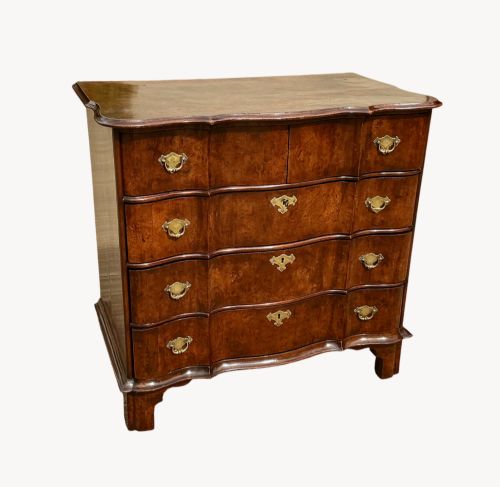
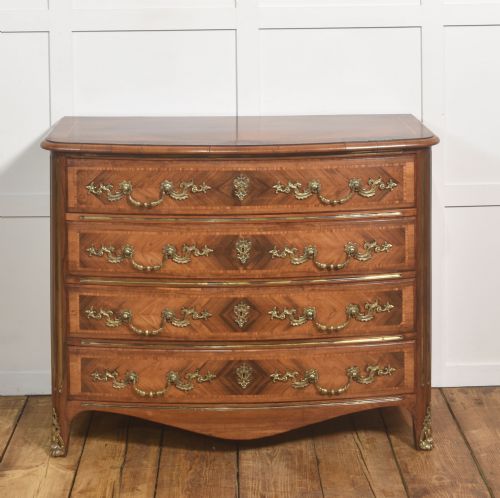
The most common forms on this page are mahogany and burr walnut chests of drawers alongside continental commodes. Buyers encounter regional variations from English Georgian workshops as well as French, Dutch, and Swedish cabinetmakers.
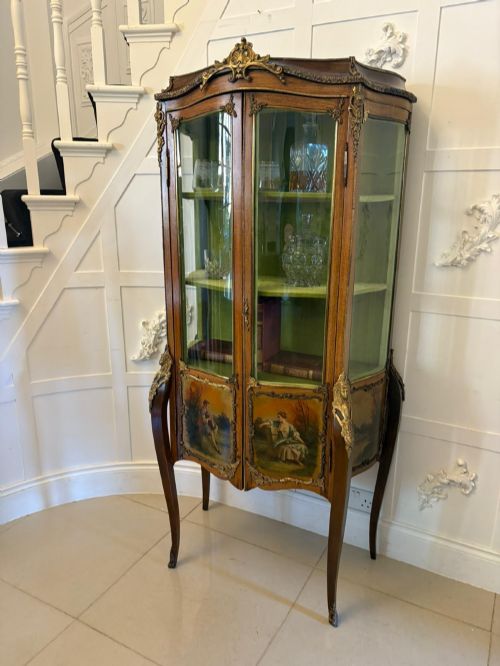
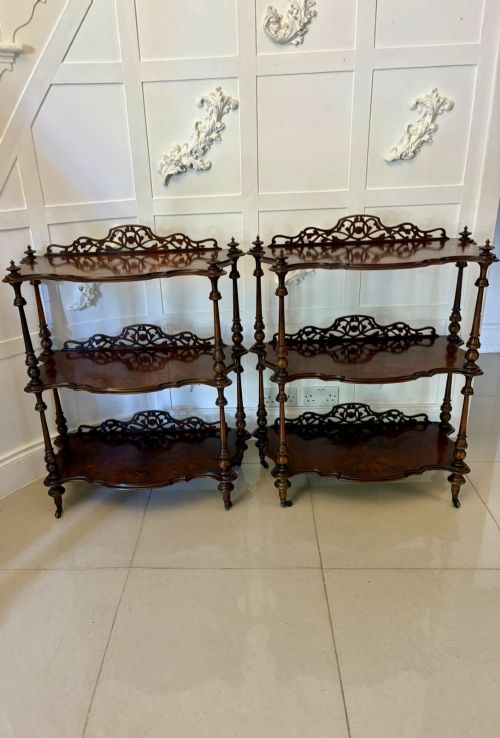
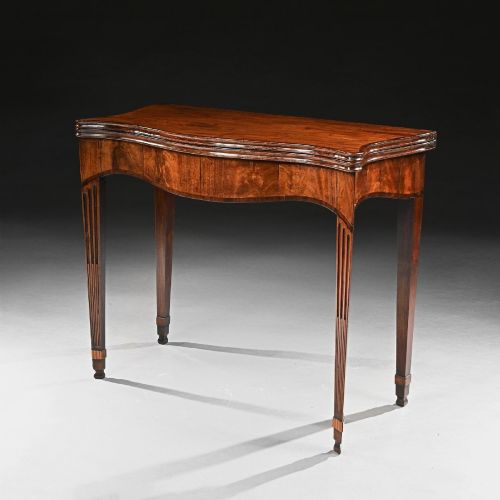
Object types extend from tea tables and writing tables to display cabinets and whatnots. Each piece uses the characteristic undulating front line to soften the rectangular geometry typical of period interiors.
Materials and Technique
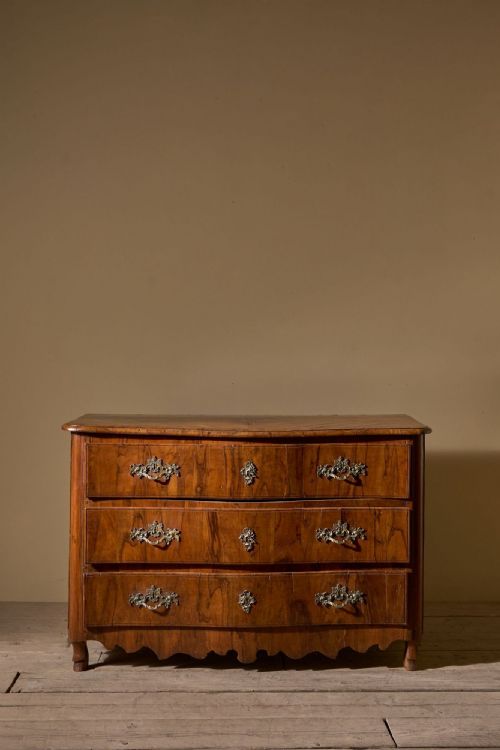
Cabinetmakers constructed these pieces using dense primary timbers such as mahogany, oak, and walnut, frequently applying figured veneers like burr walnut or olive wood across the curved drawer fronts. The undulating shape required precise shaping of the solid timber frame to support the veneered surfaces without warping.
Ornate detailing relied on crossbanding, marquetry inlay, and brass hardware to define the structural lines of the facade. Several continental examples incorporate original marble tops and ormolu mounts to finish the upper edge of the commode.
Surface finishes included hand-applied polish that enhanced the natural patination and figuring of the wood grain. Regional variations demonstrate specialised techniques, from French polished surfaces to painted wood finishes on provincial pieces.
Maltese olive wood and Swedish rococo bombe forms bring unexpected Mediterranean warmth and northern flair to the serpentine lineup.
Assessing Quality
Quality rests upon the handling of the curved timber and the consistency of the grain matching across the drawer fronts. Superior examples maintain crisp lines along the undulating profile where solid wood meets veneer.
The choice of secondary timbers inside the drawers and the integrity of the original brass handles distinguish standard production from finer cabinetwork. Graduations in quality also appear in the subtlety of the marquetry and the preservation of the original surface patination.
The Antique Serpentine Fronted Furniture Glossary
- Serpentine
- A furniture front shaped with a convex central sweep flanked by two concave curves. This contour requires advanced woodworking skill to execute properly.
- Commode
- A low cabinet or chest of drawers, frequently referencing continental European pieces from the eighteenth and nineteenth centuries. The term often denotes a decorative focal point in a principal room.
- Burr walnut
- Timber taken from the warted growths of walnut trees, yielding highly figured and swirling grain patterns. Cabinetmakers prized this material for veneering prominent drawer fronts.
- Crossbanding
- A narrow strip of veneer laid around the border of a panel with the grain running perpendicular to the central piece. This technique frames the primary wood of the drawer.
- Marquetry
- Decorative patterns formed by fitting together thin slices of different coloured woods and veneers. Craftsmen applied these pictorial designs to cabinet doors and drawer surfaces.
Antique Serpentine Fronted Furniture: Frequently Asked Questions
What rooms suit serpentine furniture?
These pieces function effectively in bedrooms, hallways, and living spaces as primary storage or display surfaces. Their curved profiles allow them to sit comfortably against walls while softening room angles.
Smaller side tables and bedside chests fit narrow spaces where standard rectangular furniture might appear heavy. Larger chests of drawers serve as substantial focal points within period or mixed-period interiors.
How do I care for antique wood?
Maintaining these surfaces involves keeping them away from direct heat sources and strong sunlight to prevent the timber and veneer from drying out. Regular dusting with a soft, dry cloth preserves the polished finish.
Applications of appropriate wax polish help nourish the wood grain over time. Avoiding synthetic cleaning sprays ensures the original patination remains undisturbed.
How do I date a piece?
Dating relies on examining the construction methods, timber choices, and secondary woods used inside the drawers. Eighteenth-century examples often feature hand-cut dovetails and native cabinet timbers appropriate to their region of origin.
Revival pieces from the Edwardian period or the early twentieth century display standardised fixings and machine-sawn elements beneath the traditional exterior styling. Hardware types and lock mechanisms also provide clear chronological markers.
What is an oxbow front?
An oxbow front is a specific variation of curving furniture design where the central section is concave and flanked by convex ends. This profile inverts the standard serpentine arrangement.
Pieces featuring this form share the same high level of cabinetmaking skill required to shape solid timber and apply matching veneers.