


19th Century Scandinavian Cupboards
These 19th century scandinavian cupboards bring robust regional character and useful storage to a room through painted pine and polished birch.
19th Century Scandinavian Cupboards
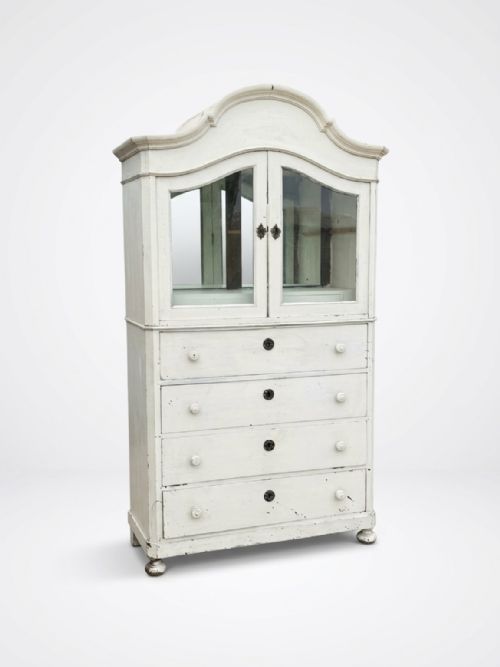
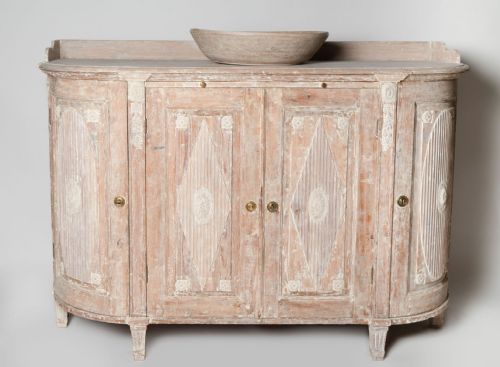
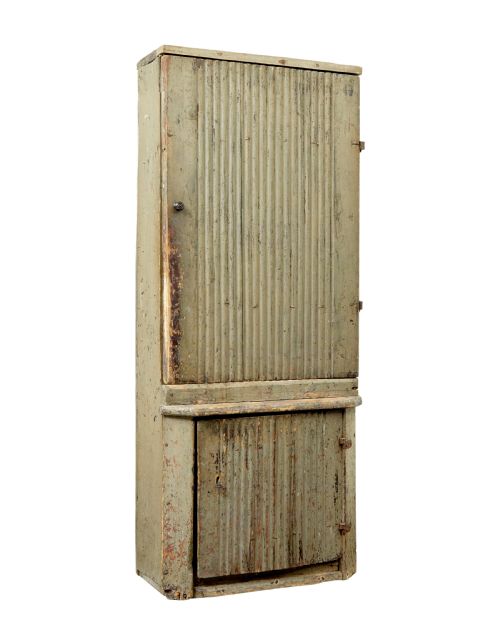
When you search for 19th century scandinavian cupboards, you encounter a diverse array of functional storage pieces originating from Sweden, Denmark, Finland, and the wider Baltic region. The selection spans wall-mounted cabinets, floor-standing cupboards, dressers, and sideboards built to serve domestic needs in farmhouses and townhouses alike.
The most common examples on this page are constructed from pine and finished with traditional paint surfaces, often displaying the light tones associated with Gustavian taste or the decorative motifs of Scandinavian folk art. Alongside these painted country pieces, you find more formal urban iterations featuring rich birch veneers or flame mahogany.
While the majority of these storage pieces belong to the nineteenth century, variations stretch from earlier eighteenth-century roots into later revivals, encompassing serpentine shapes, bonnet tops, and corner configurations designed to maximise space.
Materials and Technique
Makers relied principally on native softwoods like pine for everyday utility pieces, building sturdy carcases that could take thick layers of lead or oil-based paint. Surfaces frequently display scraped paint effects, traditional ragwork finishes, or detailed hand-painted folk decorations applied over the timber.
For more formal urban furniture, craftsmen turned to hardwoods such as birch, satin birch, and flame mahogany, often polished to highlight the natural grain patterns of the wood. Iron and brass hardware, including hinges, escutcheons, and locks, secure the doors of these cabinets, while occasional glass panes front the upper display sections.
Object forms range from compact wall cabinets and corner cupboards to large dressers, armoires, and fitted kitchen sideboards.
Assessing Quality
Quality in these storage pieces rests largely on the integrity of the surface finish and the harmony of the proportions. Original painted finishes that retain their scraped patination or authentic folk art details command greater appreciation than later overpainting, as the layers tell a story of the object's age and use.
Construction methods also separate utilitarian farm furniture from refined cabinetwork. Dovetail joints, well-fitted doors, original brass or iron fittings, and balanced neoclassical or Gustavian lines indicate the skill of the regional joiner who shaped the pine or birch.
The 19th Century Scandinavian Cupboards Glossary
- Gustavian
- A Swedish neoclassical style characterised by restrained classical ornamentation, light colour palettes, and balanced symmetry. It draws inspiration from French Louis XVI design adapted to Nordic tastes.
- Ragwork
- A decorative painting technique where rags or cloths are used to apply or texture paint onto a wooden surface, creating a mottled, patterned finish popular on traditional country furniture.
- Bonnet top
- A curved or arched upper hood on a cabinet or dresser, providing extra height and architectural presence above the main storage section.
- Serpentine
- A gently undulating curved line forming the front shape of a cabinet or sideboard, requiring skilled woodworking to achieve the S-shaped contour.
19th Century Scandinavian Cupboards: Frequently Asked Questions
How do I identify a Gustavian cupboard?
Look for restrained neoclassical details such as fluted columns, simple carved urns or rosettes, and pale painted finishes. These pieces reflect Swedish interpretations of French eighteenth-century royal design.
Proportions tend to be clean and symmetrical, avoiding heavy ornamentation in favour of architectural dignity and light colour schemes.
What is ragwork paint?
Ragwork is a decorative surface treatment where painters used cloths to manipulate wet paint on pine furniture. This method created textured, mottled patterns that added visual depth to plain wooden boards.
In Scandinavian folk pieces, this technique often imitated more expensive materials or simply provided a durable, decorative finish for domestic interiors.
Where were these cupboards used?
These cabinets served practical storage roles across homes, kitchens, and farmhouses in Sweden, Denmark, Finland, and the Baltic region. Wall cabinets kept provisions or tableware off the floor, while larger armoires and dressers organised household linens.
Corner cabinets and sideboards maximised dining room space, combining display surfaces with enclosed cupboards.
Are birch and pine cupboards from the same period?
Both timbers appear throughout the nineteenth century, though they served different aesthetic traditions. Pine was the primary choice for painted country furniture and rustic folk art pieces.
Birch, particularly satin birch and flame mahogany veneers, featured in more formal urban cabinets, sideboards, and Biedermeier-influenced furniture.