


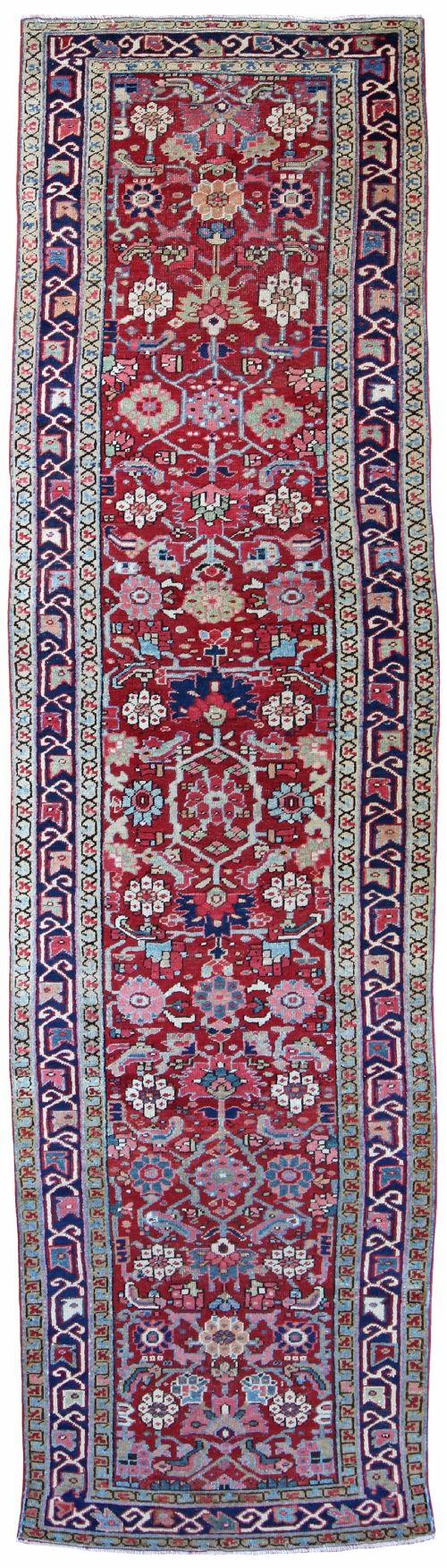


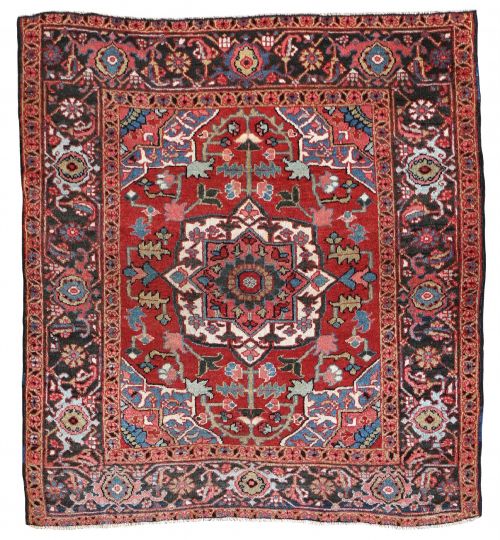


Antique Serapi Style Carpet
These antique serapi style carpet examples are durable floor coverings valued for their bold geometric motifs and rich wool pile.
Antique Serapi Style Carpet
When you search for an antique serapi style carpet, you are looking at large floor coverings originating from Northwest Persia, specifically associated with Heriz styles. These pieces arrive in various formats, predominantly appearing as large carpets alongside smaller rugs and elongated runners.
The selections span several decades from the late nineteenth century through to the early decades of the twentieth century, specifically covering periods around 1880, 1890, 1900, 1910, 1920, and 1930. Buyers encounter traditional Persian designs that frequently feature characteristic large-scale patterns and balanced geometric layouts.
How They Were Made
These floor coverings are constructed primarily using durable wool for the pile, which provides resilience and a distinct texture underfoot. The foundational structure relies on sturdy cotton warps and wefts to maintain the rigidity and shape of each woven piece over decades of use.
Weavers employed traditional knotting techniques characteristic of Northwest Persian Heriz production to secure the wool pile tightly to the cotton foundation. This meticulous hand-weaving method enabled artisans to create the geometric medallions and intricate rectilinear patterns seen across the inventory.
Antique Serapi Style Carpet Retail Price Guide 2026
Typical asking prices for serapi style carpet among the pieces listed under this phrase on Sellingantiques today, from the lower quarter to the upper quarter. They describe what is for sale here now, not the wider market.
Listings incorporate wool and cotton materials across rug, carpet, and runner formats dated from 1880 to 1930.
What Varies in Quality
The overall standard of these woven pieces depends heavily on the fineness of the knot count and the precision executed in the geometric drawing. Denser knotting allows for sharper definition within the central medallions and border details.
Condition and scale also differentiate examples, with larger carpets requiring greater structural integrity across their expansive cotton foundations. The depth and consistency of the wool pile directly influence how well each floor covering withstands ongoing foot traffic.
The Antique Serapi Style Carpet Glossary
- Heriz
- A region in Northwest Persia renowned for producing distinctive geometric carpets with bold central medallions and strong cotton foundations. These pieces are closely linked to the serapi style.
- Runner
- A long, narrow carpet format designed specifically for hallways and corridors. They typically measure significantly longer than they are wide.
- Pile
- The upper visible surface of a carpet formed by the cut ends of wool threads tied to the foundation. This layer provides both cushioning and visual depth.
- Warp
- The vertical threads stretched tightly on the loom before weaving begins. Cotton is commonly utilised for this structural element.
- Weft
- The horizontal threads passed alternately over and under the warp threads to bind the knots in place. Together with the warp, it forms the internal grid of the carpet.
Antique Serapi Style Carpet: Frequently Asked Questions
How do I place an antique carpet?
These floor coverings suit reception rooms, dining areas, and long hallways depending on whether you select a grand carpet or a narrow runner.
Ensure the chosen room allows the geometric patterns to remain visible rather than being entirely obscured by heavy furniture.
What periods do these pieces span?
The inventory covers pieces originating from the late nineteenth century through the early decades of the twentieth century.
Dates range specifically from the 1880s across the decades up to the 1930s, reflecting traditional Persian weaving eras.
Are these runners suitable for hallways?
Elongated runner formats in this selection are specifically shaped for corridors and narrow transitional spaces.
Their sturdy wool and cotton construction handles regular foot traffic while introducing traditional Northwest Persian design to long rooms.
How do I identify a Heriz design?
Heriz carpets are characterised by bold rectilinear motifs, large central geometric medallions, and structured corner spandrels.
The regional style relies on strong lines rather than the curved floral details found in other Persian traditions.