

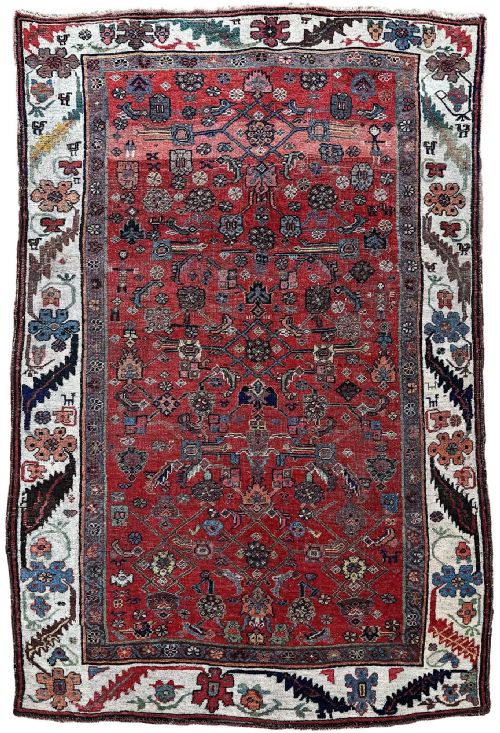
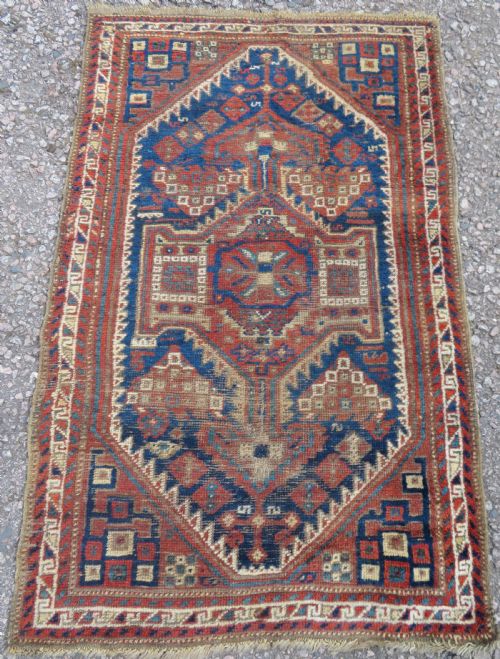
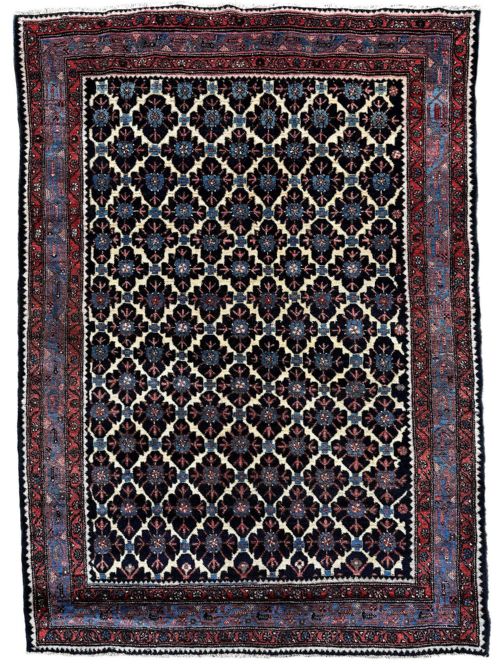


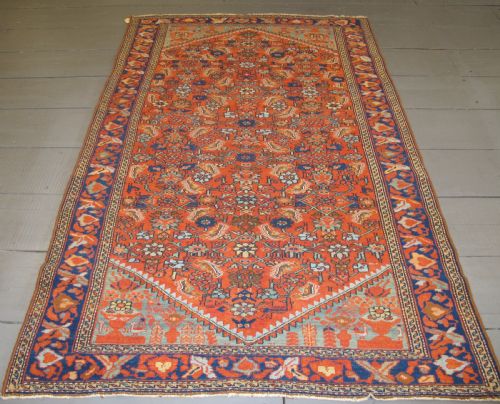


Handcrafted Geometric Wool Carpet
These handcrafted geometric wool carpet examples bring robust village knotting and flatweaving straight to the floor.
Handcrafted Geometric Wool Carpet
A handcrafted geometric wool carpet combines village and tribal traditions from Persian, Caucasian, Turkmen, Uzbek, Afghan and Turkish origins. When searching for a handcrafted geometric wool carpet, buyers encounter nineteenth-century and early twentieth-century formats including area rugs, runners and kilim rugs.
The prevalent styles span Persian Bidjar, Heriz, Khamseh, Qashqai and Kelardasht alongside Yomut Turkmen, Uzbek suzani kilim and Caucasian Erivan Armenian Perepedil work. These pieces display distinct rectilinear motifs and regional weaves handed down across generations.
Most entries date from the late nineteenth century through to the 1920s, showcasing traditional village floor coverings intended for heavy everyday domestic use. The predominant regional designs rely on angular medallions, repeating hooked patterns and crisp compartmentalised fields.
Materials and construction methods
These floor coverings utilise natural wool for the pile and surface texture, paired with cotton foundations in many traditional regional rugs and runners. Certain flatweaves and soumak kilims rely entirely on wool for both warp and weft construction.
Weavers constructed these pieces by hand on vertical or horizontal looms, applying knotting techniques or flatweave and soumak structures. Artisans dyed the wool using traditional methods that yield soft faded reds, yellow grounds and scarce green palettes.
Handcrafted Geometric Wool Carpet Retail Price Guide 2026
Typical asking prices for handcrafted geometric wool carpet among the pieces listed under this phrase on Sellingantiques today, from the lower quarter to the upper quarter. They describe what is for sale here now, not the wider market.
Listings feature pieces spanning the late nineteenth century through to the 1920s, constructed primarily from wool and cotton.
Evaluating quality and execution
Quality rests on the precision of the geometric layout, the crispness of the tribal motifs and the integrity of the weave across the field. Tightly packed knots and robust structural foundations separate finely executed village carpets from simpler utility pieces.
The choice and stability of natural dyes influence the visual depth, particularly where pieces show age-related softening or distressed patination. Well-executed borders and balanced proportions distinguish superior examples within each regional type.
The Handcrafted Geometric Wool Carpet Glossary
- Soumak kilim
- A flatweave textile technique producing a smooth face with wrapped weft threads on the front and loose floats on the reverse. This method creates durable geometric patterns without a cut pile.
- Kilim rug
- A pileless woven textile made by tightly interweaving warp and weft strands to form flat geometric surfaces. These lightweight pieces serve as versatile floor coverings and wall hangings.
- Runner rug
- A long, narrow carpet format designed specifically for hallways, corridors and narrow passage spaces. They typically feature repeating medallions or continuous rectilinear borders.
- Area rug
- A portable floor covering smaller than fitted wall-to-wall carpeting, used to define spaces within a room. They appear in varied regional dimensions across village and tribal workshops.
- Bidjar
- A Persian weaving centre known for heavy, dense construction and durable wool piles. Carpets from this region employ strong foundations that hold their shape firmly over decades.
Handcrafted Geometric Wool Carpet: Frequently Asked Questions
How do I clean an antique wool rug?
Vacuum gently without a rotating brush roll to remove embedded grit from the wool pile. Professional specialist cleaning remains essential for handling natural dyes and antique foundations safely.
Avoid soaking the piece or applying harsh chemical detergents that strip the natural lanolin from the wool fibres. Regular shaking outdoors helps maintain the texture without risking water damage.
Where should I place a runner rug?
Runners suit narrow hallways, corridors, staircases and galley kitchens where linear floor coverings fit best. They protect high-traffic wooden floorboards while adding distinct colour and geometric pattern to transitional spaces.
Ensure you use an appropriate non-slip underlay beneath the carpet to prevent shifting and reduce wear from friction against the floor.
How can I tell different tribal designs apart?
Study the specific structural traits, palette choices and border arrangements unique to each regional group. Turkmen weaving often displays deep red tones and repeated guls, while Caucasian pieces favour crisp, highly angular medallions.
Persian village rugs like Heriz or Qashqai incorporate distinctive corner spandrels and animal or human motifs integrated into the geometric field.