
Antique Scroll Sofa
An antique scroll sofa brings sweeping classical lines and deep comfort to a room, offering the enduring craftsmanship of the Regency and Victorian periods.
Antique Scroll Sofa
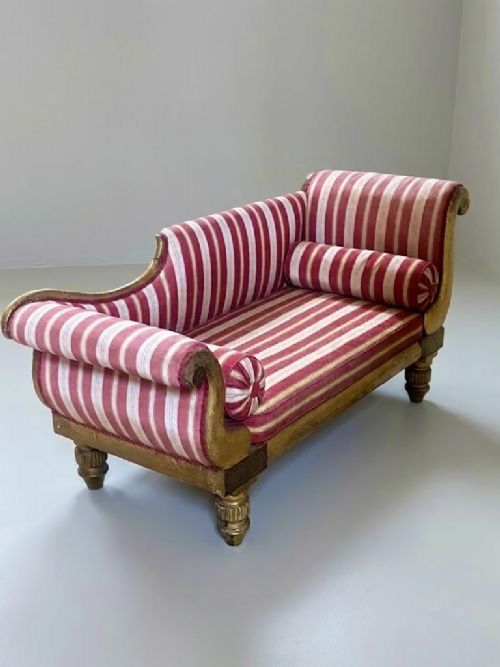
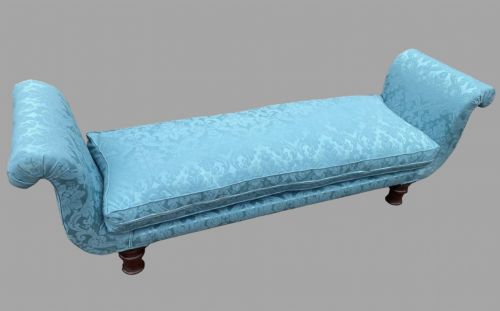
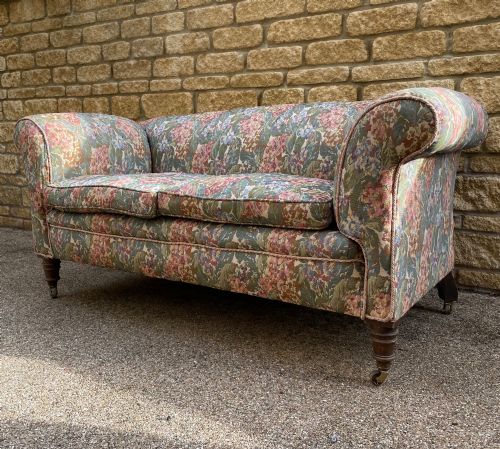
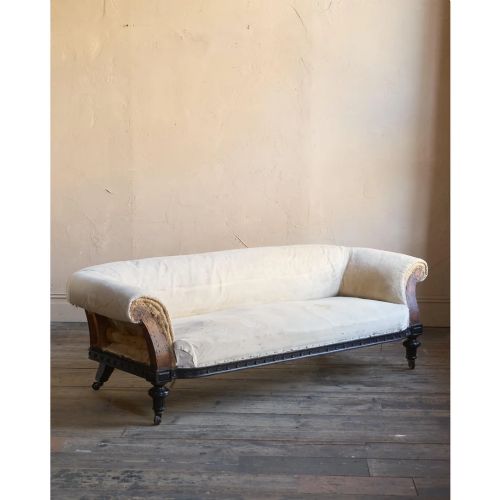
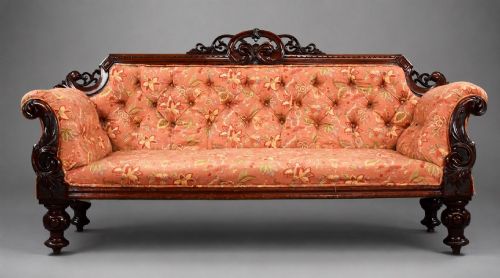
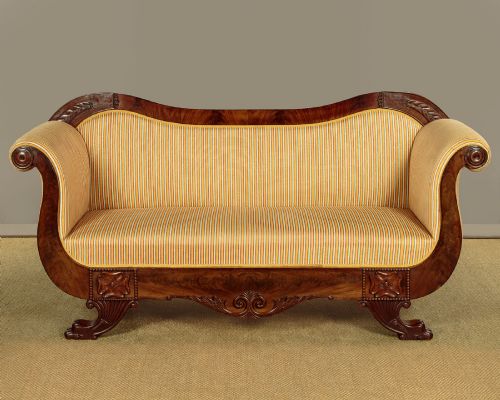
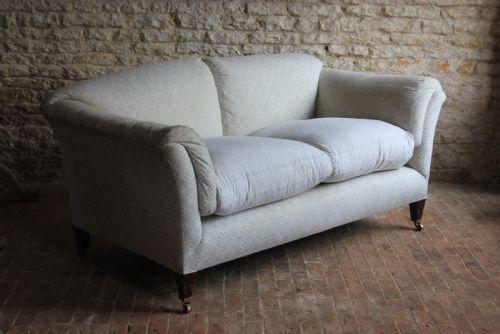
When you search for an antique scroll sofa, you enter a world of nineteenth-century seating that spans the Regency, William IV, and Victorian eras. These pieces range from grand mahogany double scroll-end couches to intimate two-seater Chesterfields and elongated daybeds.
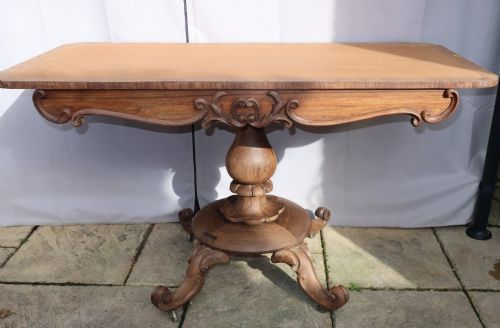
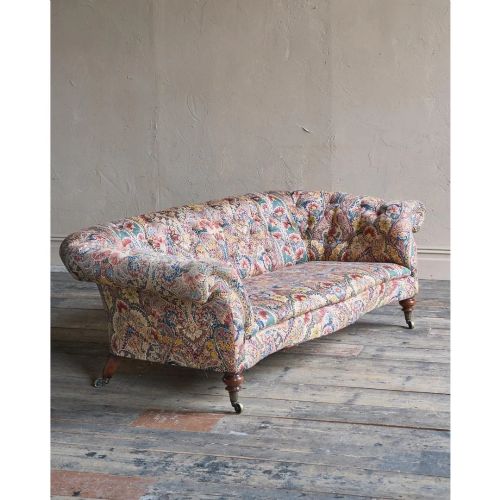
The version most commonly met on this page is the generous nineteenth-century mahogany or rosewood frame featuring sweeping scroll arms or ends. Many examples utilise show-wood frames carved with classical motifs, whilst others present clean upholstered lines resting on turned walnut or mahogany legs.
Makers and workshops of the period, including notable firms like Howard and Sons and Holland and Sons, often shaped these seats for country houses and formal drawing rooms. Alongside conventional sofas, related forms such as chaise longues and daybeds appear frequently across the listings.
How they were made
Cabinet makers built the structural frames of these seats using dense timbers such as mahogany, rosewood, and walnut, often applying simulated rosewood finishes or brass inlay to create decorative contrast. Show-wood frames required skilled carpentry to carve the characteristic scroll ends and structural supports.
Upholstery formed the core of the seating comfort, utilising traditional stuffing materials enclosed in durable fabric, velvet, or leather. Later nineteenth-century pieces incorporated robust spring systems and cast iron components in daybeds, whilst decorative details included silk upholstery and brass elements.
The documented pieces span several distinct eras, encompassing Regency, William IV, Victorian, and later twentieth-century interpretations.
What varies in quality
The distinction between ordinary and exceptional pieces lies in the crispness of the timber carving and the architectural balance of the scroll arms. Finer examples display carefully selected grain patterns in the mahogany or rosewood veneer, alongside precise brass inlay work that remains securely seated within the wood.
Structural integrity and the retention of original framing define the upper tier of the range. Pieces bearing maker stamps from prominent workshops command greater interest due to documented craftsmanship and superior joinery hidden beneath the upholstery.
Howard and Sons·Holland and Sons·James Mein of Kelso
The Antique Scroll Sofa Glossary
- Scroll end
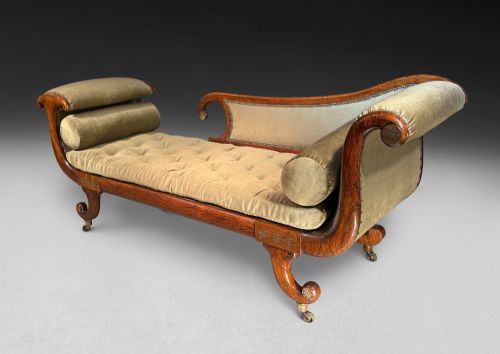
- A sweeping, curved wooden or upholstered armrest that rolls outward in a volute shape. This characteristic silhouette defines much of Regency and William IV seating design.
- Show-wood
- Exposed polished timber framing that forms a decorative border around the upholstered portions of a sofa or settee. Mahogany and rosewood are frequently utilised for this purpose.
- Chesterfield
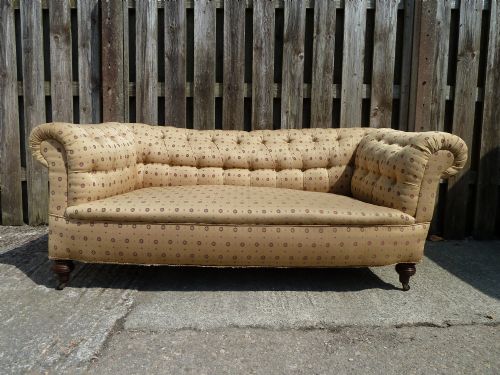
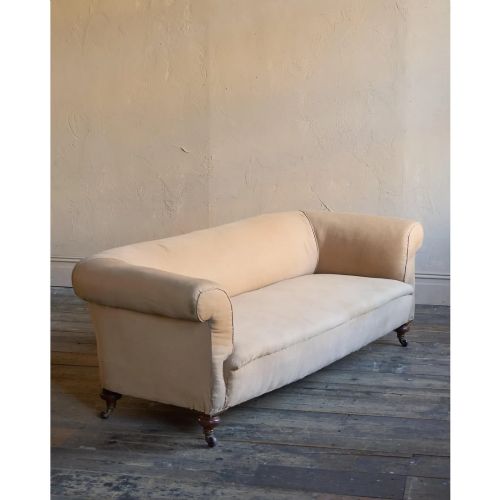
- A deeply upholstered sofa traditionally featuring arms and back of the same height. Victorian examples often incorporate buttoned leather or tight fabric upholstery.
- Chaise longue
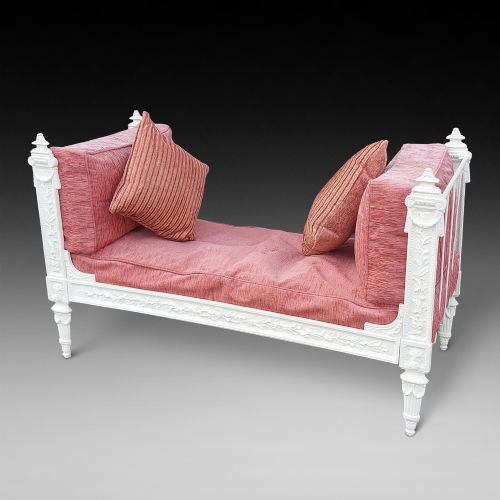
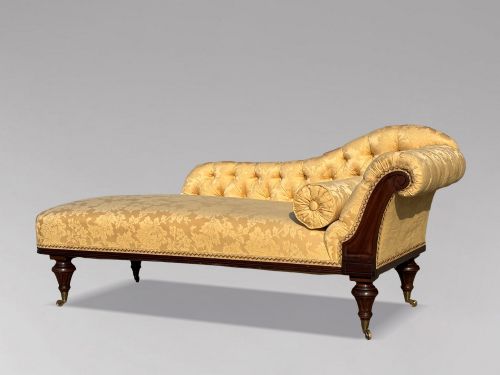
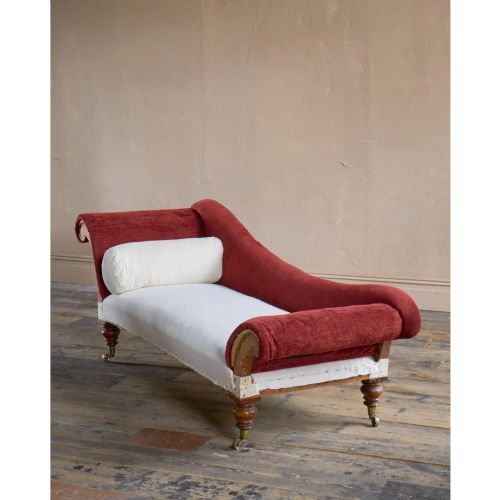
- An elongated upholstered seat designed for reclining, combining elements of a chair and a daybed. These typically feature a single raised scroll end for head support.
- Simulated rosewood
- Painted or stained timber, often beech or birch, grained to imitate the rich dark figuring of genuine rosewood. This technique was popular during the Regency period for decorative furniture.
Antique Scroll Sofa: Frequently Asked Questions
How do I identify a Regency scroll sofa?
Regency pieces generally feature clean architectural lines, often executed in rich mahogany or simulated rosewood with brass inlay details. The scroll ends on these earlier pieces tend to be tightly rolled and accompanied by classical show-wood frames.
Later Victorian interpretations usually present heavier proportions, softer padding, and turned wooden legs rather than the sharp classical detailing found in Regency and William IV examples.
Were these sofas used in bedrooms?
While the larger mahogany and rosewood scroll sofas belonged primarily in drawing rooms and country house reception spaces, smaller daybeds and chaise longues served multiple domestic functions. Lighter forms were frequently placed in boudoirs, dressing rooms, and morning rooms for daytime resting.
Heavier Chesterfield and settee variants remained strictly in public reception rooms where entertaining took place.
What is the difference between a settee and a chaise longue?
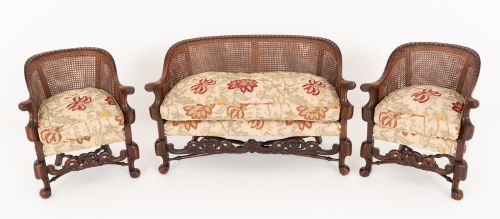
A settee is designed for upright seated company, featuring a full backrest and two symmetrical armrests or scroll ends. It accommodates multiple people sitting side by side.
A chaise longue is built for reclining, featuring an elongated seat base with typically one raised scroll end and a partial backrest that runs only partway down the length of the frame.
How do I care for antique upholstery?
Preserving antique fabric or leather requires keeping the piece away from direct sunlight and strong heat sources, which dry out natural fibres and leather hides. Regular gentle vacuuming with a soft brush attachment prevents dust accumulation within the weave.
Professional cleaning is recommended for antique textiles to avoid damaging the underlying historic stuffing materials and traditional frame construction.