


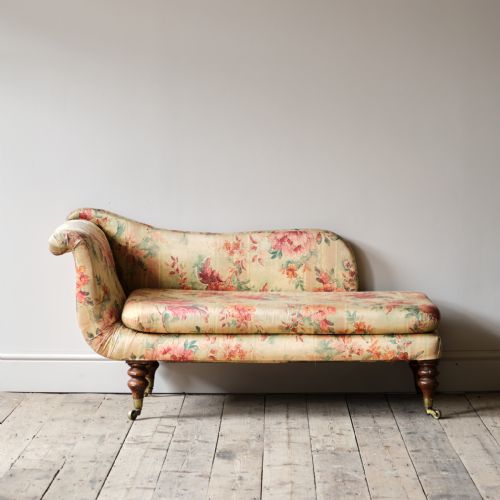


Regency Mahogany Couch
A regency mahogany couch brings sculptural timber framing and generous scrolling ends to a principal reception room.
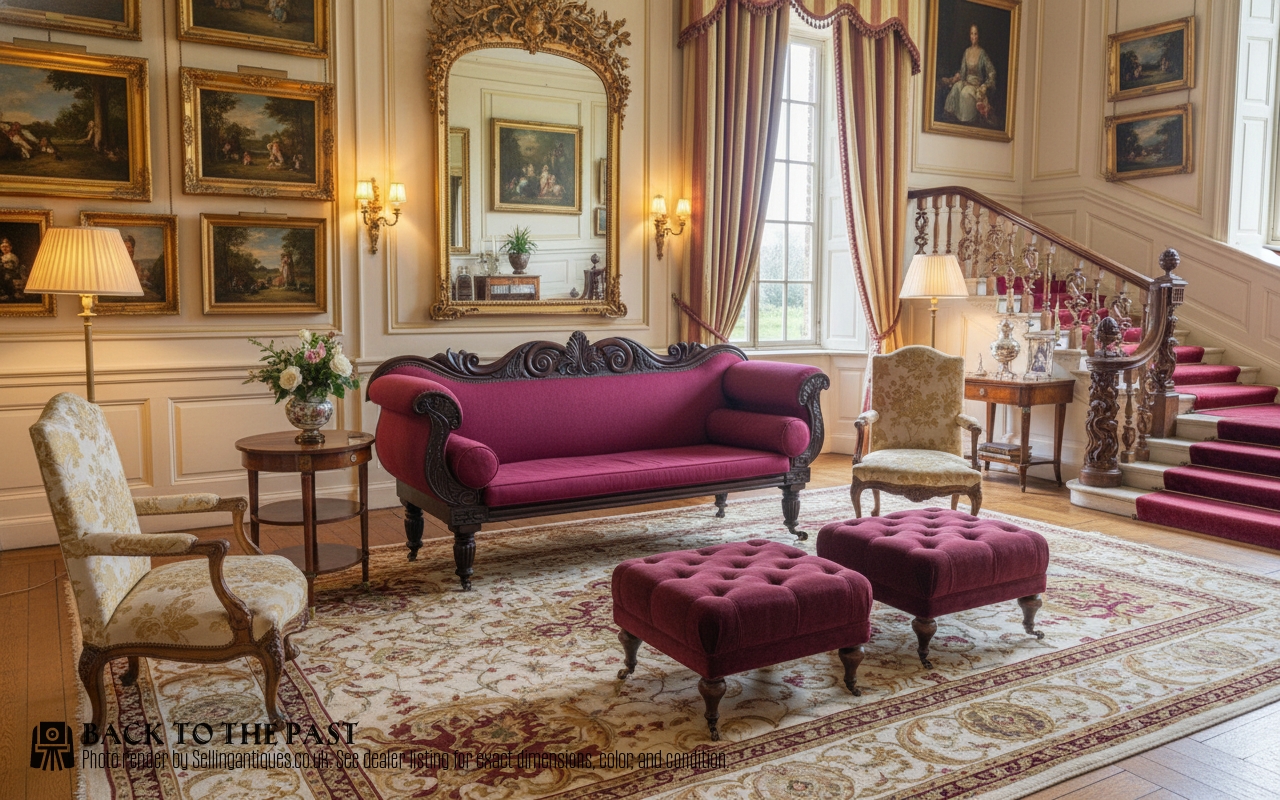
Regency Mahogany Couch
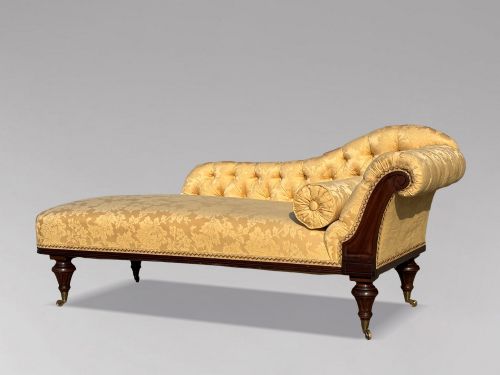
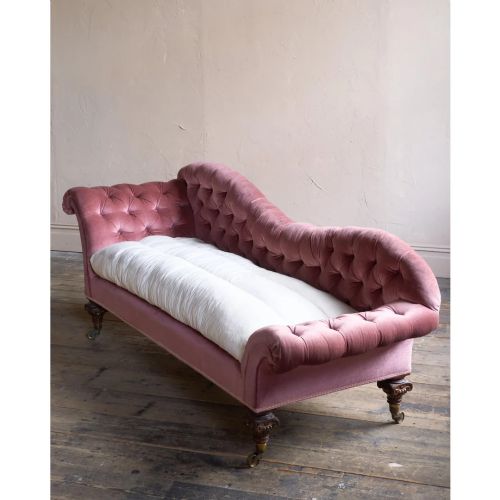
A regency mahogany couch encompasses daybeds, chaise longues, and scroll-end settees originating from the nineteenth century. These seating forms developed from classical daybeds and evolved through the Regency and William IV periods into substantial drawing room furniture.
The pieces on this page span from the early nineteenth century into the early Victorian era, reflecting English country house tastes. Buyers will frequently encounter double scroll-end sofas, single-ended chaise longues, and frame designs associated with Gillows workshops.
Materials and Construction
Frames are constructed from solid mahogany and rosewood, sometimes accented with brass inlay. Timber is shaped into scroll arms, show frames, and carved supports such as Ionic column legs or herms statues.
Upholstery relies on traditional stuffing secured by hessian, then covered in leather, velvet, or various upholstery fabrics. Leather versions often involve fully restored hides paired with exposed carved timber structures.
Period designations span from 1800 through the Regency era and William IV periods into early Victorian 1850 examples.
Design and Execution
The distinction between ordinary and superior pieces rests on the crispness of the timber carving and the architectural ambition of the frame. Heavy scroll ends, lyre shapes, and well-executed show frames elevate a piece above standard upholstery carriers.
Proportion and timber figure also dictate distinction, with flamed mahogany surfaces and balanced double-ended proportions commanding greater visual presence in a room.
Gillows
The Regency Mahogany Couch Glossary
- Chaise Longue
- An upholstered long chair designed for reclining, combining a chair back with an extended seat. It functions as a single-ended daybed.
- Scroll End
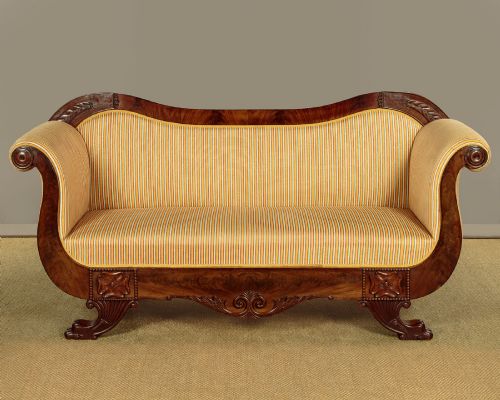
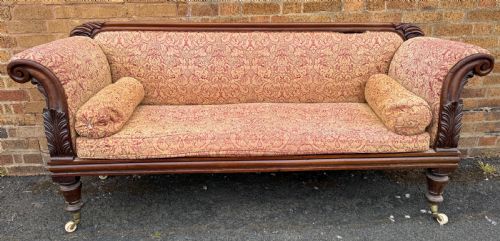
- A sweeping, curved wooden arm or terminal resembling a scroll, common on nineteenth-century seating. This shape defines the silhouette of many couches.
- Double Ended
- A sofa or settee featuring matching scroll ends or raised backs at both extremities. This symmetry allows a person to recline comfortably facing either direction.
- Show Frame
- An exposed wooden structural frame surrounding the upholstered portions of a sofa. It displays the carved mahogany grain directly.
- Herm
- A sculpted pillar tapering downwards, topped by a carved bust or head. These figures occasionally support the corners of architectural couches.
Regency Mahogany Couch: Frequently Asked Questions
How do I date a regency mahogany couch?
Dating relies on stylistic markers such as the sharpness of the scroll arms, the presence of brass inlay, and the transition from Regency classical forms to heavier William IV proportions.
Evidence from nineteenth-century pieces shows shifts from restrained 1810 designs to more exuberant carved show frames by 1840.
Where should I place a chaise longue?
These pieces suit principal drawing rooms, libraries, or large hallways where their sculptural timber frames can be viewed from multiple angles.
They require open floor space to allow the scroll ends and show frames to remain visible against surrounding furniture.
What is the difference between a couch and a settee?
A couch or chaise longue typically accommodates reclining with one raised end, whereas a settee provides upright seating for multiple people along a shared back.
Many nineteenth-century examples blur these categories by combining double scroll ends with generous seat lengths.
How do I care for leather upholstery?
Leather-covered frames require regular dusting and occasional conditioning to maintain the suppleness of the restored hide.
Keeping the timber and leather away from direct heat sources preserves the natural finish of both materials.