




Mahogany Padded Settee
A mahogany padded settee brings warmth and substantial seating to a room, offering classic wood frames paired with soft upholstery.
Mahogany Padded Settee
A mahogany padded settee is a traditional upholstered seat framed in rich timber, designed to accommodate multiple people in a drawing room, salon, or bedroom. When you explore this selection of a mahogany padded settee, you encounter forms spanning the 18th century through to the Edwardian era.
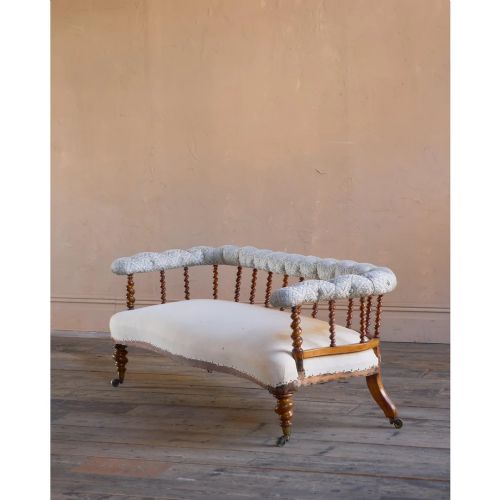
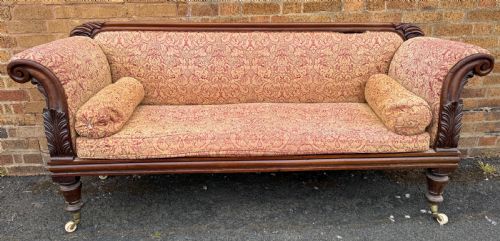
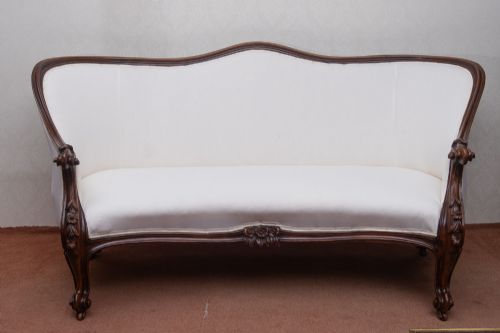
The pieces appearing here include substantial William IV scroll-end sofas, George III Hepplewhite examples, and lighter Edwardian inlaid salon settees. Most options showcase the enduring popularity of mahogany framing combined with various fabrics, velvets, and padded cushions.
Construction and materials
Makers shaped solid mahogany to form structural frames, scroll ends, and turned legs, often selecting dense timbers that took a deep polish. Many examples incorporate decorative elements such as satinwood inlay and marquetry directly into the wooden framework.
Upholstery techniques involve securing fabric, cream textiles, or velvet over padded seat bases and backs, sometimes complemented by brass details. Craftsmen utilised carving and turning on the mahogany structures to define stylistic periods from Regency to late Victorian.
The furniture styles represented range from George III Hepplewhite and Regency to William IV, Victorian, and Edwardian Art Nouveau.
Judging quality and craftsmanship
Quality rests in the crispness of the mahogany carving, the integration of delicate satinwood inlay, and the structural integrity of the frame. Superior examples maintain tight joinery in the scroll arms and legs, alongside balanced proportions that support the padded seat.
The finesse of applied embellishments, such as marquetry or turned woodwork, distinguishes standard utility seating from finer salon pieces. Selection of the covering fabric also matters, though framing execution and period woodwork remain the primary indicators of a superior settee.
C. Hindley and Sons
The Mahogany Padded Settee Glossary
- Mahogany
- A durable, reddish-brown tropical hardwood prized for furniture framing and fine cabinet work. It takes a smooth polish and holds intricate carved details well.
- Scroll-end
- A furniture arm or terminal shaped in a continuous curving roll. This profile frequently appears on Regency and William IV seating.
- Marquetry
- Decorative woodwork where thin pieces of veneer are fitted into a design on a solid ground. It often incorporates lighter woods like satinwood into mahogany surfaces.
- Satinwood
- A lustrous, yellow-toned timber used for contrasting inlay and bandings on darker mahogany furniture. It creates bright geometric or floral patterns.
- Hepplewhite
- An 18th-century furniture style characterised by light graceful proportions, shield-back designs, and tapered legs. Pieces from this tradition often feature fine mahogany construction.
Mahogany Padded Settee: Frequently Asked Questions
What periods do these settees cover?
The pieces span from the 18th century through the Regency, Victorian, and Edwardian eras. You will find styles ranging from George III Hepplewhite to late Victorian and Edwardian inlaid designs.
This broad timeline means construction methods and decorative flourishes shift from heavy carved scroll-ends to lighter inlaid satinwood frames.
How do I identify a Regency sofa?
Regency settees typically feature architectural mahogany frames, scroll arms, and clean classical lines. They often emphasise the natural grain of the timber rather than heavy carving.
Look for robust proportions and scroll-end details that reflect early 19th-century cabinet making traditions.
Where were these settees used?
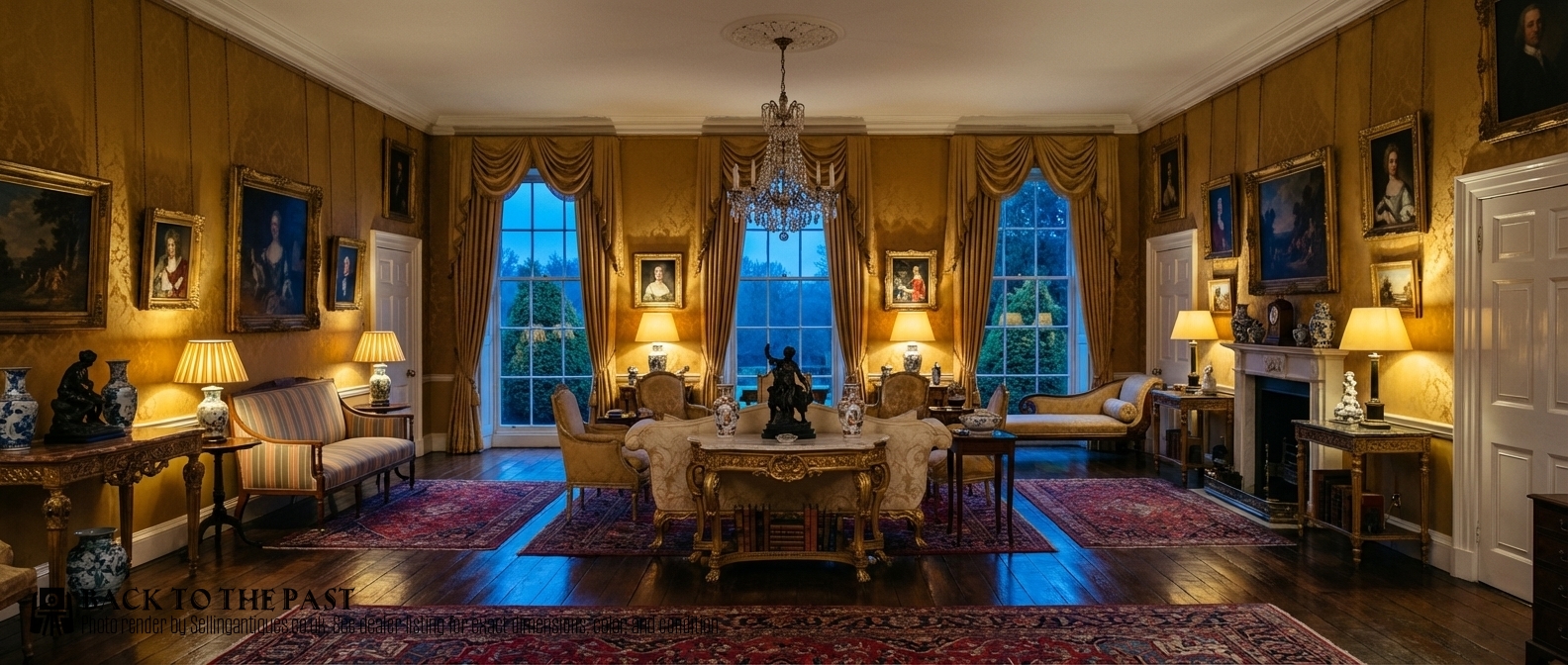
Historically, these padded seats belonged in grand drawing rooms, country house salons, and formal sitting areas. Lighter Edwardian versions were also suited for bedrooms or smaller parlours.
Their dual function of wooden display and comfortable padding made them versatile central seating for entertaining guests.
What upholstery materials are common?
Original and replacement coverings include patterned fabrics, rich velvets, and cream-coloured textiles. These materials complement the dark polished mahogany and inlaid satinwood frames.
The padding provides soft support while letting the wooden structure remain the visual focal point of the settee.
How do Edwardian settees differ?
Edwardian settees often feature lighter frames with satinwood inlay, marquetry, and delicate proportions. They tend to look less heavy than their Victorian or William IV predecessors.
Styles from this later period frequently incorporate salon or cameo designs intended for refined indoor spaces.