


Antique Sauce Tureen Lid
An antique sauce tureen lid completes a dining table's silver or ceramic service, offering a decorative cover for gravy and sauce vessels.
Antique Sauce Tureen Lid
When you search for an antique sauce tureen lid, you encounter small ceramic and metal covers designed to fit matching serveware from the eighteenth and nineteenth centuries. These pieces survive from periods spanning Georgian and Victorian eras, often separated from their original bases over generations of use.
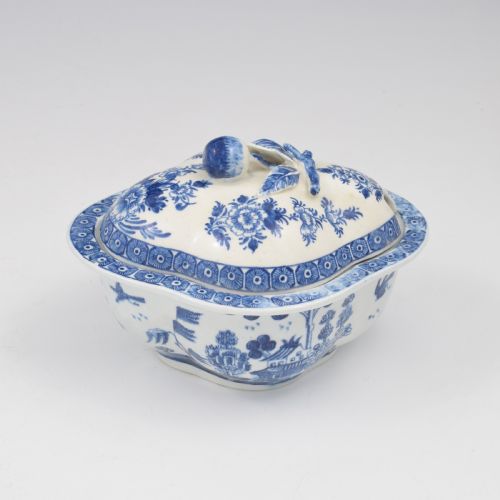
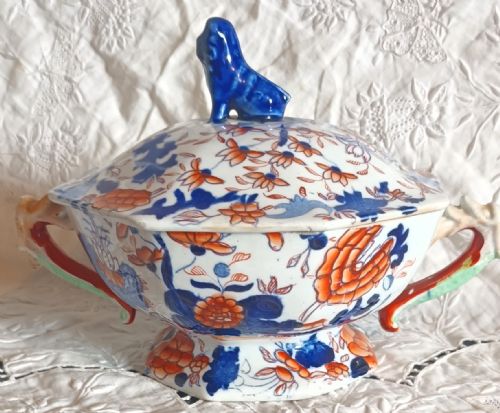
The most common versions met on this page are earthenware and ironstone covers, frequently produced by English potteries during the Georgian and Victorian periods. Porcelain examples also appear alongside silver and Old Sheffield plated metal lids, reflecting the diverse dining table fashions of the past.
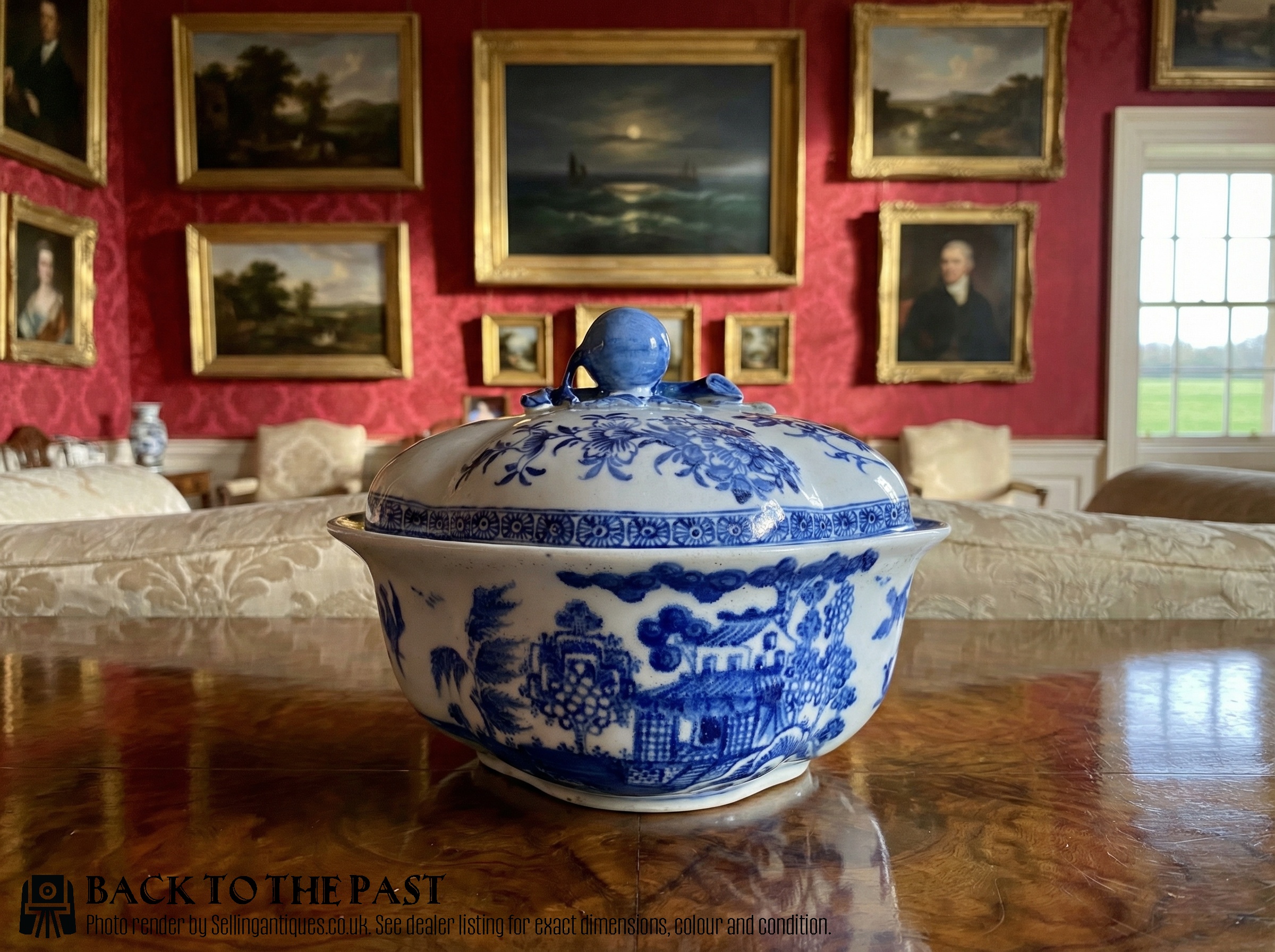
These lids typically feature small knob handles or finials designed for lifting, alongside shaped rims meant to rest securely upon an oval, quatrefoil, or circular tureen body. Their forms correspond directly to the sauce tureens and gravy boats popular in formal dining settings of the eighteenth and nineteenth centuries.
How they were made
Ceramic examples rely on materials such as ironstone, soft-paste porcelain, and earthenware, shaped and fired in kilns before receiving hand-applied enamel colours, glaze, and occasionally gold leaf accents. Potters moulded these components to match specific serveware forms, applying underglaze blue and white designs or botanical motifs.
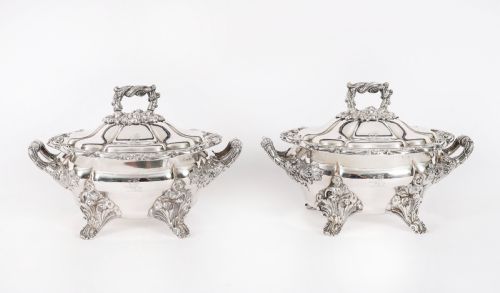
Metal versions utilise sterling silver or copper fused with silver through the Old Sheffield plating technique, shaped by hammering and soldering. Silversmiths formed the detailed finials and borders by hand, creating robust covers designed to withstand regular dining room use.
The site listings feature ironstone, soft-paste porcelain, sterling silver, and Old Sheffield plate across the Georgian and Victorian periods.
What varies in quality
The standard of an antique sauce tureen lid depends on the precision of its moulding, the clarity of its glaze or metal finish, and the artistic execution of any hand-painted decoration. Finer ceramic pieces display crisp botanical or blue and white transfer printing combined with careful enamel work.
Metal quality shows in the weight of the silver or the execution of the Old Sheffield plating, where the underlying copper remains hidden beneath the silver layer. Superior examples retain well-defined finials and balanced proportions that indicate skilled craftsmanship from workshops like those of recognised silversmiths or established potteries.
Derby Porcelain·Mason s Ironstone·Tiffany and Co·William Grundy·JC Moore·Coalbrookdale
The Antique Sauce Tureen Lid Glossary
- Ironstone
- A heavy, durable type of earthenware patented in the nineteenth century. It resists chipping better than soft-paste porcelain and served as a popular material for domestic tableware.
- Old Sheffield Plate
- An early method of fusing a thin layer of silver to a thicker copper base. This technique preceded modern electroplating and produced durable metal serveware.
- Soft-Paste Porcelain
- An early ceramic composition fired at lower temperatures than hard-paste porcelain. It results in a warm, slightly porous body common in eighteenth-century English factories.
- Quatrefoil
- A symmetrical shape featuring four overlapping circles or lobes. This decorative outline frequently appeared on Georgian porcelain serveware and lids.
- Enamel
- Opaque glass-like substances fused to ceramic or metal surfaces through firing. It provided vibrant colours for hand-painted patterns before glazing.
Antique Sauce Tureen Lid: Frequently Asked Questions
What is an antique sauce tureen lid?
An antique sauce tureen lid is a ceramic or metal cover originally made to match a gravy or sauce boat from the Georgian or Victorian period. These lids are often found independently from their matching bases.
They served to keep table sauces warm and protected during formal meals in eighteenth and nineteenth-century dining rooms.
How do I identify the period of a lid?
You identify the period by examining the material, glaze characteristics, and any makers marks or patterns stamped on the underside. Georgian pieces often show soft-paste porcelain or early pearlware bodies.
Victorian items commonly utilise heavier ironstone or silver, reflecting the manufacturing standards and design styles of the mid-nineteenth century.
What materials were used for these lids?
Makers utilised ironstone, soft-paste porcelain, earthenware, sterling silver, and copper with Old Sheffield plating. Each material reflects the prevailing manufacturing techniques of its respective decade.
Ceramic versions feature painted enamels and glazes, while metal examples rely on silversmithing and plating methods.
Can I match a loose lid to a tureen?
Matching a loose lid to a tureen requires careful comparison of dimensions, material composition, shape, and decorative motifs. Oval, quatrefoil, and circular profiles must align precisely with the rim of the base.
Factories such as Mason s and Derby produced consistent patterns, though slight variations in hand-finished ceramics can occur between individual pieces.
How should I display an antique lid?
You can display an antique lid on a plate rack, within a cabinet, or alongside complementary serveware from the same era. Their decorative hand-painted patterns and shaped finials suit traditional shelf displays.
Ensure the support holds the weight securely, particularly for heavier ironstone and silver items.