
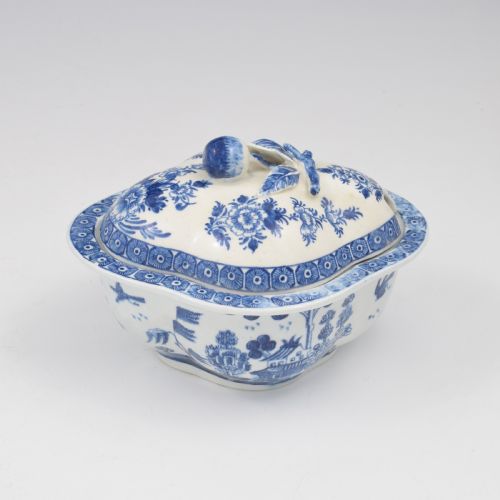
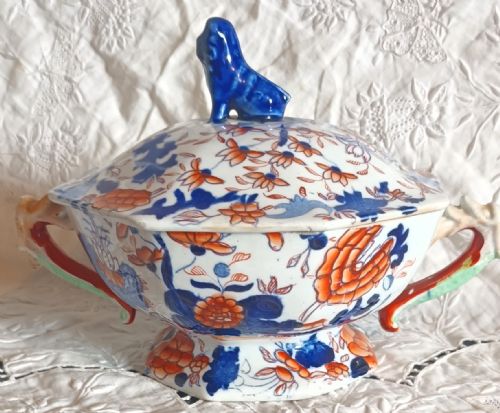


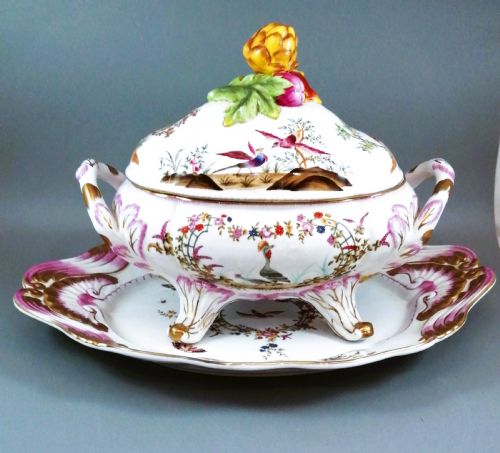


Covered Porcelain Serving Dish
A covered porcelain serving dish brings refined eighteenth and nineteenth-century dining tables to life with hand-painted enamel and crisp glaze.
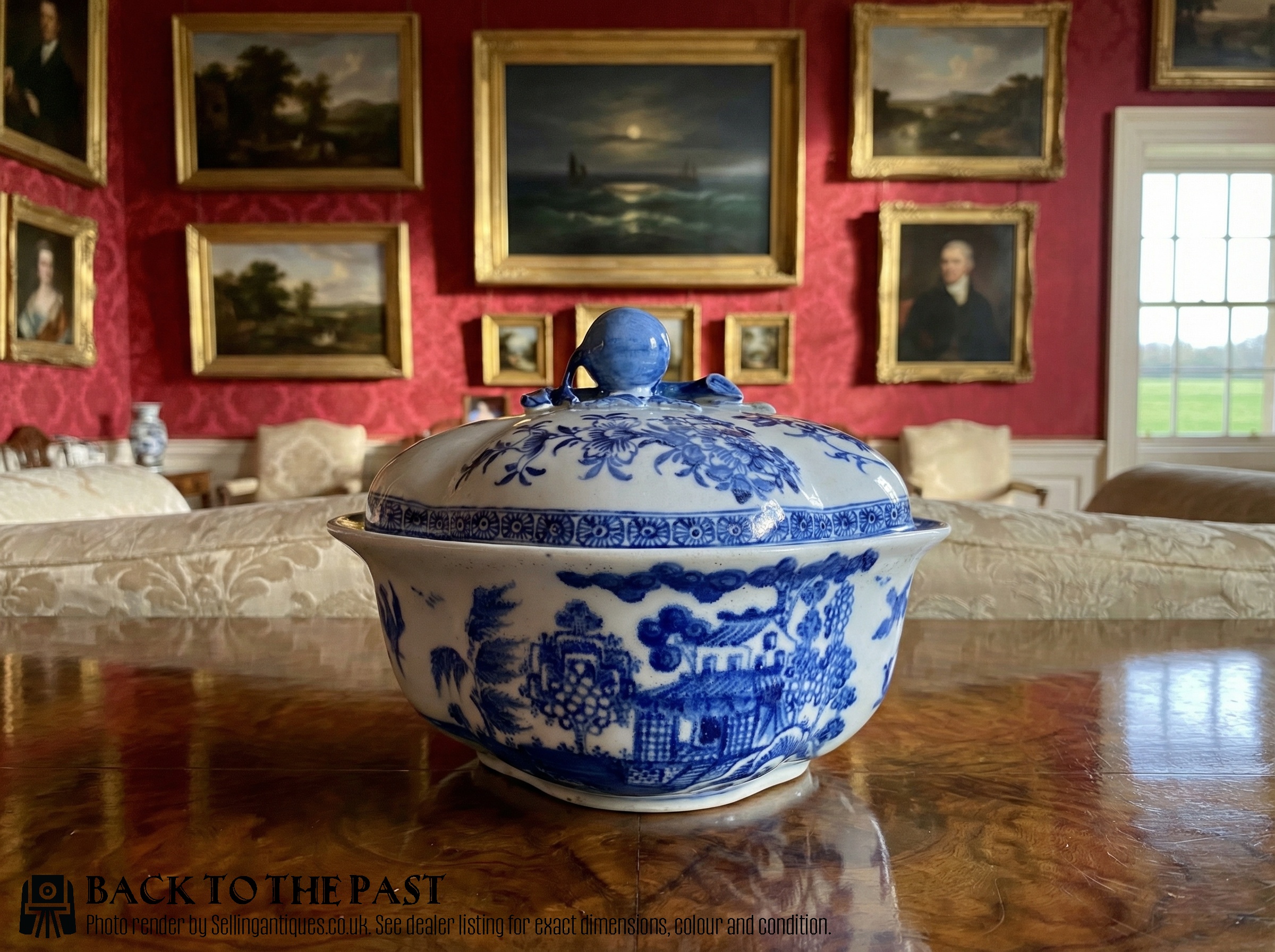
Covered Porcelain Serving Dish
When you search for a covered porcelain serving dish, you encounter an array of tureens, entrée dishes, and dinner service pieces spanning the eighteenth and nineteenth centuries. These vessels served soups, sauces, and principal courses in domestic settings before modern dining habits shifted.
The pieces on this page lean heavily towards English factories like Derby, Worcester, and Mason's, alongside Chinese export porcelain and Continental European items. You meet everything from small sauce tureens with quatrefoil stands to large soup tureens decorated in Chinoiserie mandarin patterns.
Forms vary from boat-shaped dishes to traditional round vessels, often complete with matching lids and sometimes stands. The historical periods range from the Qianlong period through Regency sauce tureens to Victorian ironstone heavyweights.
How they were made
Potters shaped these vessels using hard-paste porcelain, soft-paste porcelain, or robust ironstone, firing the body before applying intricate enamel decoration. Artisans then hand-painted motifs using cobalt blue, polychrome enamels, and sometimes gold leaf.
Glazing sealed the ceramic body, providing a smooth, impervious surface that preserved the painted scenes through decades of use. Gilt accents were frequently added in final low-temperature firings to highlight handles, rims, and finials.
One archival pair of serving dishes comes equipped with a pomegranate knob, giving the vegetables inside someone to look at.
What varies in quality
Quality rests primarily on the crispness of the porcelain body and the precision of the hand-painted enamel work. Pieces from established factories like Flight Barr & Barr or Derby typically display superior ceramic refinement and more controlled glazing than anonymous workshop equivalents.
The depth of the decorative scheme also distinguishes standard production from finer items. Elaborate Chinoiserie or Mandarin patterns executed with rich polychrome enamel and intact gold leaf elevate a dish above plain blue and white domestic ware.
Derby Porcelain·Flight Barr and Barr·Mason's Ironstone·Müller Volkstedt·Edm'e Samson
The Covered Porcelain Serving Dish Glossary
- Ironstone
- A dense, durable type of ceramic patented in the nineteenth century to bridge the gap between earthenware and porcelain. Mason's factories utilised this material extensively for heavy-duty tureens.
- Soft-Paste Porcelain
- An artificial porcelain mixture fired at lower temperatures than hard-paste, common in eighteenth-century English factories like Derby and Worcester. It often exhibits a warm, slightly creamy translucency.
- Quatrefoil
- A symmetrical shape composed of four partially overlapping circles, frequently seen in the design of sauce tureen rims and matching stands during the eighteenth century.
- Chinoiserie
- European artistic interpretations of Chinese and East Asian decorative motifs, popular on nineteenth-century ironstone and porcelain serving dishes.
- Entree Dish
- A shallow covered vessel designed for serving side dishes or second-course items at formal dining tables during the Regency period and beyond.
Covered Porcelain Serving Dish: Frequently Asked Questions
How do I date a covered porcelain serving dish?
Dating relies on factory marks, ceramic body composition, and stylistic clues such as Regency neoclassical shapes or eighteenth-century floral enamels. Comparing the glaze and potting style to known factory periods helps narrow the timeframe.
Makers like Derby or Worcester often used distinct underglaze blue marks or impressed ciphers that change across decades. Ironstone pieces from the nineteenth century frequently carry specific packer or pattern names on the base.
Can I use these dishes for serving food?
Many antique porcelain and ironstone dishes remain structurally sound for serving dry foods or room-temperature items at modern tables. However, thermal shock from hot liquids can stress centuries-old glaze and historic ceramic bodies.
Hand washing is essential for preserving delicate overglaze enamel and gold leaf decorations. Dishwashers and microwaves will quickly damage the historical surfaces of these pieces.
What is the difference between ironstone and porcelain?
Ironstone is a heavy, opaque ceramic developed to mimic porcelain while offering greater resilience for everyday dining. Porcelain, whether soft-paste or hard-paste, tends to be thinner, more translucent, and rings when tapped gently.
Serving dishes made of ironstone, such as those by Mason's, often feel heavier and thicker in the hand. Porcelain pieces from factories like Flight Barr and Barr present a more delicate, refined profile.
How should I display a covered serving dish?
Displaying these pieces safely requires stable shelving with adequate depth to support the combined footprint of the dish, lid, and any matching stand. Keeping them away from direct sunlight prevents fading in hand-painted polychrome enamels.
Grouping sauce tureens together or featuring a large soup tureen as a centrepiece highlights their sculptural forms. Ensuring the lid rests securely on cork or felt pads prevents friction damage to the rim.