
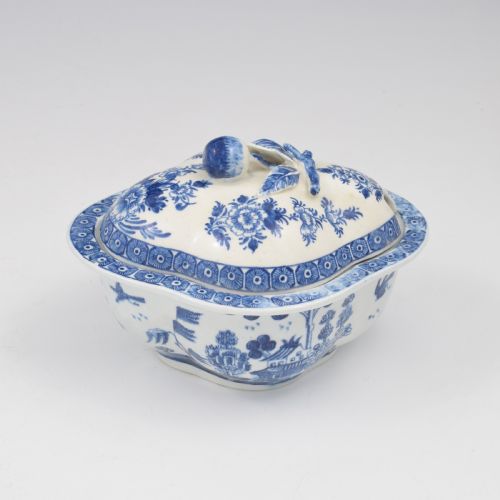
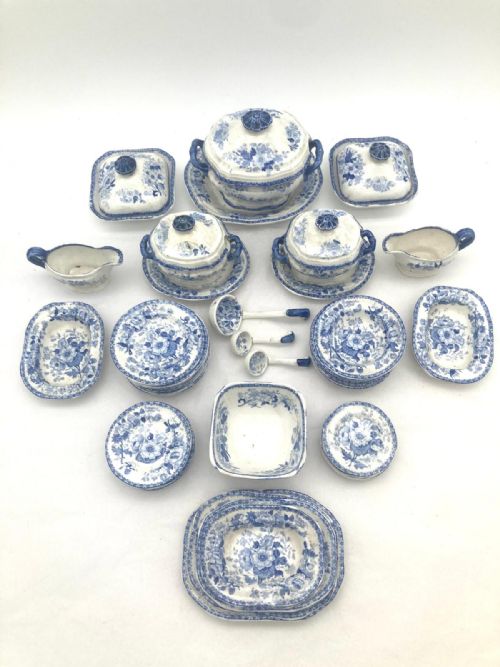


Blue White China Tureen
These blue white china tureen examples bring table service history directly into your dining room through centuries of ceramic artistry.
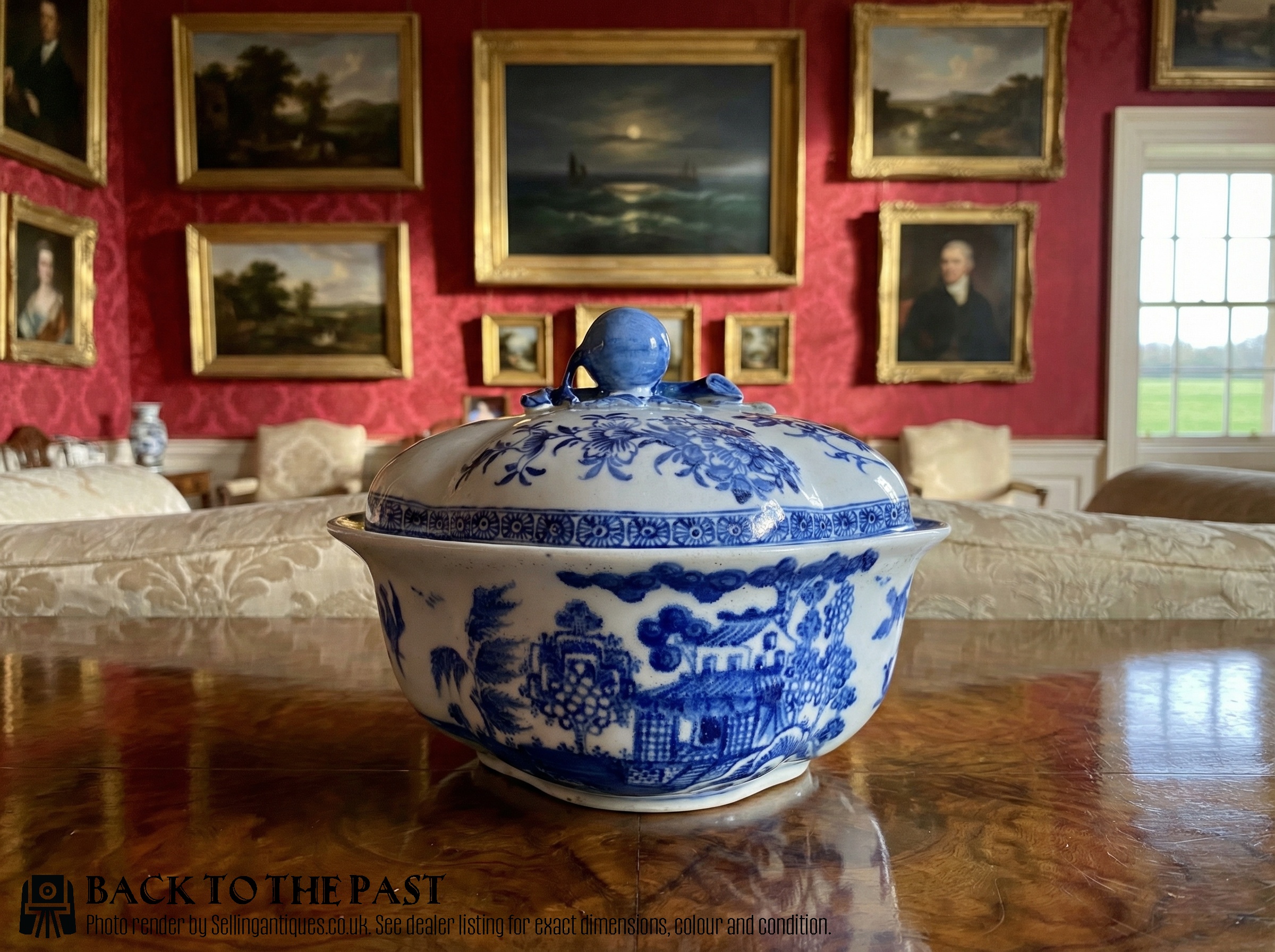
Blue White China Tureen
A blue white china tureen serves as a deep vessel designed for holding soup, sauce, or vegetables at the dining table, often accompanied by a matching cover and stand. Collectors encounter various forms here, ranging from small sauce tureens and miniature dinner service pieces to substantial vegetable and soup tureens.
The selections span the eighteenth and nineteenth centuries, taking in Georgian and Victorian eras alongside Chinese export wares. Pieces emerge from notable periods such as the Qianlong reign as well as English factories producing transfer-printed earthenware and porcelain.
Buyers will find individual serving vessels alongside child's service elements and matched pairs. Each item reflects the domestic dining habits and ceramic technologies of its respective decade.
Materials and production methods
Potters shaped these objects from earthenware, ironstone, ceramic, and soft-paste porcelain, applying cobalt glaze to achieve the characteristic blue decoration. Many English factories utilised transfer-printing techniques to apply intricate patterns such as Castle, Rural Scenery, Canovian Statues, and floral sheet designs onto the ceramic body.
Earlier pieces from Chinese export workshops and English porcelain houses relied on hand-painted cobalt underglaze, whilst later nineteenth-century examples often employed flow blue printing. Artisans fired these vessels at high temperatures to fuse the glaze and pigment, ensuring a durable surface suitable for practical service.
Listings feature earthenware, ironstone, ceramic, and soft-paste porcelain objects from the eighteenth and nineteenth centuries, including Georgian and Victorian periods.
Distinctions in quality and execution
Quality rests upon the crispness of the cobalt transfer or hand-painted detail and the precision of the moulding on handles, finials, and lion-head or elephant-design motifs. Superior examples maintain a clean white ground against deep, well-defined blue pigments without blurring or running in the glaze.
The presence of original matching covers, ladles, and stands elevates the desirability of a tureen. Intricate shapes like quatrefoil designs or chestnut baskets demonstrate higher ambition from the maker compared to standard utilitarian forms.
Derby Porcelain·Minton·Worcester Dr Wall·Masons Ironstone·Doulton Burslem·Wedgwood·J. and R. Clews·James Wallace and Co·John Rogers and Son
The Blue White China Tureen Glossary
- Transfer-print
- A method of decorating ceramics by engraving a copper plate, pulling an ink impression on paper, and transferring it onto the bisqued or glazed clay body before firing. This technique allowed factories to produce complex pictorial scenes consistently across dinner services.
- Ironstone
- A heavy, durable type of earthenware patented in the nineteenth century to imitate Chinese porcelain while offering greater strength for daily use. Masons famously produced large quantities of tureens in this robust material.
- Soft-paste porcelain
- An artificial porcelain compound made from white clay, glass frit, and other minerals, fired at lower temperatures than hard-paste porcelain. Eighteenth-century English factories frequently utilised this body for fine sauce tureens.
- Flow blue
- A nineteenth-century transfer-printing method where lime or ammonia chloride was introduced into the kiln atmosphere to deliberately blur the cobalt pigment. This created a hazy, ethereal effect across the pattern.
- Quatrefoil
- A symmetrical shape composed of four partially overlapping circles, often utilised for the bodies and stands of eighteenth-century sauce tureens. The outline provides an organic, decorative alternative to standard circular vessels.
Blue White China Tureen: Frequently Asked Questions
What is a tureen used for?
A tureen functions as a large serving dish specifically designed for soups, sauces, or vegetables at the dining table. The accompanying lid helps retain heat during meals.
Historically, these vessels formed the centrepiece of formal dinner services, often accompanied by a matching stand and ladle.
How do I date a blue and white tureen?
Dating relies on examining the ceramic body, glaze characteristics, factory marks on the base, and the style of the transfer print. Eighteenth-century pieces often show hand-painted cobalt underglaze on soft-paste porcelain or export china, whilst nineteenth-century examples frequently utilise transfer printing on ironstone.
Comparing pattern names and maker marks against historical factory records provides a reliable timeframe of production.
What is flow blue china?
Flow blue is a nineteenth-century ceramic style where the cobalt blue pigment intentionally bled into the surrounding white glaze during the kiln firing. This produced a misty, atmospheric appearance across the decorative scenes.
Potters achieved this effect by placing chemical substances in the kiln to vaporise and spread the ink.
Can I use antique tureens for serving food?
Whilst these vessels were originally created for culinary use, antique ceramics often develop hairline cracks, crazing, or staining over centuries. Many collectors prefer to display them as decorative art rather than risking damage during modern dining.
Hand washing in warm soapy water is essential if you choose to use them, avoiding dishwashers entirely.