


Antique Satsuma Bowl
An antique satsuma bowl brings intricate hand-painted earthenware and gold leaf into a room, prized for dense floral and figural scenes.
Antique Satsuma Bowl
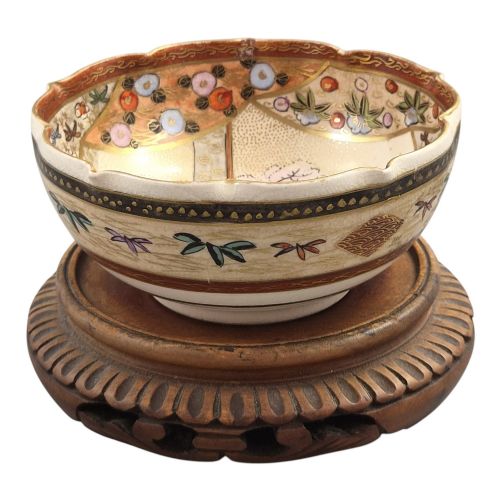
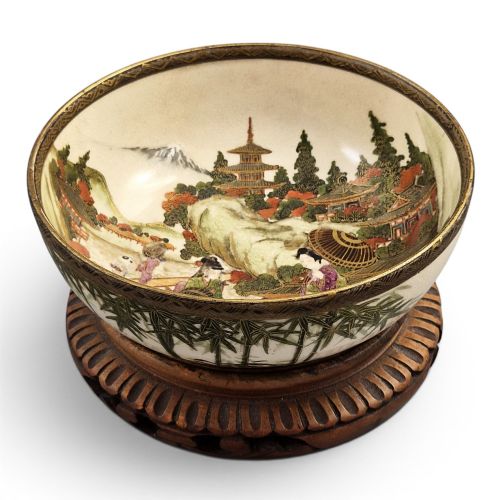
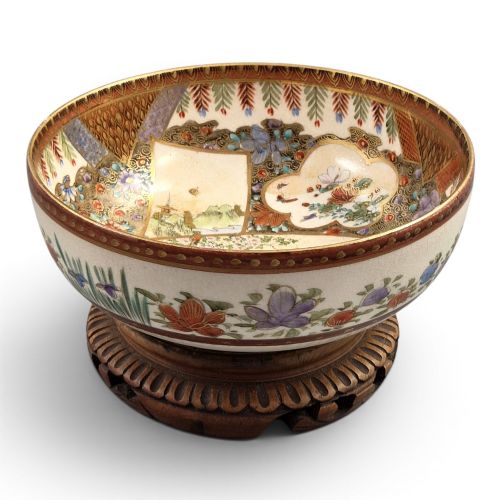
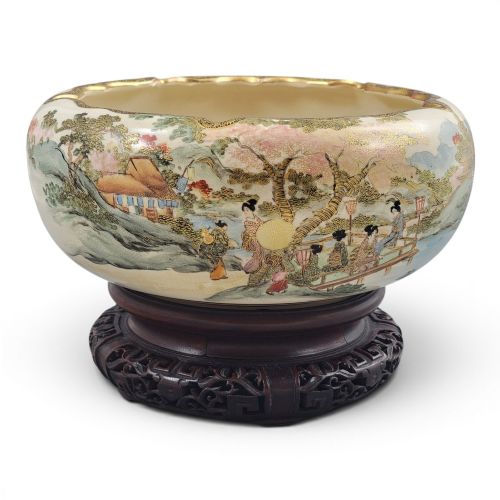
When you search for an antique satsuma bowl, you encounter finely decorated earthenware originating from Japan, predominantly created during the Meiji period and the early twentieth century. These vessels range from small delicate dishes to monumental display pieces, featuring traditional forms such as footed bowls, sugar bowls, and decorative ceramics.
The objects on this page centre on Kyoto production alongside pieces from Yokohama, reflecting distinct regional painting styles and studio traditions. Collectors frequently encounter pieces adorned with flowers, birds, samurai battles, and figural compositions framed by intricate geometric borders.
Many examples bear signature seals or the Shimazu family crest, connecting individual items to renowned master workshops. The forms serve primarily as decorative works of art, though smaller bowls and saucers occasionally indicate functional domestic use.
How they were made
Makers shaped these vessels from earthenware clay, applying a distinctive cream-coloured crackle glaze that formed the pale canvas for detailed pigment work. Artisans then painted complex motifs using mineral enamels, layering rich cobalt blue, red, and other colours across the surface.
Gold leaf and raised gilt work were applied over the enamel designs to accentuate key elements, robes, and borders with metallic brilliance. Many workshops finished the process by adding artist signatures and studio seals in red or gold enamel on the underside.
Object forms appearing in the inventory include footed bowls, incense burners, sugar bowls, and saucers.
What varies in quality
The refinement of the brushwork largely defines the distinction between standard production and masterwork pieces, particularly in the precision of facial expressions, miniature figures, and layered floral panels. Denser application of gold gilt and disciplined control over the enamel palette also separate ambitious studio pieces from simpler items.
The crispness of the underlying crackle glaze and the presence of clear signatures by recognised artists such as Kinkozan, Gyokko, or Shizan elevate a piece. Monumental scale combined with complex narrative scenes, such as samurai battles or thousand-flower patterns, demonstrates higher ambition in the studio.
Kozan·Shizan·Kinkozan·Nikko·Hododa·Shozan·Ryuzan
The Antique Satsuma Bowl Glossary
- Satsuma ware
- Japanese pottery originating in Satsuma Province, characterised by an earthenware body covered in a finely crackled ivory glaze. This glaze absorbs moisture and darkens slightly over time, adding depth to the surface.
- Meiji period
- The era of Japanese history lasting from 1868 to 1912, corresponding with the reign of Emperor Meiji. This period saw a massive expansion of decorative arts destined for export to Western markets.
- Shimazu mon
- The heraldic crest of the Shimazu clan, rulers of Satsuma domain, consisting of a cross within a circle. Potters often included this mon on pieces associated with the clan or produced in Kyoto workshops.
- Millefleur
- A decorative pattern covering the entire surface with thousands of tiny, meticulously painted flowers. In satsuma ceramics, this style is also known as thousand flowers.
- Gilt
- Application of gold or gold leaf to highlight specific details in the painted composition. This technique catches the light and creates contrast against the matte enamel colours.
Antique Satsuma Bowl: Frequently Asked Questions
What is satsuma ware?
Satsuma ware is a type of Japanese earthenware featuring a distinctive ivory-coloured glaze covered in a network of fine microscopic cracks. Artisans painted these surfaces by hand using detailed enamel colours and gold leaf.
Production shifted significantly to urban centres like Kyoto during the Meiji period, where specialised studios created elaborate pieces specifically for international export.
How do I identify Meiji period pieces?
Meiji period pieces are generally identified by their intricate decorative density, complex figural scenes, and fine artist signatures or studio marks on the base. The motifs often reflect traditional Japanese mythology, flora, and historical battles rendered with high precision.
The presence of the Shimazu mon or specific Kyoto studio names further helps narrow down the production era to the late nineteenth or early twentieth century.
Were these bowls meant for food?
Most surviving pieces function primarily as decorative art objects rather than tableware. The porous earthenware body and delicate enamel work make them unsuited for regular dining use.
Smaller forms like sugar bowls or saucers indicate domestic utility, but the extensive gilt and enamel decoration typically points towards display and collection.
Why do the glazes have cracks?
The crackled effect in the glaze is an intentional characteristic of satsuma pottery caused by the differential cooling rates of the clay body and the glaze layer. Over decades, microscopic dust settles into these lines, accentuating the crackle pattern.
This network of fine lines forms a stable characteristic of the ceramic type rather than a sign of structural damage.