
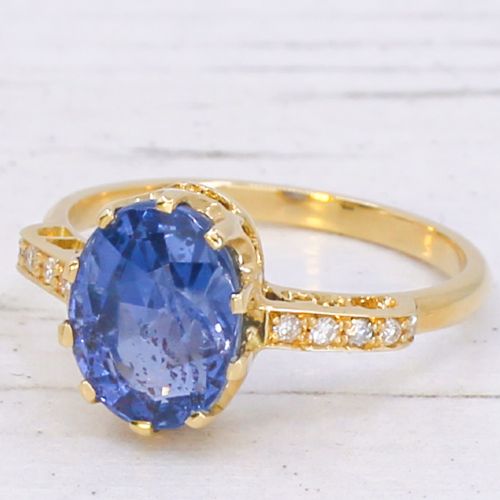
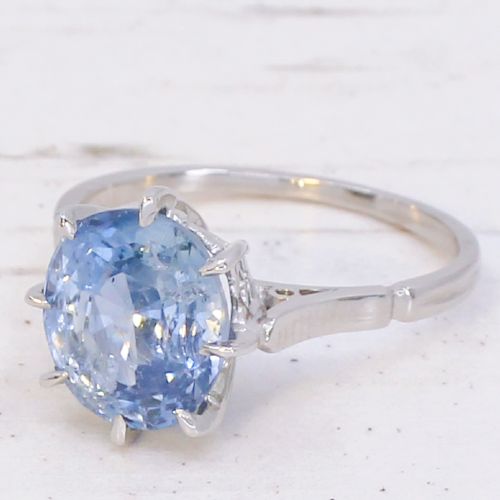
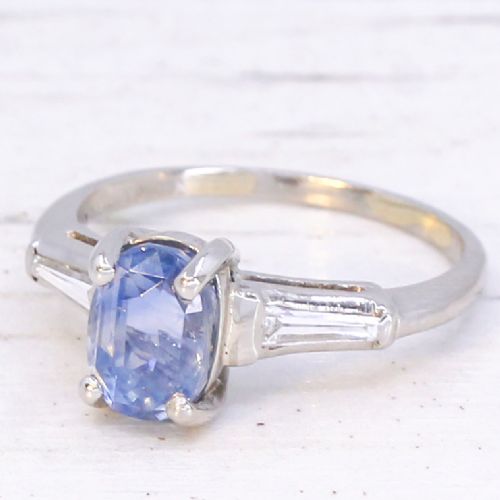
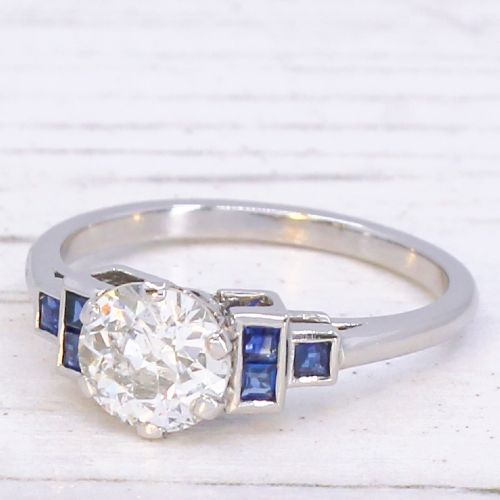


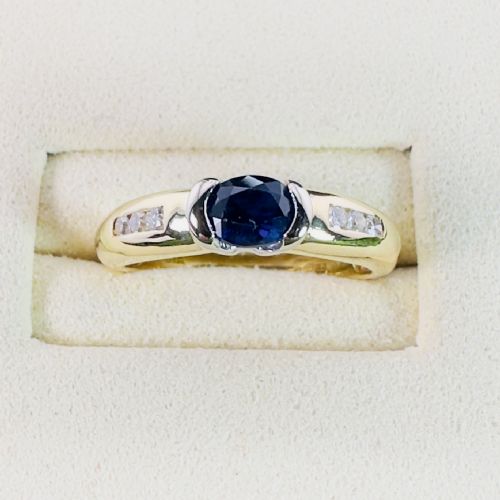


Antique Sapphire Solitaire
An antique sapphire solitaire brings together a single, striking blue or coloured gemstone and precious metal, creating a timeless focal point.
Antique Sapphire Solitaire
When you search for an antique sapphire solitaire, you look at rings and necklaces featuring a single prominent stone rather than a cluster. The pieces on this page span the nineteenth century through the mid-twentieth century, capturing Victorian, Edwardian, Art Deco, and mid-century aesthetics.
You are most likely to meet an Art Deco ring featuring a central sapphire set in platinum, often accompanied by smaller diamonds. These designs reflect the geometric precision and clean lines favoured during the interwar years.
The selection also includes earlier Victorian gold bands and later mid-century creations, showing how jewellers adapted the single-stone focus across different decades. While rings dominate the available forms, pendants occasionally appear.
How they were made
Craftsmen utilised platinum and gold, including yellow gold, eighteen-carat gold, and nine-carat gold, to mount the principal gems securely. Platinum gained favour in the early twentieth century for its strength and bright finish, allowing for delicate settings.
Gemstones such as unheated Ceylon sapphires, Kashmir sapphires, and Burmese sapphires were cut into oval, round, or transitional shapes. Old cut diamonds frequently accent the shoulders or surround the central sapphire.
Settings relied on precise hand-working, from bezel collets to claw prongs, ensuring each stone remained stable within its precious metal framework.
Listings feature platinum, yellow gold, 18ct gold, and 9ct gold alongside natural and unheated sapphires from Ceylon, Kashmir, and Burma.
What varies in quality
The origin and thermal history of the gemstone dictate much of the standing within this category, particularly when unheated stones from sources like Ceylon, Kashmir, or Burma are involved. Natural colour saturation and clarity without artificial enhancement elevate certain examples above others.
The quality of the metalwork and the precision of the diamond accents also separate standard examples from finer ones. Heavier platinum or gold mountings that show careful hand-finishing provide greater structural integrity.
The Antique Sapphire Solitaire Glossary
- Solitaire
- A piece of jewellery featuring a single gemstone as the main focal point. This setting style concentrates visual weight entirely on one stone.
- Ceylon Sapphire
- A sapphire originating from Sri Lanka, historically celebrated for its vibrant blue hue and high brilliance. These stones often exhibit a lively, open colour.
- Old Cut Diamond
- A diamond cut by hand before modern machinery standardised facets, typically featuring a smaller table and larger culet. This cut produces a softer, candlelit sparkle.
- Unheated Sapphire
- A natural sapphire that has not undergone thermal enhancement to improve its colour or clarity. Unearned stones retain their original geological characteristics.
- Art Deco
- A design style spanning the 1920s and 1930s characterised by symmetry, geometric motifs, and the prominent use of platinum.
Antique Sapphire Solitaire: Frequently Asked Questions
What is a sapphire solitaire?
A sapphire solitaire is a ring or pendant centred on a single sapphire gemstone. It highlights the natural colour and cut of one primary stone.
Most examples pair the sapphire with a platinum or gold band, sometimes accompanied by smaller accent diamonds.
How do I identify Art Deco jewellery?
Art Deco pieces typically feature geometric lines, symmetrical patterns, and platinum or white metal settings. They date from roughly the 1920s and 1930s.
Stones in these pieces are frequently cut in transitional, old European, or baguette shapes to complement the architectural styling.
Are all sapphires blue?
While deep blue is the most common variety, sapphires occur in a range of natural colours including orange, yellow, and pink. Coloured varieties appear in several period designs.
Geographic origins like Ceylon, Kashmir, or Burma often influence the specific shade and saturation of the sapphire.