


Natural Blue Sapphire
Natural blue sapphire jewellery spans eras from the Victorian period to the mid-century, offering enduring appeal for collectors of fine gemstone pieces.
Natural Blue Sapphire
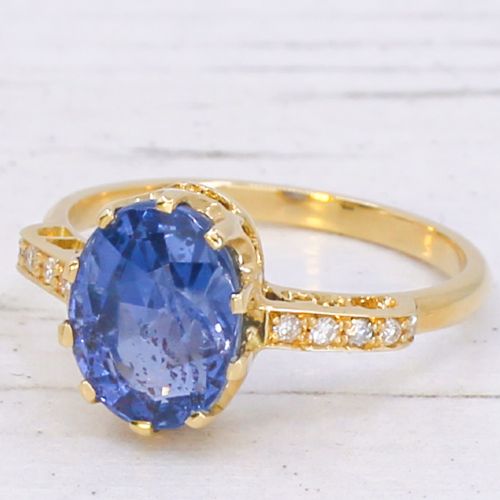
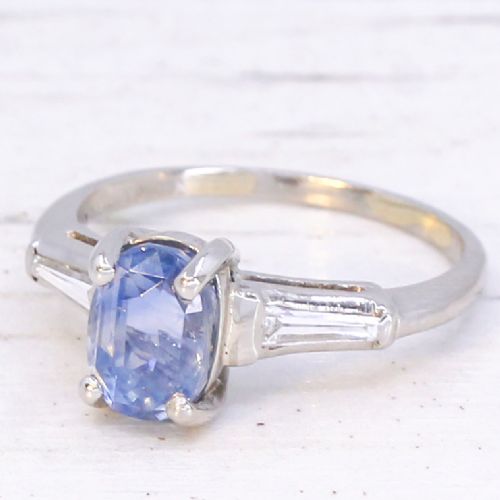
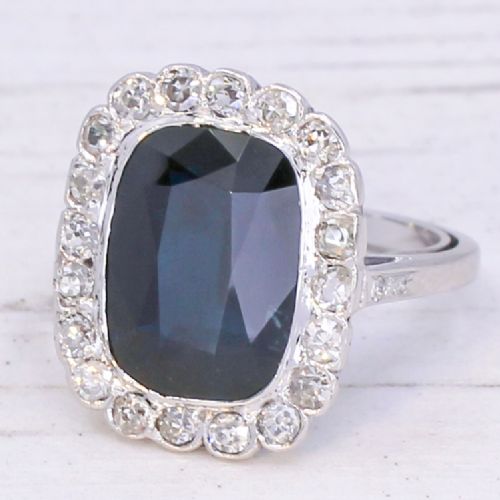
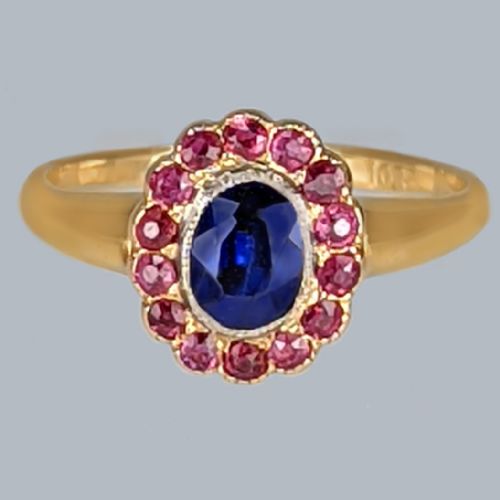
When you search for natural blue sapphire, you are looking at items featuring corundum formed without artificial enhancement, mounted in rings, pendants, necklaces, brooches and bracelets. These items appear across multiple eras, with significant representation from the Victorian, Edwardian, Art Deco and mid-century periods.
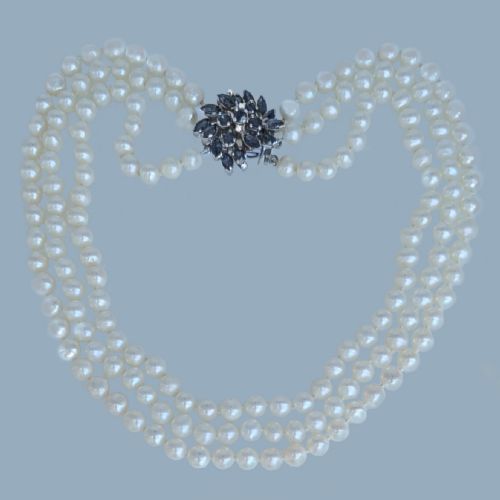
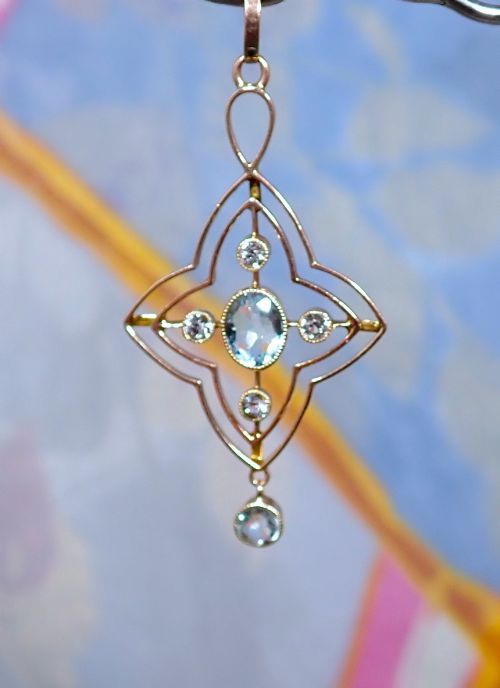
On this page, rings are the most common form you will meet, ranging from single-stone solitaires and three-stone trilogies to elaborate diamond cluster designs. Alongside rings, you will find pendants, lockets, pearl necklaces with gem-set clasps, and bracelets spanning from the late nineteenth century to the 1960s.
Materials and construction
The jewellery combines natural sapphires - frequently originating from Ceylon, Burma or Kashmir - with precious metals including platinum, 18ct yellow gold, 18ct white gold and silver. Diamonds, both old cut and rose cut, frequently accompany the central stones in cluster and multi-stone settings.
Craftsmen of the Edwardian and Art Deco periods utilised platinum and white gold to create delicate filigree and millegrain details, whilst Victorian and mid-century makers favoured yellow gold settings and heavier casting for substantial cocktail rings and bracelets.
Several rings conceal their origins in secret inscriptions tucked inside vintage bands.
Quality variations
Quality rests significantly on the origin and geological characteristics of the sapphire itself, with unheated stones originating from Kashmir, Burma or Ceylon commanding particular attention. The depth of colour saturation, transparency and the presence of natural inclusions also differentiate standard commercial pieces from exceptional examples.
The standard of metalwork and the integration of accompanying diamonds further separate pieces at different levels of the market. Finer examples display meticulous hand-setting, well-matched old cut diamonds and robust mounts that have survived intact from the Victorian era onwards.
The Natural Blue Sapphire Glossary
- Unheated
- A sapphire that has not undergone thermal enhancement to improve its colour or clarity. Such stones retain their natural geological properties.
- Cabochon
- A gemstone cut with a smooth, rounded dome rather than faceted surfaces. This style is frequently found in mid-century and Art Deco rings.
- Trilogy ring
- A ring featuring three principal gemstones set in a row. They often combine a central natural sapphire flanked by diamonds.
- Old cut diamond
- A hand-faceted diamond cut popular before the standardisation of modern brilliants. These stones feature smaller tables and larger culets.
- Millegrain
- A jewellery technique creating a decorative border of tiny metal beads along the edges of settings. It is characteristic of Edwardian and Art Deco platinum work.
Natural Blue Sapphire: Frequently Asked Questions
What is an unheated natural sapphire?
An unheated natural sapphire is a gemstone that has grown in the earth and been cut and polished for jewellery without undergoing any artificial heat treatment to alter its colour or clarity.
Such stones are documented with gemological reports and are sought after by collectors for their unaltered optical properties.
How do I care for antique sapphire jewellery?
Antique sapphire jewellery requires gentle handling due to the age of the settings and the nature of surrounding pearls or old cut diamonds. Professional cleaning is advised to avoid damaging delicate claws or filigree work.
Store pieces individually in soft pouches to prevent harder diamonds from scratching neighbouring gold, platinum or softer gems.
How can I tell an Art Deco sapphire ring apart from a Victorian one?
Art Deco sapphire rings typically feature geometric motifs, platinum settings and stylised symmetry that reflect the aesthetic of the 1920s and 1930s. In contrast, Victorian pieces often utilise yellow gold, gypsy settings or organic cluster designs influenced by nature.
Examining the metal choice and overall silhouette usually reveals the period of manufacture.
Where did historical sapphires originate?
Historical sapphires seen in antique and vintage jewellery frequently originated from regions such as Ceylon, Burma and Kashmir. Each of these geographic locations imparts distinct visual characteristics to the stones.
Gemological certificates often verify these origins, which influence the historical interest of the piece.