






Antique Saint Portrait
An antique saint portrait captures centuries of devotion, appearing as oil paintings, miniatures, and pendants across European schools.
Antique Saint Portrait
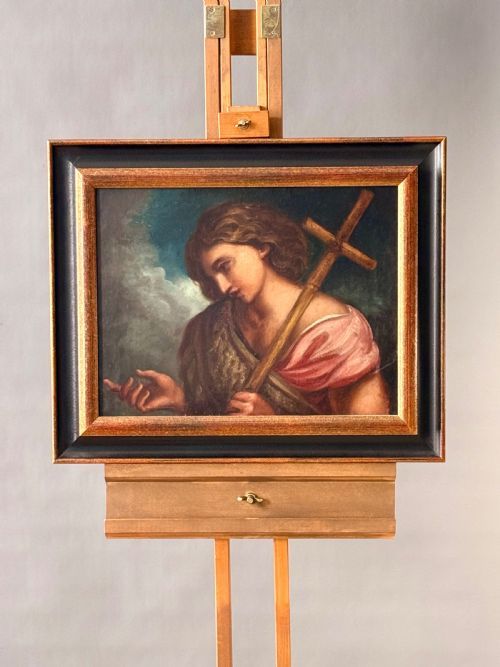
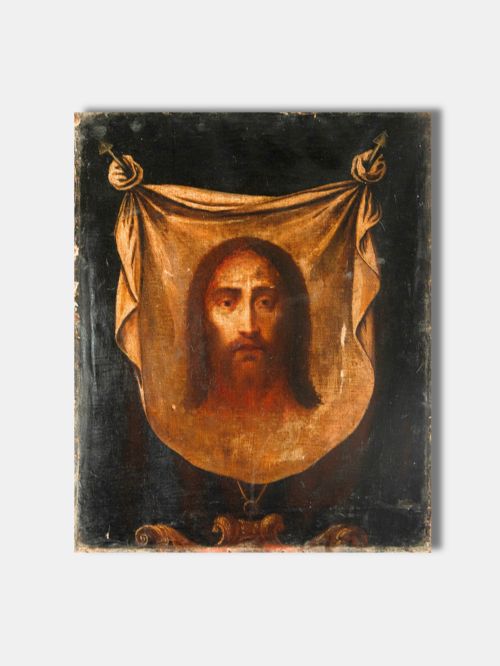
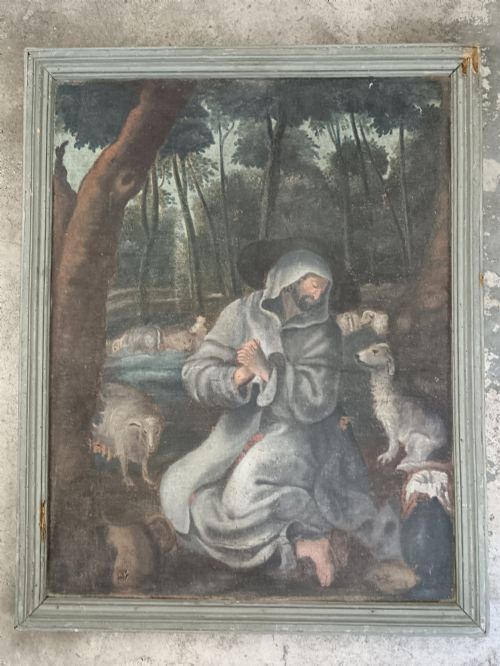
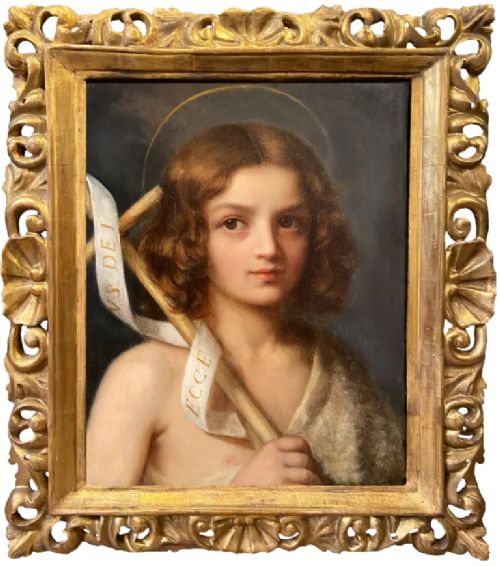
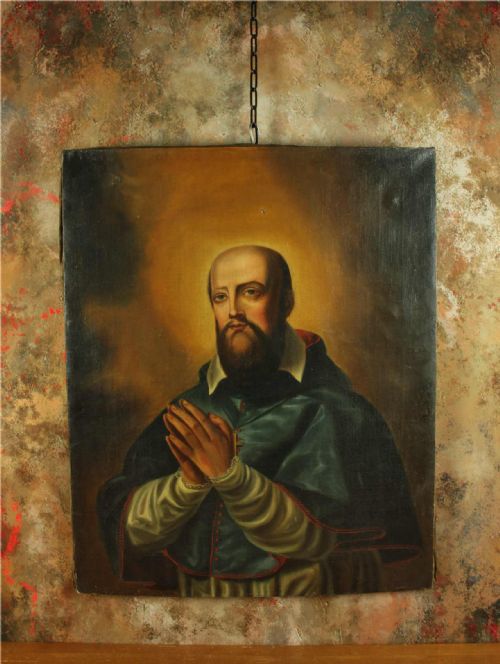
An antique saint portrait encompasses devotional artworks and personal items depicting holy figures, most commonly encountered here as oil paintings on canvas from Italian, Spanish, and French schools spanning the seventeenth and eighteenth centuries. These works range from large studies of figures such as Saint John the Baptist and Saint Francis to smaller miniatures and gold pendants featuring the Virgin Mary or Saint Christopher.
Buyers frequently discover regional interpretations including Spanish Baroque canvases and naive European school pieces alongside Victorian and Edwardian silver and enamel jewellery. The selection bridges formal ecclesiastical art and intimate personal items utilised for private prayer.
How they were made
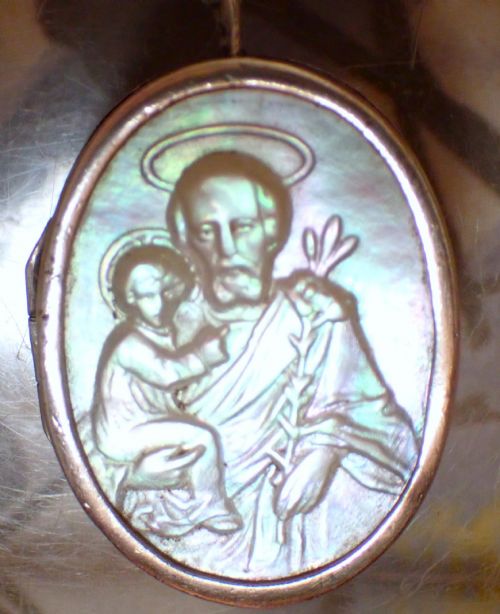
Artists painted oil on canvas or wood panels, frequently framing the works in giltwood, while goldsmiths shaped silver and yellow gold into pendants, lockets, and brooches set with enamel. Artisans also utilised mother of pearl and polychrome wood for carved statues and miniature plaques.
Techniques varied from meticulous seventeenth-century Spanish and Italian brushwork to Limoges enamelling and reverse glass painting, demonstrating diverse regional craftsmanship.
Listings feature canvas, wood, silver, and enamel across seventeenth-century and eighteenth-century periods.
What varies in quality
Quality rests in the fidelity of the draughtsmanship, the expressiveness of the subject's face, and the handling of pigment, such as visible pentimenti that reveal an artist's working process. Finer pieces demonstrate superior anatomical understanding and emotional depth, whilst lesser examples rely on formulaic execution.
The preservation of the original canvas, the integrity of giltwood frames, and the crispness of detail in enamel and metalwork distinguish exceptional works from ordinary regional production.
Francesco Solimena Workshop·Gaspar de Figueroa·Pierre Mignard Studio
The Antique Saint Portrait Glossary
- Pentimento
- An alteration in a painting, evidenced by traces of previous work, showing that the artist changed their composition during creation.
- Giltwood
- Wood that has been covered with a thin layer of gold leaf or gold paint, commonly found on seventeenth and eighteenth-century frames.
- Enamel
- A glassy substance fused to metal through firing, utilised to create durable miniature portraits and decorative details on pendants.
- Baroque
- An ornate artistic style prevalent from the seventeenth well into the eighteenth century, characterised by drama and rich detail.
- Reverse glass picture
- An artwork created by painting or drawing on the back of a piece of glass, viewed from the unpainted side.
Antique Saint Portrait: Frequently Asked Questions
How do I identify seventeenth-century canvases?
Examine the canvas weave, stretcher construction, and preparation layers beneath the oil paint, which typically show age-appropriate oxidation and hand-beveled wooden frames.
Style, pigment composition, and subject matter attribution to specific European schools also help date these historical works accurately.
What subjects appear most frequently?
Saint John the Baptist, the Holy Family, and various figures associated with the Virgin Mary and regional patron saints dominate the painted works and devotional pendants.
These subjects reflect Counter-Reformation themes prevalent in Italian, Spanish, and French religious art of the period.
How were miniatures and pendants used?
Pendants and lockets featuring saints or the Madonna served as personal amulets and portable items of private devotion for the wearer.
Enamelled brooches and gold medals combined religious observance with status and personal adornment during the Edwardian era and earlier.
Are frames original to the paintings?
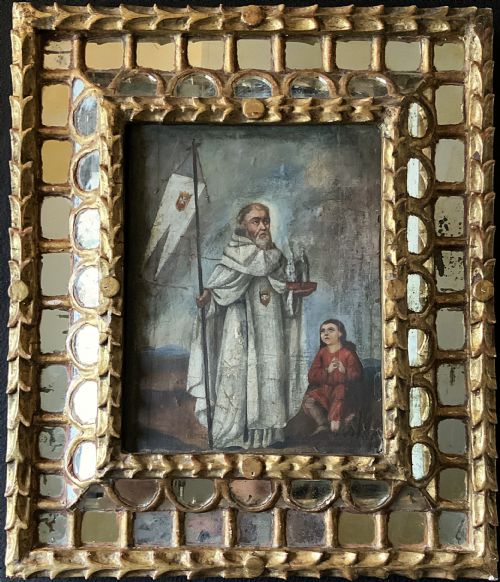
Many seventeenth and eighteenth-century paintings retain period giltwood frames, though frames were frequently replaced over centuries to suit prevailing tastes.
The compatibility of the frame's style and wear patterns with the canvas provides clues to their historical pairing.