



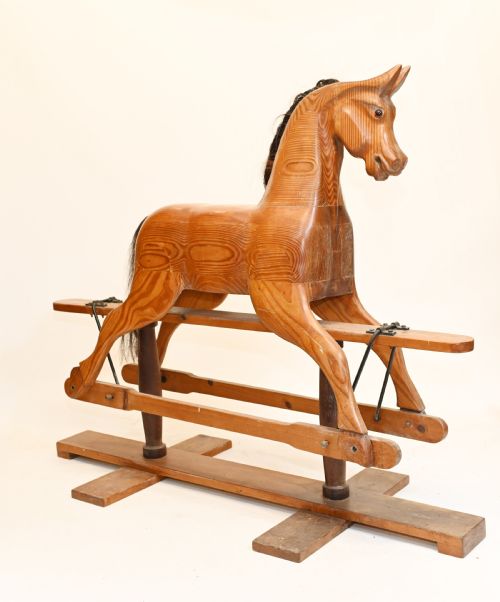
Antique Safety Rocking Horse
An antique safety rocking horse brings the charm of traditional playrooms into your home through sturdy mechanical innovation.
Antique Safety Rocking Horse
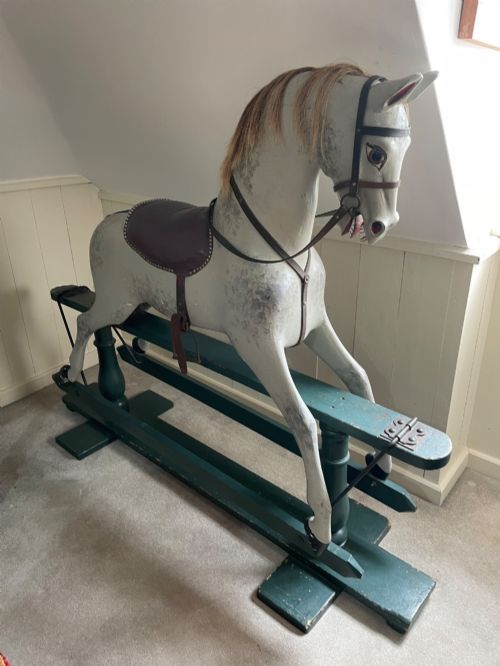
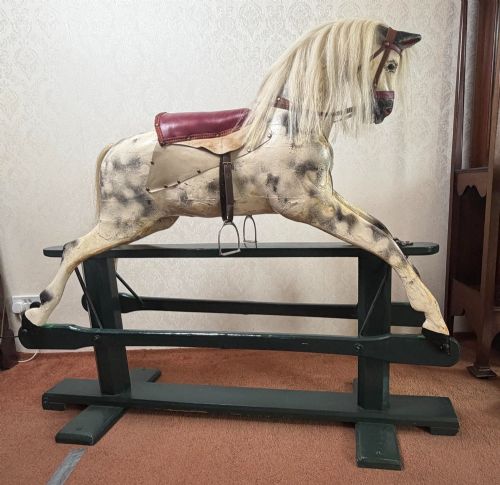
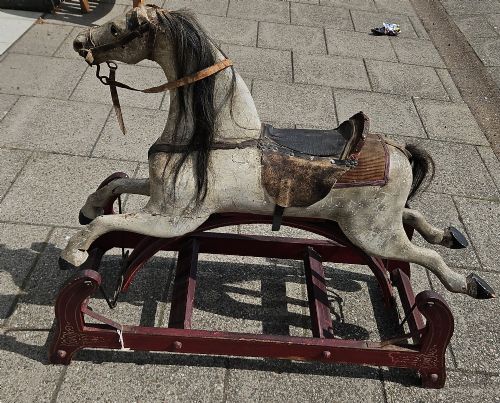
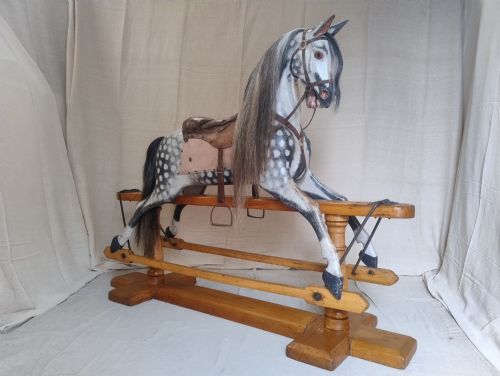
An antique safety rocking horse is a child's toy designed with an ingenious iron or steel swing frame rather than traditional bow rockers, preventing the horse from tipping over during vigorous play. When you search for an antique safety rocking horse, you encounter Victorian, Edwardian, and interwar examples that range from grand, dappled showpieces to simpler pine versions.
The pieces appearing on this page span several decades from the nineteenth century into the mid-twentieth century, capturing the evolution of toy manufacturing in Britain and America. Traditional forms often feature substantial carved wooden bodies suspended on complex metal subframes that allow a smooth, swinging motion.
Materials and construction
Makers shaped these toys primarily from carved wood and pine, building robust internal frameworks of iron and steel to support the swinging mechanism. Artisans applied coats of paint to the wooden bodies, often creating dappled finishes that defined the aesthetic of the period.
Detailing relied on organic materials such as genuine leather for tack and horsehair for manes and tails, fastened securely to the carved wooden heads and necks. Metal components were engineered to withstand the rigorous movement of children while maintaining the balance of the suspended frame.
Antique Safety Rocking Horse Retail Price Guide 2026
Typical asking prices for safety rocking horse among the pieces listed under this phrase on Sellingantiques today, from the lower quarter to the upper quarter. They describe what is for sale here now, not the wider market.
Listings here feature pieces spanning from the nineteenth century through the interwar period, constructed in carved wood, pine, iron, and steel.
Assessing quality and craftsmanship
Quality in these pieces rests upon the precision of the mechanical swing frame and the artistry of the wood carving. Finer examples display deeply carved muscle definition in the wooden body and retain their original iron brackets and paint finishes.
The integrity of the original leather tack and horsehair mane distinguishes better preserved pieces from those that have undergone extensive replacement. Substantial size and attribution to established makers elevate certain examples above standard workshop output.
F.H. Ayres·Collinson·Lines Bros
The Antique Safety Rocking Horse Glossary
- Safety stand
- An iron or steel swing frame that suspends the horse above the floor. This mechanism replaced traditional curved wooden rockers to prevent the toy from tipping over.
- Dappled
- A painted surface finish imitating the spotted coat of certain horses. Artisans applied these grey or brown spots over a lighter base coat.
- Tack
- The harness, saddle, and reins fitted to the horse. These elements are typically fashioned from leather and brass fittings.
- Original paint
- The initial surface coating applied by the maker during manufacture. Surviving examples retain this undisturbed finish rather than later repainting.
Antique Safety Rocking Horse: Frequently Asked Questions
How does a safety rocking horse work?
A safety rocking horse hangs within a rigid metal swing frame rather than resting on curved wooden rockers. This iron or steel linkage allows the horse to move back and forth while the base remains firmly planted on the floor.
This clever engineering prevents the toy from rearing over or tipping completely forward during enthusiastic play, making it a safer option for children introduced in the Victorian era.
How do I identify the age of a rocking horse?
Dating relies on construction methods, paint layers, and materials used in the body and mechanism. Nineteenth-century examples often feature heavy carved wood construction and distinct iron safety frames.
Twentieth-century pieces from the interwar period introduce different proportions and lighter metal components. Examining the nails, fixings, and tack helps narrow down the manufacturing decade.
Where should I place a rocking horse at home?
These large toys require adequate floor space to allow the swinging mechanism to move freely without striking walls or furniture. Placing them in a spacious hallway, living room, or nursery highlights their substantial presence.
Because the iron swing frames are heavy and stable, they sit securely on most floor surfaces without needing permanent floor fixings.
Are horsehair manes original?
Many surviving pieces retain their original horsehair manes and tails, secured firmly into drilled channels along the neck. These organic fibres often show natural wear and ageing appropriate to the toy's history.
Replacements do occur during restoration work, so inspecting the attachment points provides insight into the originality of the mane and tail.