







Antique Rustic Floor Rug
An antique rustic floor rug brings grounded texture and deep, time-softened colour to a room.
Antique Rustic Floor Rug
When you search for an antique rustic floor rug, you are looking at handmade carpets and floor coverings originating from Persian and Anatolian weaving traditions. These pieces span periods from the mid-nineteenth century to the early twentieth century, showing the honest wear of domestic use.
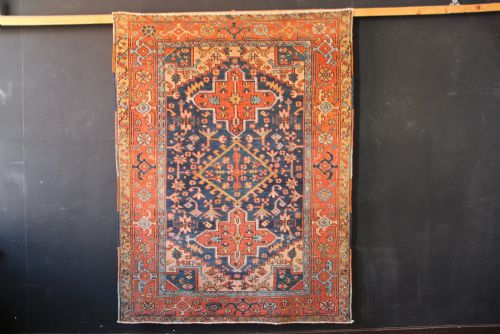
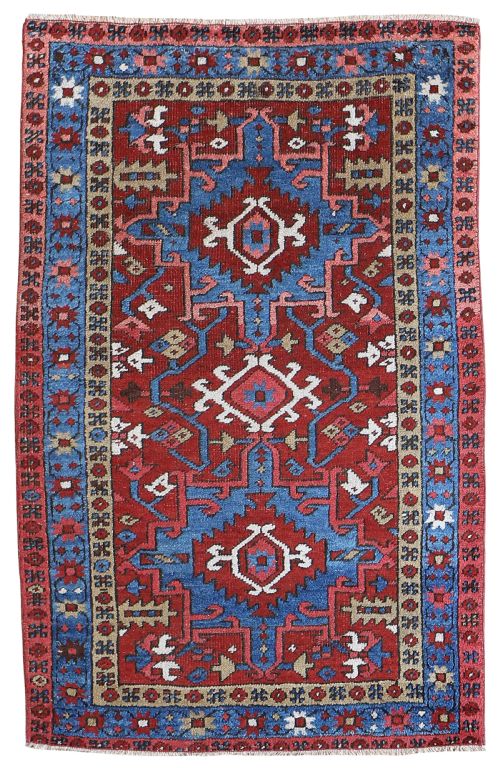
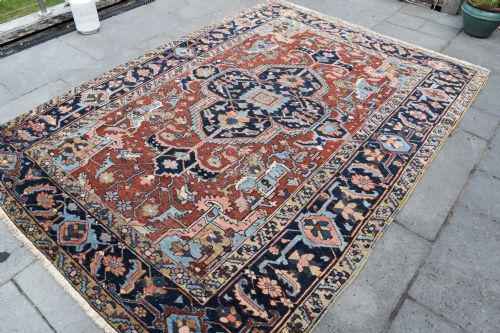
The selection here leans heavily towards Heriz and tribal carpets, alongside Kurdish, Baluch, and Anatolian regional examples. You will find both room-size carpets and smaller area rugs suited to grounding a seating arrangement.
These textiles carry the distinct geometry of tribal designs or the bolder medallions of village workshops. Their rustic character comes from unpretentious wools and tribal patterns woven for daily habitation rather than formal display.
How they were made
The physical substance of these rugs rests on natural fibres, principally wool, hand-spun wool, and camel wool, often worked over a cotton foundation. Hand-spinning creates an irregular yarn that takes dye with subtle variations across the surface.
Weavers knotted these carpets by hand using traditional village looms, employing sturdy wool piles designed to endure generations of foot traffic. The resulting structure combines resilient pile with robust kilim ends.
Antique Rustic Floor Rug Retail Price Guide 2026
Typical asking prices for rustic floor rug among the pieces listed under this phrase on Sellingantiques today, from the lower quarter to the upper quarter. They describe what is for sale here now, not the wider market.
Camels contributed their actual wool to keep nineteenth-century nomads warm.
What varies in quality
Quality in these rustic rugs lies in the integrity of the wool and the strength of the tribal design rather than pristine condition. A superior piece retains dense, resilient wool and balanced proportions that hold the eye from across the room.
The handling of natural dye colour distinguishes the better examples, where abrash and soft fading enhance the depth of the pattern. Distressed surfaces vary from honest, low pile earned through age to areas of structural compromise.
The Antique Rustic Floor Rug Glossary
- Abrash
- Natural variations in colour shading caused by changes in dye batches or hand-spun wool lots. This subtle striping or tonal shift is a hallmark of genuine village and tribal weaving.
- Kilim
- A flat-woven carpet or rug made without a pile, often forming the ends of knotted-pile rugs or created as reversible floor coverings. They are lighter in weight and feature sharp geometric motifs.
- Camel wool
- Un-dyed natural wool taken from camels, ranging from warm tans to deep browns. It provides exceptional durability and a distinct tactile softness in tribal rugs.
- Heriz
- A village style from northwest Persia known for bold geometric medallions and robust structural wool. These carpets are prized for their architectural layouts and enduring strength.
- Baluch
- Rugs produced by nomadic and semi-nomadic tribes of the Baluchistan region. They frequently incorporate dark wools, camel hair, and repeating prayer or field motifs.
Antique Rustic Floor Rug: Frequently Asked Questions
How do I care for an antique wool rug?
Vacuum gently without using a rotating beater bar to protect the old pile from stress.
Keep the rug out of direct, harsh sunlight to prevent the natural dyes from fading unevenly over the years.
Can I place these rugs in high traffic areas?
Many of these village and tribal rugs were built for heavy domestic use and handle corridors or living rooms well.
Ensure you place a quality underlay beneath the rug to cushion the antique foundation against hard floors.
What makes a rug rustic?
A rustic label points to honest tribal origins, unpretentious village wools, and designs drawn from local tradition rather than court workshops.
Signs of age, hand-spun irregularities, and charming imperfections all contribute to this grounded aesthetic.
How can I tell a Heriz rug apart?
Heriz carpets typically feature a strong, geometric central medallion supported by bold, angular corner spandrels.
The handle is usually heavy and stiff, reflecting the sturdy foundation materials used in those Persian village workshops.