



Antique Rush Seat Carver
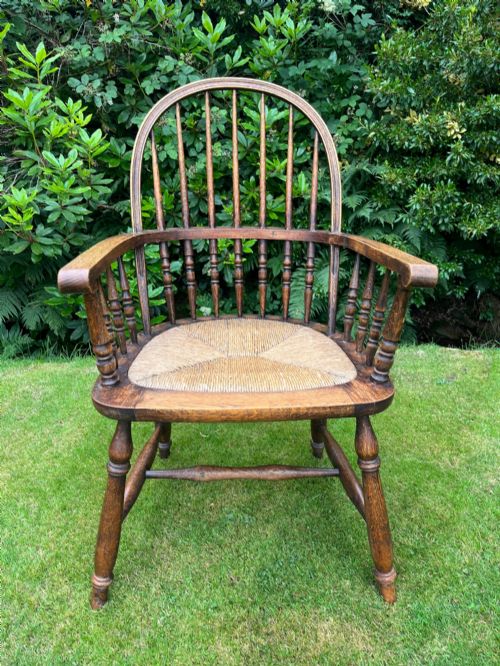
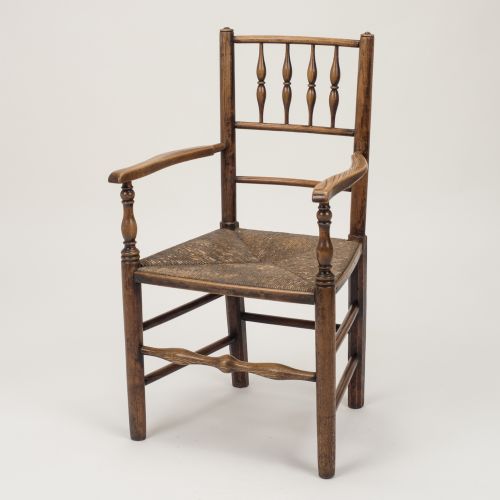
An antique rush seat carver is a sturdy country armchair designed for comfort, combining traditional woven seating with supportive wooden arms.
Antique Rush Seat Carver
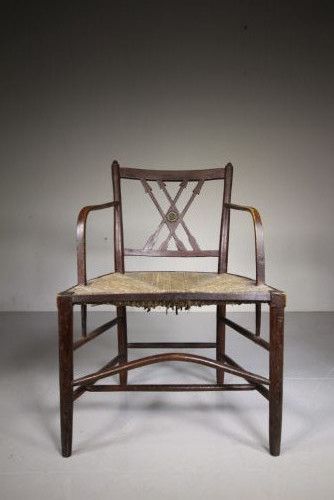
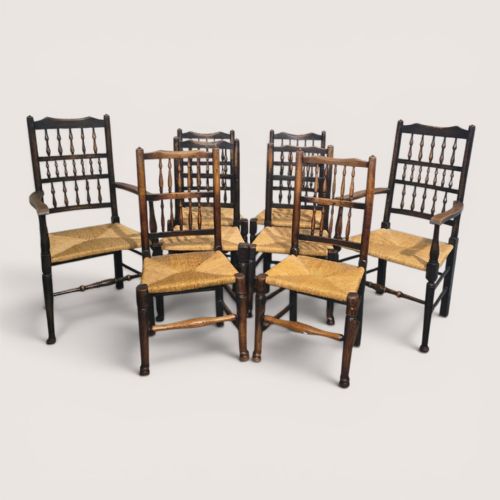
An antique rush seat carver represents the tradition of English country and vernacular seating, typically built with open arms for daily use in farmhouses and cottages. The selection spans periods from the Georgian era through the Victorian period, Edwardian times, and into the early twentieth century.
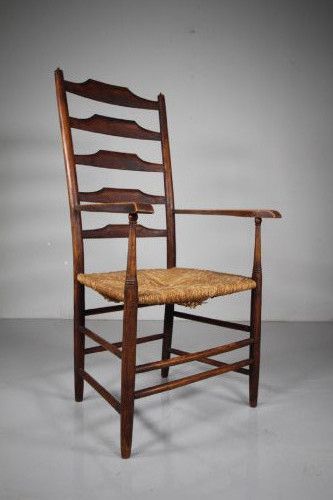
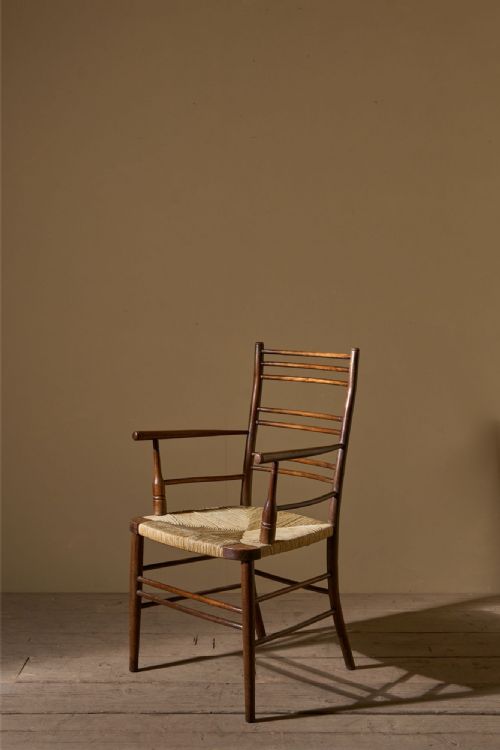
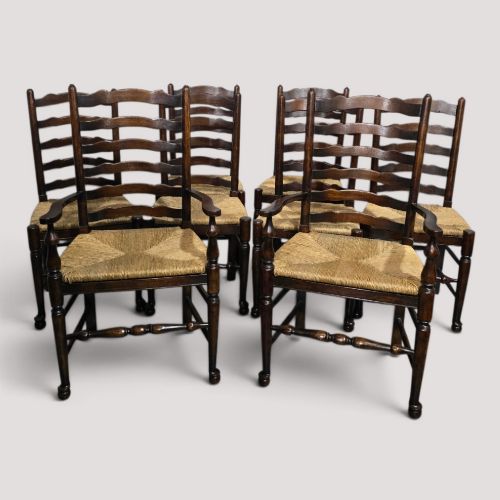
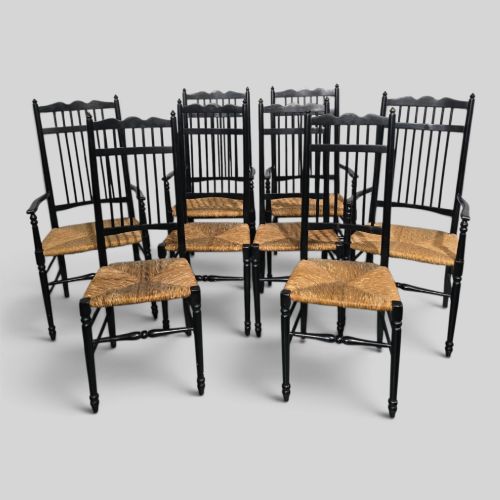
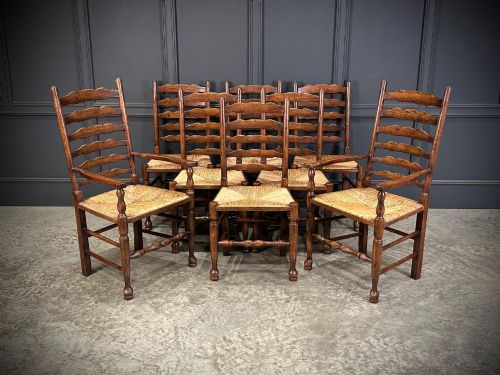
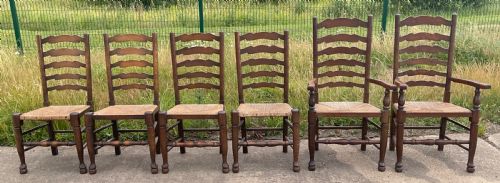
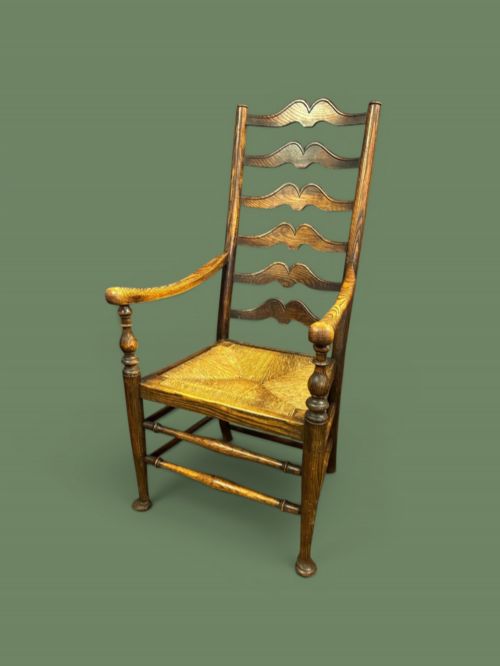
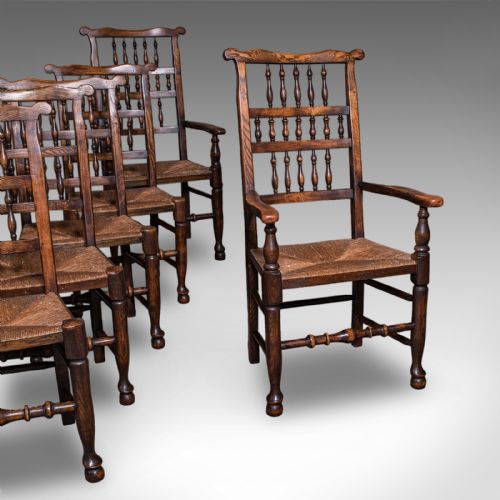
Most examples you will encounter combine a ladderback or spindleback frame with a woven natural rush seat, often found individually or as part of larger dining sets. Regional variants such as Cheshire, Lancashire, and Scottish crofter chairs appear alongside Arts and Crafts interpretations.
How they were made
Makers utilised local hardwoods selected for specific parts of the chair, combining elm seats, ash or beech spindles and ladder backs, and oak or fruitwood frames. Turned wooden components were shaped using traditional turning lathes before being assembled by hand.
The seats are formed from natural dried rush, twisted tightly and woven by hand into a durable checkerboard pattern across the frame. Some regional pieces feature painted wood surfaces or stained finishes over the exposed timber.
Several chairs retain traces of their original farmhouse paint, having survived generations of kitchen use without being stripped down to bare wood.
What varies in quality
Quality rests in the harmony of the timber selection and the integrity of the original construction, where well-proportioned turnings and tight joints define better examples. The tightness and uniformity of the hand-woven rush seating also distinguish finer pieces from simpler utilitarian workshops.
Makers' marks or attribution to notable design houses and studios elevate certain chairs, while untouched surface patination on older painted or polished wood adds depth to the piece.
Philip Clissett·Morris And Co·Liberty And Co·E W Godwin·Dicon Nance
The Antique Rush Seat Carver Glossary
- Carver
- An armchair, typically taller and wider than surrounding dining chairs, designed to sit at the head of a table. These pieces feature integrated armrests for added support.
- Rush
- Dried marsh grass woven into cords and utilised for seating. This traditional material creates a flexible yet durable surface that adapts to the sitter.
- Ladderback
- A chair back constructed with horizontal slats resembling the rungs of a ladder. These slats are often shaped or graduated in width.
- Spindleback
- A chair back composed of numerous thin, turned vertical wooden rods. This style provides light yet strong support.
- Vernacular
- Everyday furniture built by local country craftsmen for utility rather than following strict metropolitan design rules. These pieces rely on regional traditions of timber use.
Antique Rush Seat Carver: Frequently Asked Questions
How do I identify a rush seat carver?
Look for an armchair configuration featuring open wooden arms attached to a seat woven from natural marsh grass. The frame typically employs regional country construction methods such as ladder backs or turned spindles.
Check the timber species, as regional makers frequently combined local hardwoods like ash, elm, and beech. The presence of painted finishes or specific regional turning patterns often points toward particular English or Scottish counties.
Are these chairs suitable for daily dining?
These carvers were originally built for heavy domestic use in farmhouse kitchens and dining rooms. Their sturdy construction makes them well-suited for everyday seating around a table.
Ensure the woven rush surface remains taut and the wooden frame joints are secure. Placing them in normal indoor environments helps preserve the natural materials without special care.
How do I care for a rush seat?
Natural rush seats require minimal maintenance beyond regular dusting with a soft brush. Keep them away from excessive moisture and direct heat sources to prevent the dried grass from becoming brittle.
Applying a light, breathable wax to the wooden frame helps protect the finish. Avoid heavy commercial furniture polishes that can leave a residue on the woven rush.
What distinguishes Arts and Crafts carvers?
Arts and Crafts rush seat carvers reflect the late nineteenth and early twentieth-century return to handcraftsmanship and honest materials. Makers influenced by this movement emphasised simple structural forms and visible construction details.
These pieces often bear associations with prominent design firms and independent studios. The emphasis shifted toward clean lines and celebrating the natural grain of oak or ash.